
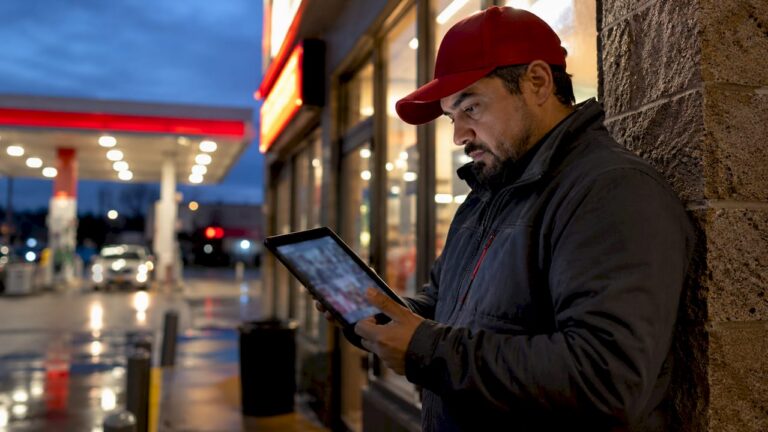
Gas stations are defined as one of the highest-risk commercial properties in the United States, combining 24/7 operation, cash transactions, open forecourts, and high-value fuel inventory into a single location that criminals actively target. Losses from a single serious incident can exceed $50,000 when you factor in downtime, inventory loss, and reputation damage. Understanding why gas stations need surveillance is not a theoretical exercise. It is a financial and operational necessity that every station owner should address before an incident forces the decision.
Why gas stations need surveillance more than most businesses
Gas stations carry a risk profile that most retail businesses do not. Cash, fuel, and late-night hours create predictable windows of criminal opportunity that bad actors learn to exploit. A convenience store inside a gas station closes at midnight. The pumps stay on. That gap between staffed hours and 24/7 fuel access is where a large share of theft and fraud occurs.
The importance of gas station security becomes clear when you map out every transaction point. Fuel pumps process payments without a cashier present. Customers pay at the pump with cards that can be skimmed. Drivers can fill up and leave without paying. Each of these scenarios requires a camera system designed around evidence collection and real-time deterrence, not just passive recording.
What are the primary risks gas stations face without surveillance?
Gas station operators face a specific set of threats that compound quickly without a CCTV system in place.
- Drive-offs and fuel fraud. Unpaid fuel is a direct inventory loss. UK fuel stations lose an average of £11,530 annually to drive-offs, with roughly 28 incidents per station per quarter. American stations face comparable exposure. Without license plate capture, recovery is nearly impossible.
- Robbery and cash theft. Gas stations rank among the most frequently robbed businesses in the country. The combination of cash registers, isolated overnight staff, and limited foot traffic makes them attractive targets.
- Pump tampering and card skimming. Organized criminal groups install skimming devices on card readers in under 60 seconds. Without cameras covering each pump, you will not know a device is there until customers report fraudulent charges.
- Vandalism and unauthorized access. Fuel storage areas, dumpsters, and rear access points attract vandalism and trespassing. Damage to fuel infrastructure carries both repair costs and regulatory liability.
- Slip-and-fall and liability claims. False or exaggerated injury claims are a growing cost for gas station operators. Without timestamped video, you have no defense against a claim that contradicts what actually happened.
Each of these threats hits your bottom line differently. Theft reduces inventory. Liability claims inflate insurance costs. Vandalism creates repair expenses and potential downtime. A surveillance system addresses all five categories simultaneously.
How does surveillance shift gas station security from reactive to proactive?
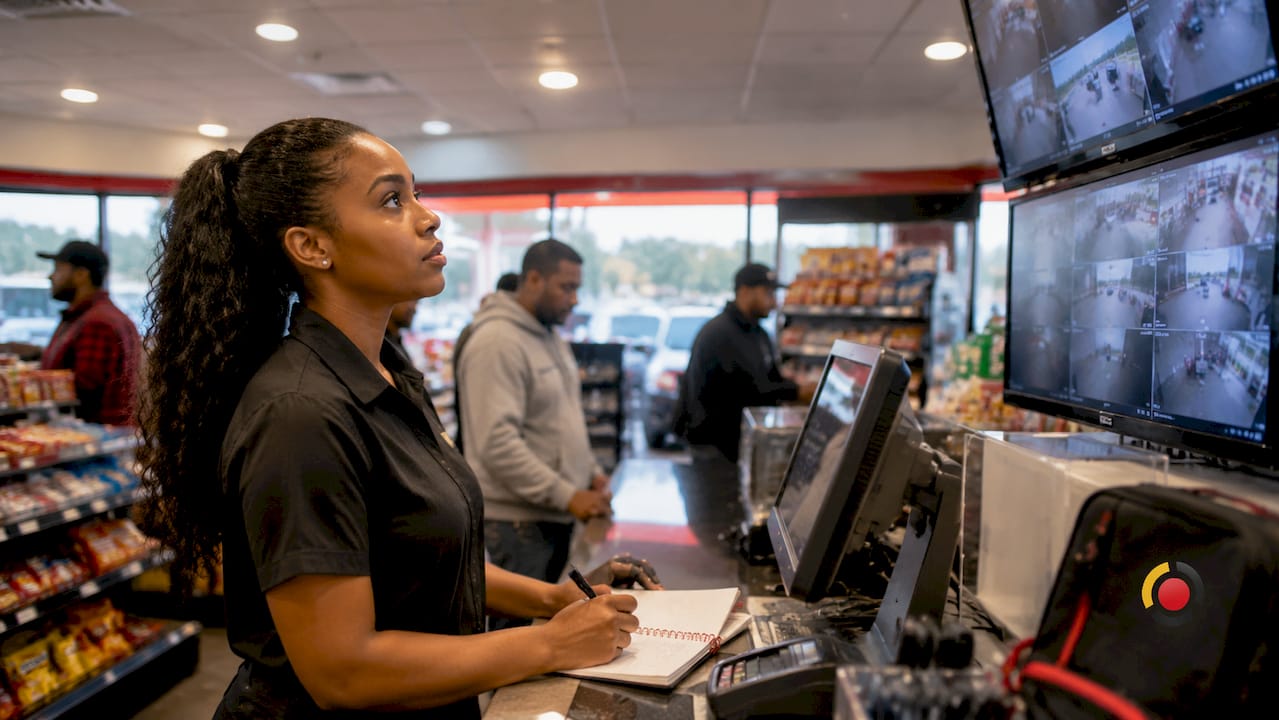
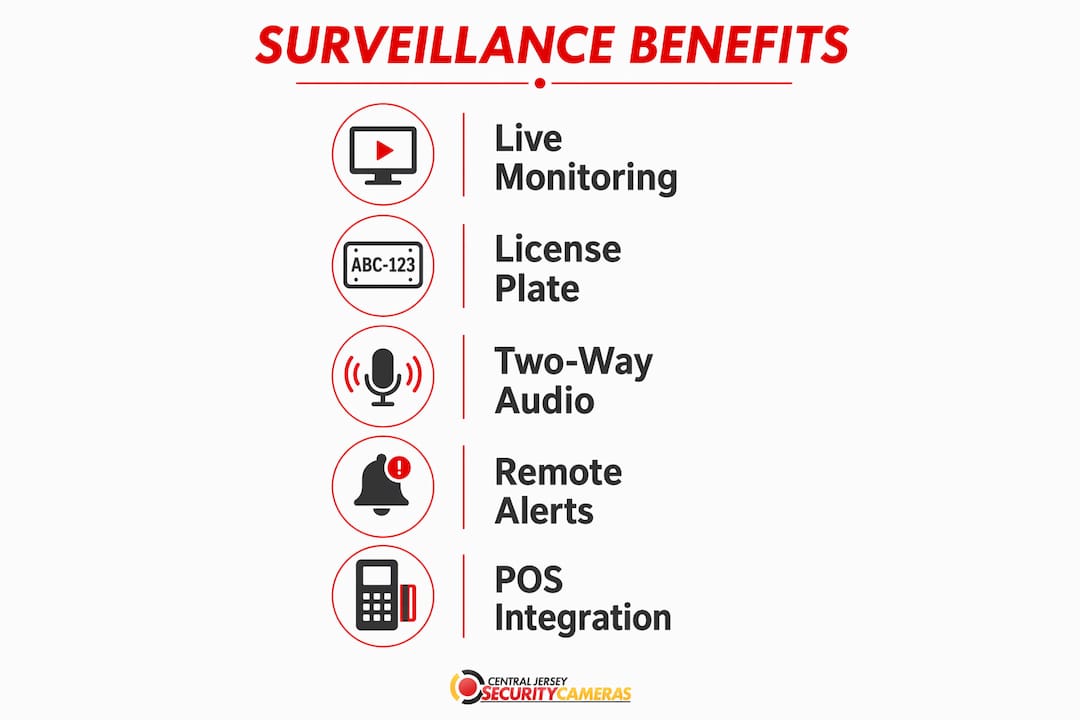
The difference between recording an incident and preventing one is live monitoring. Trained operators watching live feeds can identify pump tampering, verify a drive-off in progress, and dispatch police while the vehicle is still on the forecourt. A static recording system documents what happened. A monitored system stops it.
Modern CCTV systems for gas stations use audio warnings as a first response layer. When a camera detects suspicious behavior at a pump, a speaker can broadcast a direct verbal warning to the individual. That intervention alone deters a significant share of opportunistic theft. Active deterrence cameras combine motion detection, floodlights, and two-way audio to create a visible, audible response without requiring staff to leave the cashier area.
Cloud-based systems extend this capability further. Remote monitoring centers staffed by trained security operators can watch multiple camera feeds across several locations simultaneously. For a gas station owner operating two or three sites, this means consistent coverage without hiring dedicated on-site security at each location.
Pro Tip: Set up your monitoring system to send push alerts to your phone when motion is detected at pumps after midnight. That 30-second window between detection and response is often enough to prevent a drive-off or catch a skimmer installation in progress.
Fuel theft and organized retail crime are evolving faster than most loss prevention programs. Staying ahead requires integrating surveillance with incident reporting workflows and real-time staff alerts, not just reviewing footage after the fact.
What are the essential surveillance features gas stations need?
Camera placement at a gas station follows a logic built around decision points. Critical angles cover the forecourt, each pump, the cashier station, all entrances and exits, parking areas, and rear access points. Each zone serves a specific evidentiary purpose.
Camera coverage by zone
| Zone | Primary purpose | Recommended camera type |
|---|---|---|
| Fuel pumps | Drive-off capture, skimmer detection | Fixed IP camera, 4K resolution |
| Cashier/POS area | Robbery evidence, employee accountability | Wide-angle dome camera |
| Entrances and exits | ID capture, vehicle tracking | License plate recognition camera |
| Parking lot | Vandalism, assault, slip-and-fall | PTZ or wide-angle fixed camera |
| Rear and storage | Unauthorized access, fuel theft | Night-vision fixed camera |
License plate recognition cameras are non-negotiable for drive-off prevention. They capture plate numbers automatically and timestamp each read, giving you a verifiable record to hand to law enforcement. Without them, a drive-off is a loss you absorb with no recourse.
Two-way audio capability turns a passive camera into an active deterrent. POS integration links video timestamps directly to transaction records, so when a dispute arises, you pull one package rather than searching hours of footage. Linking video to transaction data creates an evidence chain that holds up in insurance claims and court proceedings.
How does surveillance support financial and risk management goals?
Surveillance is a cost center that pays for itself through loss prevention and insurance savings. Insurance companies may reduce premiums by 5–15% for gas stations operating under documented live video surveillance. On an $18,000 annual premium, that translates to $900 to $2,700 in direct savings every year.
The financial case goes beyond insurance. Every drive-off you prevent is fuel revenue recovered. Every false liability claim you defeat with timestamped video avoids a settlement or legal fee. Effective evidence chains reduce the time your staff spends pulling footage and improve outcomes in insurance reviews and police investigations.
Employee accountability is a less-discussed benefit of gas station cameras. Knowing that the cashier area is monitored reduces internal theft and improves compliance with cash-handling procedures. That accountability effect does not require confrontation. The camera’s presence alone changes behavior.
The business security benefits of a professionally installed system compound over time. Year one, you recover losses and reduce premiums. Year two, you use footage to train staff on incident response. Year three, your insurance carrier recognizes your documented monitoring history and adjusts your risk profile accordingly.
Key takeaways
Gas stations require professionally installed CCTV surveillance with live monitoring, license plate recognition, and POS integration to prevent theft, defend against liability claims, and reduce insurance costs.
| Point | Details |
|---|---|
| Live monitoring beats recording alone | Trained operators prevent crimes in real time rather than documenting losses after the fact. |
| License plate recognition stops drive-offs | Automatic plate capture with timestamps gives law enforcement actionable evidence for recovery. |
| Insurance savings offset system costs | Documented surveillance can reduce annual premiums by 5–15%, recovering installation costs over time. |
| POS integration builds evidence chains | Linking video timestamps to transaction records speeds up investigations and strengthens insurance claims. |
| Camera placement must follow decision points | Covering pumps, entrances, cashier areas, and rear access points closes every major vulnerability zone. |
What I’ve learned after years of installing gas station systems
Most gas station owners I speak with come to us after an incident. A drive-off that cost them $400 in fuel. A slip-and-fall claim they could not disprove. A robbery that left their overnight cashier shaken and their insurance rate climbing. The pattern is consistent, and it is avoidable.
The mistake I see most often is cameras without monitoring capacity. A station will have 16 cameras recording to a local DVR that nobody watches in real time. Crimes happen on camera and go undetected until the owner reviews footage the next morning. That is not a security system. That is an expensive documentation tool.
The second mistake is treating surveillance as a one-time installation. Camera angles need adjustment as your operation changes. Firmware needs updating. Storage needs auditing. A system that worked perfectly at installation can develop blind spots within a year if nobody maintains it.
My honest recommendation: prioritize live monitoring over camera count. Six well-placed cameras with a monitored response workflow will outperform 20 cameras recording to an unwatched hard drive every time. Build your system around what happens when a camera detects something, not just what it records.
— Tom
Gas station surveillance solutions from Central Jersey Security Cameras
Gas station owners in Central New Jersey have a specific set of security needs that off-the-shelf systems do not address. Central Jersey Security Cameras designs and installs custom CCTV systems built around your forecourt layout, pump count, cashier setup, and risk profile.
Our installations include 4K cameras, license plate recognition, PTZ coverage for parking areas, two-way audio, NVR recording, and remote monitoring options that let you watch your station from anywhere. We serve gas station operators across Ocean County, Monmouth County, Middlesex County, Mercer County, and Burlington County. Every system comes with professional installation, system design, and ongoing support. Contact Central Jersey Security Cameras to schedule a site assessment and get a surveillance plan built for your operation.
FAQ
Why do gas stations need security cameras specifically?
Gas stations combine cash, fuel inventory, and 24/7 open access in a way that creates multiple simultaneous theft and liability risks. Security cameras provide real-time deterrence, evidence for insurance claims, and documentation for law enforcement.
What camera features matter most for gas station theft prevention?
License plate recognition and timestamped video linked to POS transaction data are the two most critical features. Together, they create a verifiable evidence chain for drive-offs, fraud, and dispute resolution.
Can surveillance cameras actually lower my insurance premiums?
Yes. Insurance carriers may reduce premiums by 5–15% for gas stations with documented live video surveillance, which on an $18,000 annual policy equals $900 to $2,700 in annual savings.
What is the biggest surveillance mistake gas station owners make?
Installing cameras without any live monitoring capacity. Footage that nobody watches in real time documents crimes but does not prevent them. Effective surveillance requires trained operators or automated alerts tied to a response workflow.
How many cameras does a gas station need?
The number depends on your forecourt size, pump count, and layout. At minimum, every pump, the cashier area, all entrances and exits, and rear access points need dedicated coverage. A professional site assessment determines the exact count and placement for complete protection.