
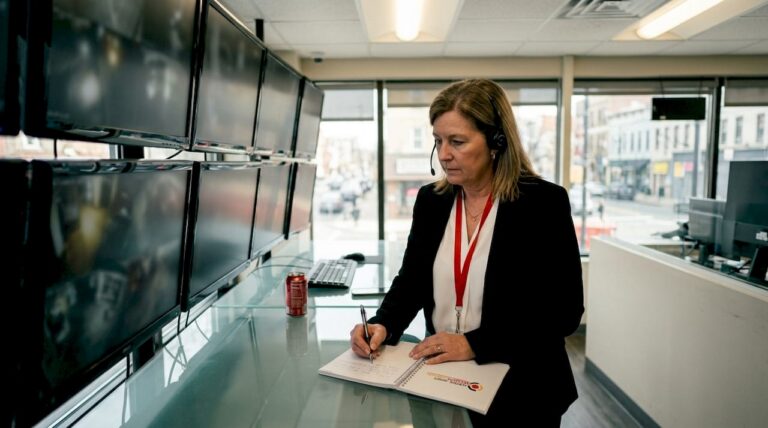
A commercial security monitoring station is defined as a 24/7 operational center that receives alarm, video, and sensor signals from a protected property and dispatches a verified response. The role of monitoring stations in commercial security goes far beyond recording footage after a crime. These centers connect trained operators to live feeds, intrusion sensors, fire alarms, and access control systems, then act in real time. For business owners in New Jersey and across the country, understanding this function is the difference between a security system that deters crime and one that simply documents it. Central Jersey Security Cameras designs and installs the camera infrastructure that feeds directly into this monitoring ecosystem.
How do monitoring stations verify and respond to security events?
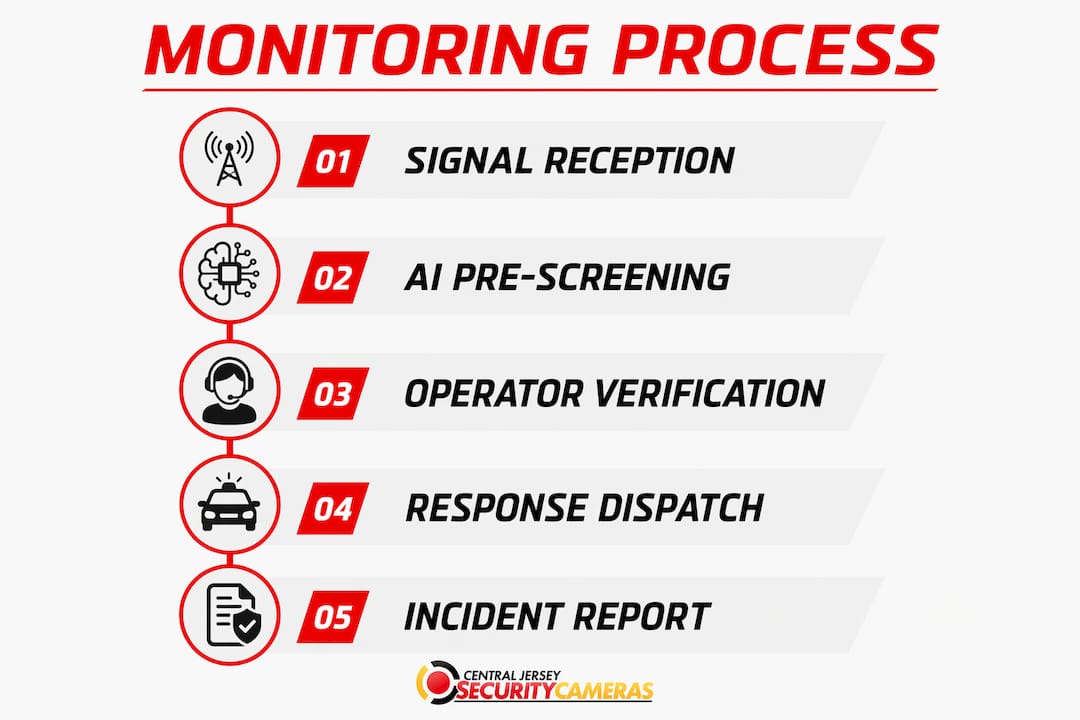
Monitoring stations follow a structured workflow from signal reception to resolution. The process starts the moment a sensor trips, a camera detects motion, or an access point is breached. Operators do not simply forward every alert to law enforcement. They verify first.
Here is how a standard response sequence works:
- Signal reception. Intrusion detectors, fire sensors, environmental monitors, and IP cameras send alerts to the central station simultaneously.
- Visual verification. A trained operator pulls up the live camera feed tied to the triggered zone. This step filters out false alarms caused by animals, HVAC movement, or equipment malfunctions.
- AI pre-screening. AI-driven analytics reduce false alarms and prioritize real threats, so operators focus only on confirmed activity. This cuts alarm fatigue significantly.
- Live audio intervention. If a real intrusion is confirmed, the operator broadcasts a live warning through on-site speakers. Active intervention by live operators deters unauthorized activity with an 87% success rate before any escalation is needed. That figure means most incidents end without police dispatch.
- Escalation. When audio warnings fail, the operator contacts law enforcement, the property owner, and designated emergency contacts in a pre-set order.
- System supervision check. Supervised systems actively verify communication path status and alert on failures, not just alarms. This distinction matters because a cut phone line or failed network connection gets flagged immediately, not discovered after a break-in.
Pro Tip: Ask your monitoring provider whether your system is supervised or simply monitored. A supervised system catches communication failures before they become security gaps.
What are the benefits of monitoring stations for commercial security?
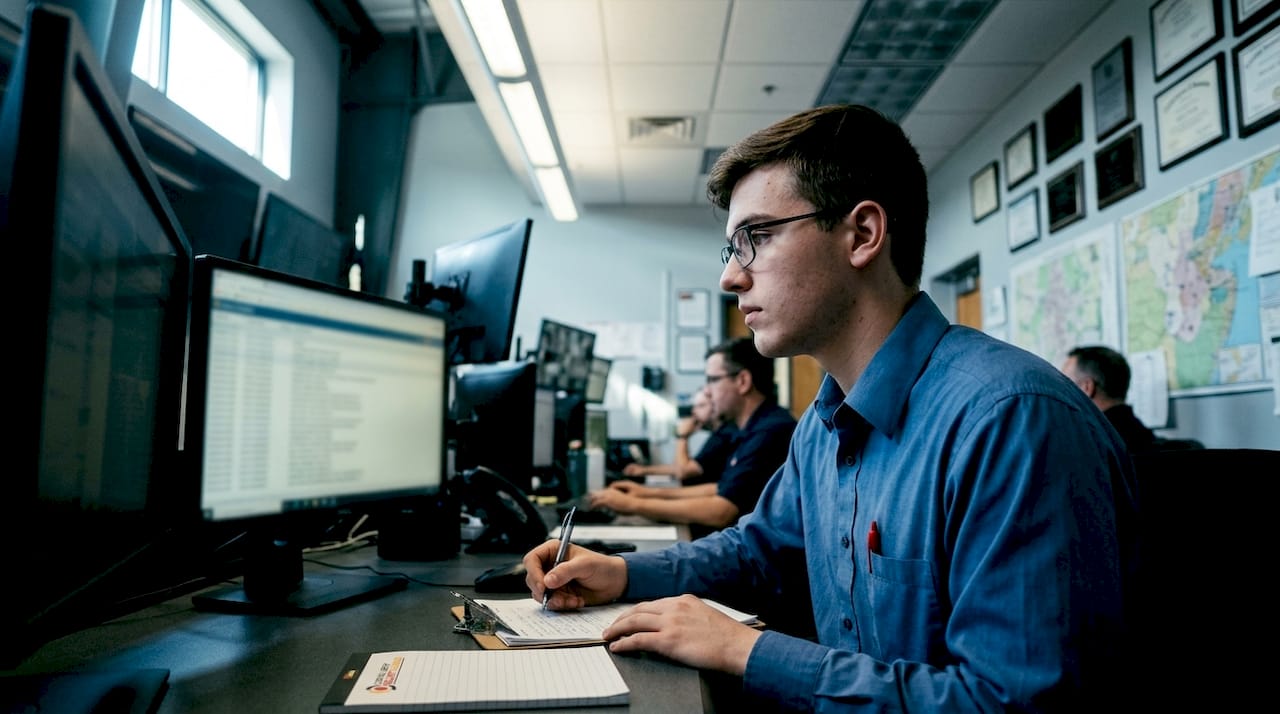
Professional monitoring shifts security from passive recording to active protection. Monitoring stations move businesses from reactive post-event review to proactive threat verification during events. That operational shift has measurable financial consequences.
Organizations without mature security monitoring take an average of 194 days to identify a breach and 64 additional days to contain it, at an average cost of $4.88 million per incident. Continuous, mature monitoring reduces that average breach cost by $1.76 million compared to organizations with no active oversight. These numbers apply across both physical and cyber threats, and they make the ROI case for professional monitoring clearer than any marketing claim.
Key benefits for commercial property owners include:
- Crime deterrence. Visible cameras connected to a live monitoring center discourage theft, vandalism, and unauthorized entry before incidents occur.
- Faster containment. Verified response cuts the time between a triggered alarm and a dispatched officer from hours to minutes.
- Cost efficiency. Monitoring contracts offer multi-location pricing advantages over hiring multiple on-site guards. A flat base fee plus per-site pricing scales far more affordably than guard labor costs.
- Insurance and code compliance. 24/7 professional monitoring is often mandated by property insurers and local building codes for commercial properties. Meeting that requirement can lower premiums and satisfy lease conditions.
- Centralized multi-site management. A single monitoring center can watch a warehouse in Middlesex County, a retail location in Monmouth County, and a corporate office in Mercer County simultaneously.
- Environmental monitoring. Stations handle fire, flood, and temperature sensors alongside intrusion alerts, protecting equipment and inventory beyond just theft prevention.
How has AI improved the effectiveness of monitoring stations?
AI has changed what monitoring stations can realistically accomplish at scale. Without AI pre-screening, a busy commercial property generates hundreds of motion alerts per night. Operators cannot review all of them accurately. With AI, the system filters irrelevant triggers and surfaces only confirmed human activity for human review.
The practical result is faster response and fewer wasted police dispatches. Professional monitoring relies heavily on AI to pre-verify alarms, but that AI is only as good as the camera placement and sensor integration behind it. A poorly positioned camera with a blind spot produces incomplete footage that AI cannot analyze correctly. This is why hardware quality and installation precision directly determine monitoring effectiveness.
Remote audio intervention is another area where technology has expanded what stations can do. Operators now speak directly to intruders through two-way audio devices mounted on-site, often stopping incidents without any physical response. Modern security requires integrated monitoring stations that handle intrusion, fire, and cybersecurity signals together. A station that only watches cameras misses network intrusions that can be just as damaging as physical break-ins. For businesses with networked equipment, commercial camera cybersecurity is part of the same protection layer.
Pro Tip: When evaluating a monitoring provider, ask specifically how their AI handles your camera type and resolution. A 4K feed processed by a capable AI system produces far fewer false positives than a lower-resolution feed with generic motion detection.
What should business owners consider when selecting monitoring services?
Choosing a monitoring provider is not the same as choosing a camera brand. The monitoring center’s certifications, staffing levels, and escalation protocols determine whether your investment actually protects your property.
Key factors to evaluate:
- Center certification. Look for UL-listed monitoring centers. UL listing means the facility meets specific standards for redundancy, staffing, and response time. An uncertified center may offer lower rates but carries higher operational risk.
- Escalation procedures. Request a written copy of the escalation protocol. You need to know exactly who gets called, in what order, and within what timeframe after an alarm is verified.
- Supervised vs. monitored systems. Supervised systems are essential for compliance and reliable protection because they alert monitoring stations to communication failures, not just alarms. Confirm your system qualifies.
- Multi-site pricing structure. If you operate more than one location, ask for flat base fee plus per-site pricing. Scaling monitored security across multiple sites is more economical with monitoring stations than with guard labor, but only if the contract is structured correctly.
- Integration scope. Confirm the station monitors video, intrusion, fire, and access control from a single interface. Siloed monitoring creates gaps.
- Contract terms. Review cancellation clauses, equipment ownership provisions, and service level agreements before signing. Multi-year contracts with no exit clause are common pitfalls.
- Ongoing maintenance. A monitoring station is only as reliable as the hardware feeding it. Schedule regular camera and sensor inspections to prevent blind spots and signal failures.
How do monitoring stations fit into a broader commercial security system?
A monitoring station is the operational center of a larger security ecosystem. It does not replace intrusion detection, video surveillance, or access control. It connects them and gives them a response mechanism.
| Security component | Role in the ecosystem | How monitoring stations use it |
|---|---|---|
| IP cameras and CCTV | Visual documentation and live feeds | Operators pull footage for verification |
| Intrusion detection sensors | Trigger alerts on unauthorized entry | Station receives signal and initiates response |
| Access control systems | Restrict and log entry by credential | Station monitors for forced entry or credential misuse |
| Fire and environmental sensors | Detect smoke, heat, flood, and temperature | Station dispatches fire or facilities response |
| Network monitoring | Flags unusual data traffic or device access | Station integrates cyber alerts with physical response |
Commercial properties that benefit most from this integrated approach include warehouses with high-value inventory, multi-tenant office buildings, retail centers, schools, and industrial facilities. Each of these property types generates a different mix of signals, and a well-configured monitoring station handles all of them through a single response protocol. Commercial security installation that accounts for sensor placement, camera angles, and network architecture from the start produces a system that monitoring stations can actually use effectively.
Key Takeaways
Professional monitoring stations are the operational core of any commercial security system, converting passive hardware into active, verified protection that reduces costs and response times.
| Point | Details |
|---|---|
| Verified response reduces false dispatches | AI pre-screening and live operator review confirm threats before law enforcement is contacted. |
| Monitoring cuts breach costs significantly | Mature monitoring reduces average incident costs by $1.76 million compared to unmonitored environments. |
| Supervised systems outperform basic monitoring | Supervised systems detect communication failures, not just alarms, providing a more reliable protection layer. |
| Multi-site scaling favors monitoring contracts | Flat-fee monitoring contracts cost less than guard labor when protecting more than one commercial location. |
| Hardware quality determines monitoring effectiveness | Camera placement, resolution, and sensor integration directly control what AI and operators can verify. |
Why monitoring stations are the most underestimated investment in commercial security
Business owners consistently underestimate what a monitoring station actually does. They see it as a call center that phones them when an alarm goes off. That framing misses the point entirely.
What a well-run monitoring station actually provides is a trained human, backed by AI, watching your property in real time and making decisions that prevent losses before they happen. The 87% deterrence rate for live audio intervention is not a marketing number. It reflects what happens when an intruder realizes someone is watching and speaking to them directly. Most people leave.
The ROI calculation is also misunderstood. Business owners compare monitoring fees to the cost of a guard and assume the guard is more capable. A guard covers one location, one shift, and one zone at a time. A monitoring station covers every camera, every sensor, and every location simultaneously, around the clock. For any property with more than one building or more than one shift, the math favors monitoring by a wide margin.
My advice to any business owner evaluating their security setup: start with the monitoring station requirement and work backward. Ask what hardware, camera placement, and sensor coverage the station needs to do its job correctly. Then build the physical system to meet that specification. Most people do it in reverse, and they end up with cameras that look good but feed unusable footage to an operator who cannot verify anything.
— Tom
How Central Jersey Security Cameras supports your commercial monitoring setup
Central Jersey Security Cameras installs the hardware that makes professional monitoring work. A monitoring station is only as effective as the cameras, sensors, and network infrastructure behind it.
Central Jersey Security Cameras designs and installs commercial CCTV systems across Ocean County, Monmouth County, Middlesex County, Mercer County, and Burlington County. Every installation is built with monitoring compatibility in mind, from camera placement and resolution to network configuration and sensor integration. Whether you operate a single commercial property or multiple locations, the team at Central Jersey Security Cameras will assess your site, identify coverage gaps, and install a system that feeds clean, verifiable footage to your monitoring center. Contact Central Jersey Security Cameras for a site assessment and get a system built to protect your business around the clock.
FAQ
What is the role of a monitoring station in commercial security?
A monitoring station is a 24/7 operational center that receives alarm, video, and sensor signals from a commercial property, verifies threats through live operator review and AI analytics, and dispatches a verified response. Its core function is converting passive security hardware into active, real-time protection.
How do monitoring stations reduce false alarms?
AI-driven analytics pre-screen incoming alerts and filter out triggers caused by animals, weather, or equipment before a human operator reviews them. This process reduces unnecessary police dispatches and prevents alarm fatigue among operators.
Are monitoring stations required for commercial properties?
24/7 professional monitoring is often mandated by property insurers and local building codes for commercial properties. Meeting this requirement can also lower insurance premiums and satisfy lease or regulatory conditions.
What is the difference between a monitored and a supervised security system?
A monitored system receives and responds to alarms. A supervised system also actively checks the communication path between the property and the monitoring center, alerting operators to failures even when no alarm has triggered. Supervised systems provide a more reliable protection layer for compliance-sensitive properties.
How much can professional monitoring reduce security incident costs?
Mature, continuous security monitoring reduces average breach costs by $1.76 million compared to organizations without active oversight. Organizations without monitoring take an average of 194 days to identify a breach and 64 additional days to contain it.