
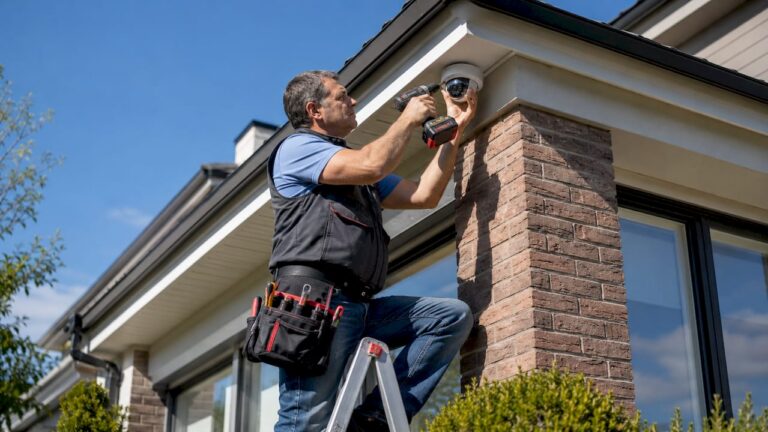
Camera coverage for townhouse surveillance means deploying well-placed CCTV cameras at key entry points, blind spots, and outdoor spaces to deter crime and capture usable footage. Townhouses present a specific challenge: shared walls, close neighbors, and HOA rules all shape where and how you can install cameras. Getting this right is less about buying the most expensive gear and more about placing the right cameras in the right spots. This guide walks you through how many cameras you need, where to put them, and how to stay on the right side of your neighbors and your HOA.
How many cameras does a townhouse surveillance system need?
Most townhouses need fewer cameras than homeowners expect. A standard townhouse setup starts at 2–4 cameras covering front doors, backyards, ground-floor windows, and private parking. Larger or multi-unit buildings typically require 6–8 cameras to close the gaps. That range gives you a practical starting point before you spend a dollar.
The key is not quantity. It is coverage logic. A single well-placed camera at your front stoop captures more useful footage than three cameras pointed at low-traffic areas. The goal is to cover every realistic entry path a person could use to approach your home.
Common targets for townhouse security cameras include:
- Front door and stoop: The highest-risk entry point for most townhouses
- Rear patio or backyard: Often overlooked, frequently used by intruders
- Side gates or alley access: Narrow chokepoints that funnel foot traffic
- Ground-floor windows: Especially those facing a shared driveway or parking area
- Private parking or garage entrance: High value for both theft deterrence and license plate capture
Layered coverage that overlaps key entry paths from two angles reduces blind spots caused by glare or motion blur. Two cameras covering your front stoop from slightly different angles will always outperform one wide-angle camera trying to cover the same zone alone.
Where should cameras be placed for the best results?
Placement strategy matters far more than camera specs. A $400 camera mounted in the wrong spot will consistently underperform a $150 camera mounted correctly. The industry standard for outdoor surveillance camera placement focuses on entrances and chokepoints at a height of 8–10 feet, angled downward.
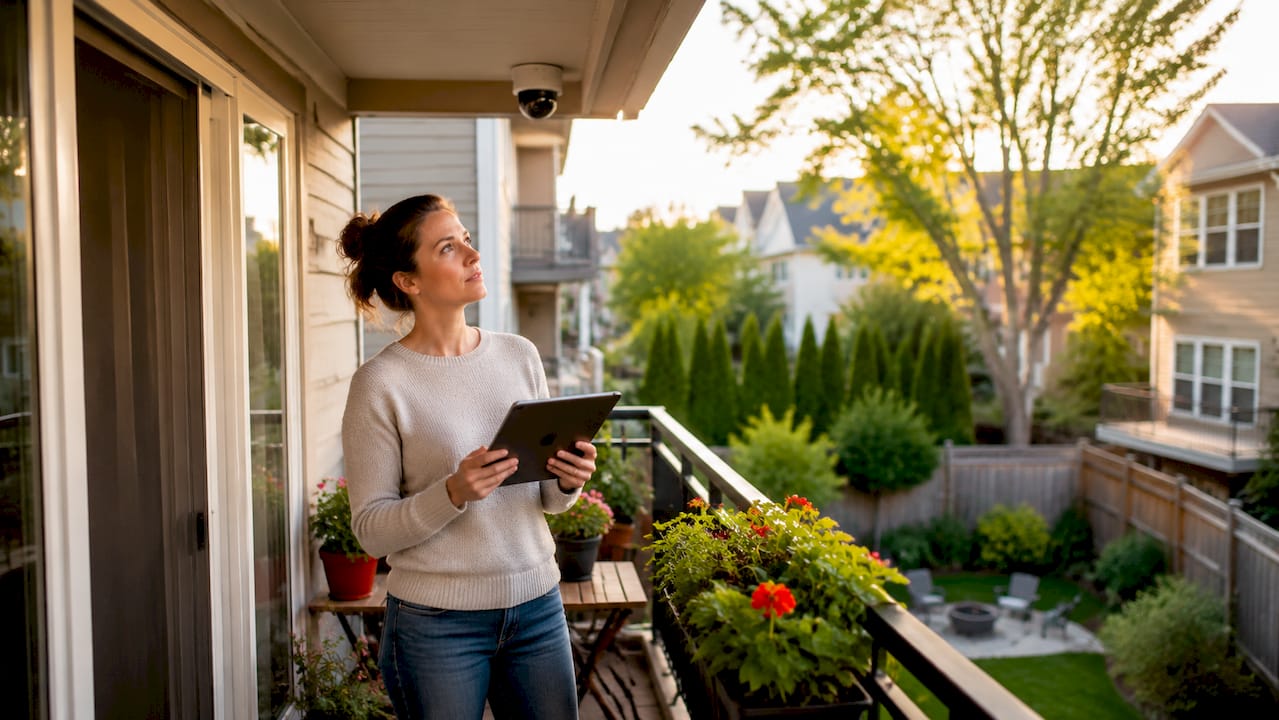
That height is not arbitrary. Mount a camera below 7 feet and it becomes easy to tamper with or redirect. Mount it above 12 feet and you lose the facial detail needed for identification. The 8–10 foot range captures faces clearly while keeping the camera out of easy reach.
The best locations for townhouse camera placement, in order of priority:
- Front door frame or porch overhang: Captures every person approaching the main entrance
- Rear patio corner: Covers the backyard and any rear gate or fence line
- Side gate or fence post: Monitors the narrow passage between units
- Garage or driveway approach: Ideal for license plate recognition cameras
- Ground-floor window corners: Covers windows facing shared spaces or parking
Pro Tip: Mount cameras under eaves whenever possible. Under-eave mounting protects the lens from rain and direct sunlight, which reduces glare and extends the camera’s lifespan without adding any extra hardware.
Townhouses also have a constraint most single-family homes do not: shared walls. You cannot always drill into a party wall or run cable through a neighbor’s side of the structure. Plan your cable routes before you buy cameras, and confirm which surfaces you own outright.
What privacy tools and settings prevent disputes with neighbors?
Townhouses require privacy-aware camera setups because of shared walls and close neighbors. Privacy zones in cameras like Arlo and Alarm.com can block specific portions of the camera’s view, up to 3 zones per camera, to prevent capturing a neighbor’s window, yard, or driveway. This is not just a courtesy feature. It is a legal compliance tool.
The legal standard most courts apply is “reasonable expectation of privacy.” Your neighbor has that expectation inside their home and in their private yard. Pointing a camera at their bedroom window, even accidentally, creates real legal exposure. Privacy zones remove that risk before it becomes a problem.
Key rules for privacy-aware surveillance camera placement:
- Never point a camera directly at a neighbor’s windows or private outdoor spaces
- Use privacy zone masking to block any portion of a neighbor’s property that falls within your camera’s field of view
- Check your HOA or condo association rules before installing any camera on a shared wall, fence, or common area
- HOA governance typically requires approval before cameras go on shared property
Configure privacy zones before you activate motion detection or video analytics. Zones configured after analytics are set up can block critical detection areas and reduce system accuracy.
Getting HOA approval early also protects you if a neighbor complains later. A written approval on file is far more useful than an argument about what you thought the rules allowed.
How to assess your townhouse layout and choose the right cameras
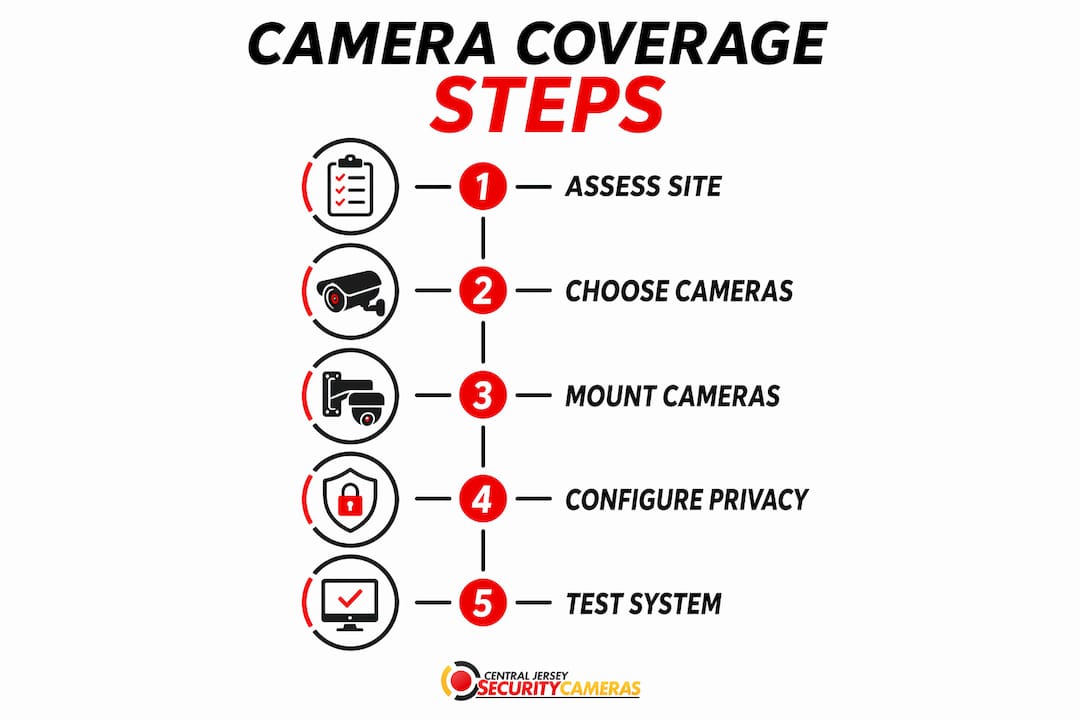
A site assessment is the correct first step, not a trip to a camera retailer. Walk your property and identify every entrance, traffic path, and blind spot before selecting any equipment. Different positions serve different goals: face identification, vehicle approach monitoring, or wide-area context. A single camera trying to do all three will fail at all three.
Once you know your coverage zones, match camera types to each location:
| Camera type | Best use case | Key feature |
|---|---|---|
| Bullet camera | Long driveways, parking areas | Narrow field of view, long range |
| Dome camera | Entryways, covered porches | Wide field of view, tamper-resistant |
| Doorbell camera | Front door | Two-way audio, visitor detection |
| PTZ camera | Large rear yards | Pan, tilt, zoom for active monitoring |
| License plate camera | Garage or driveway approach | High contrast, narrow focus |
Night vision and 1080p HD resolution are sufficient for most townhouse outdoor cameras. Higher resolutions like 2K or 4K add value at driveways and parking areas where license plate detail matters, but they are unnecessary for a standard front-door setup.
Pro Tip: Avoid relying on a single wide-angle camera to cover a large area. Wide-angle lenses distort edges and reduce the facial detail you need for identification. Use two cameras with narrower fields of view instead, positioned to overlap at the center of the zone.
Consider your NVR (network video recorder) capacity when planning. Each camera feeds footage to the recorder, and storage fills faster at higher resolutions. A professional installer can size your NVR correctly from the start, which saves you from upgrading it six months later.
What mistakes should you avoid with townhouse camera systems?
The most common mistake is skipping the HOA check. Installing a camera on a shared fence or common area wall without written approval can result in forced removal, fines, or neighbor disputes that outlast the camera itself. Get approval in writing before you drill a single hole.
The second most common mistake is poor mounting height. Cameras mounted too low get tampered with or redirected. Cameras mounted too high lose the facial detail that makes footage useful to law enforcement. The 8–10 foot sweet spot applies to nearly every outdoor camera on a townhouse.
Avoid these specific errors to keep your system working long-term:
- Skipping HOA approval: Always get written permission for cameras on shared or common property
- Mounting outside the 8–10 foot range: Too high loses face detail; too low invites tampering
- Ignoring privacy zone configuration: Set zones before activating analytics, not after
- Relying on one wide-angle camera: Layered coverage from two angles always outperforms a single wide shot
- Neglecting firmware updates: Outdated firmware creates security vulnerabilities in IP camera systems
Pair cameras with motion sensors or alarm systems for a faster response. A camera records what happened. A sensor triggers an alert while it is still happening. The combination gives you both documentation and deterrence, which is the actual goal of any home surveillance solution.
Key Takeaways
Effective townhouse surveillance requires 2–8 well-placed cameras at key entry points, configured with privacy zones, and approved by your HOA before installation.
| Point | Details |
|---|---|
| Camera quantity | Most townhouses need 2–4 cameras; larger units need up to 6–8 for full coverage. |
| Mounting height | Install cameras at 8–10 feet, angled downward, for clear face identification and tamper resistance. |
| Privacy zones | Configure privacy zones before activating analytics to protect neighbors and comply with local law. |
| HOA approval | Get written HOA approval before mounting cameras on shared walls, fences, or common areas. |
| Layered coverage | Use two cameras with overlapping angles at key zones rather than one wide-angle camera. |
What I’ve learned from townhouse camera installs
Working on townhouse surveillance setups has taught me one thing above everything else: homeowners consistently overestimate what a single wide-angle camera can do. They buy one camera with a 180-degree lens, mount it at the front corner of the unit, and assume it covers everything. It does not. Wide-angle footage distorts faces at the edges and gives you context without identification. That is the opposite of what you need when something actually happens.
The other pattern I see constantly is homeowners who install cameras first and ask HOA questions later. That sequence creates real problems. I have seen cameras removed by HOA management weeks after installation because the homeowner did not get prior approval. The cost is not just the removal. It is the wasted installation labor and the gap in coverage while the dispute gets resolved.
What actually works is starting with a site walk, not a shopping cart. Identify your three highest-risk entry points. Cover each one with a dedicated camera at the right height. Add privacy zones before you activate anything. Then talk to your HOA with a written plan in hand. That sequence produces a system that works legally, practically, and long-term.
Modern features like motion-triggered alerts and remote monitoring from your phone add real value, but they do not fix a bad placement plan. Get the placement right first. The features are secondary.
— Tom
Professional townhouse camera installation in Central New Jersey
Getting camera placement right in a townhouse takes more than reading a guide. It takes eyes on the property, knowledge of local HOA norms, and experience with the specific constraints of shared-wall construction.
Central Jersey Security Cameras designs and installs custom CCTV systems for townhouses throughout Central New Jersey, including Ocean County, Monmouth County, Middlesex County, and Mercer County. Every installation starts with a site assessment to map entry points, identify blind spots, and select the right camera types for each location. The team handles privacy zone configuration, NVR sizing, and remote monitoring setup so your system works correctly from day one. Explore the best CCTV cameras for NJ homes or review the home security buying guide to start planning your townhouse coverage.
FAQ
How many cameras does a typical townhouse need?
Most townhouses need 2–4 cameras to cover the front door, backyard, side gates, and parking. Larger or multi-level units may need 6–8 cameras for complete coverage.
What is the best height to mount outdoor security cameras?
The recommended mounting height is 8–10 feet, angled downward. This height captures clear facial detail while keeping cameras out of easy reach for tampering.
Do I need HOA approval to install security cameras on my townhouse?
HOA rules typically require written approval before you install cameras on shared walls, fences, or common areas. Check your HOA agreement and get approval in writing before installation.
What are privacy zones and why do they matter for townhouse cameras?
Privacy zones are configurable masks that block specific portions of a camera’s view, such as a neighbor’s window or yard. Tools like Arlo and Alarm.com support up to 3 privacy zones per camera to prevent legal disputes and comply with privacy laws.
Is 1080p resolution good enough for townhouse outdoor cameras?
Yes. Night vision and 1080p HD resolution are sufficient for most townhouse outdoor cameras. Upgrade to 2K or 4K only at driveways or parking areas where license plate detail is a priority.