

Workplace video surveillance, formally known as closed-circuit television or CCTV, is the most direct tool employers have for protecting staff from physical threats, misconduct, and false accusations. The role of CCTV in employee safety extends well beyond recording incidents after the fact. A properly designed system deters unsafe behavior before it escalates, provides objective evidence when disputes arise, and supports compliance with OSHA and workplace safety standards. For HR professionals and employers managing risk across warehouses, offices, retail floors, and industrial sites, understanding how to deploy surveillance effectively is no longer optional.
How does CCTV deter workplace hazards, misconduct, and violence?
The deterrent effect of CCTV is its most immediate benefit. Visible cameras signal to everyone on site that behavior is being observed. That signal alone changes how people act.
CCTV acts as an objective third eye in the workplace, deterring antisocial behavior and protecting employees from false accusations. This matters most in customer-facing roles, where staff face the highest exposure to verbal abuse, threats, and physical confrontation. When employees know cameras are present, incidents of harassment and aggression drop measurably.
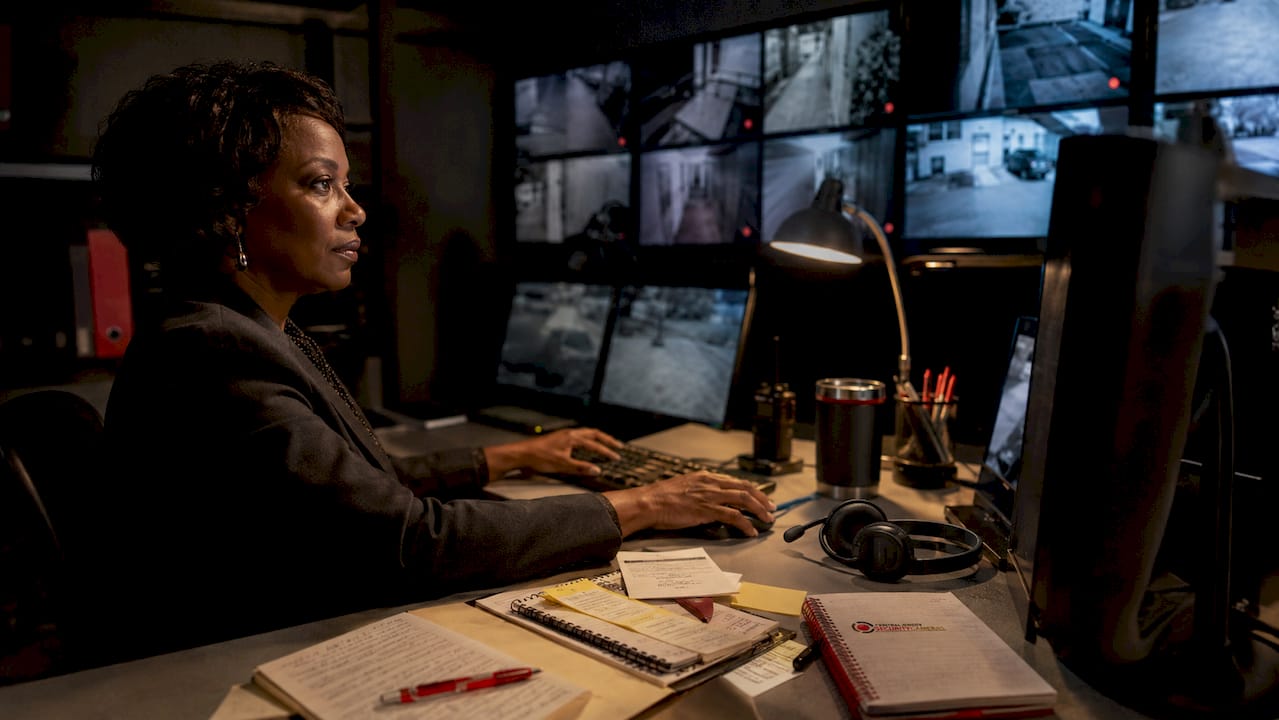
Surveillance also reinforces safety protocol compliance. Workers in warehouses and manufacturing facilities are more likely to wear PPE and follow posted procedures when they know their actions are recorded. CCTV enhances compliance with safety regulations by documenting PPE usage and flagging unsafe practices before accidents occur.
The deterrent effect extends to internal conduct as well. CCTV promotes a culture of accountability, reducing inappropriate behavior and supporting a more respectful workplace environment. Bullying, harassment, and theft all decline when employees understand that footage exists.
Key deterrence benefits include:
- Reduced theft and fraud in cash handling and stockroom areas
- Lower rates of workplace violence in high-traffic and customer-facing zones
- Improved PPE adherence in regulated industrial environments
- Fewer incidents of bullying and harassment between staff members
- Greater confidence for lone workers during isolated or after-hours shifts
Pro Tip: Place cameras at eye level near entry points and break rooms, not just at ceiling height. Eye-level placement makes the deterrent effect more immediate and visible to anyone entering the space.
How does CCTV support incident investigation and legal protection?
When an incident does occur, timestamped footage becomes the most reliable form of evidence available. It removes ambiguity from he-said/she-said disputes and gives HR teams a factual foundation for every investigation.
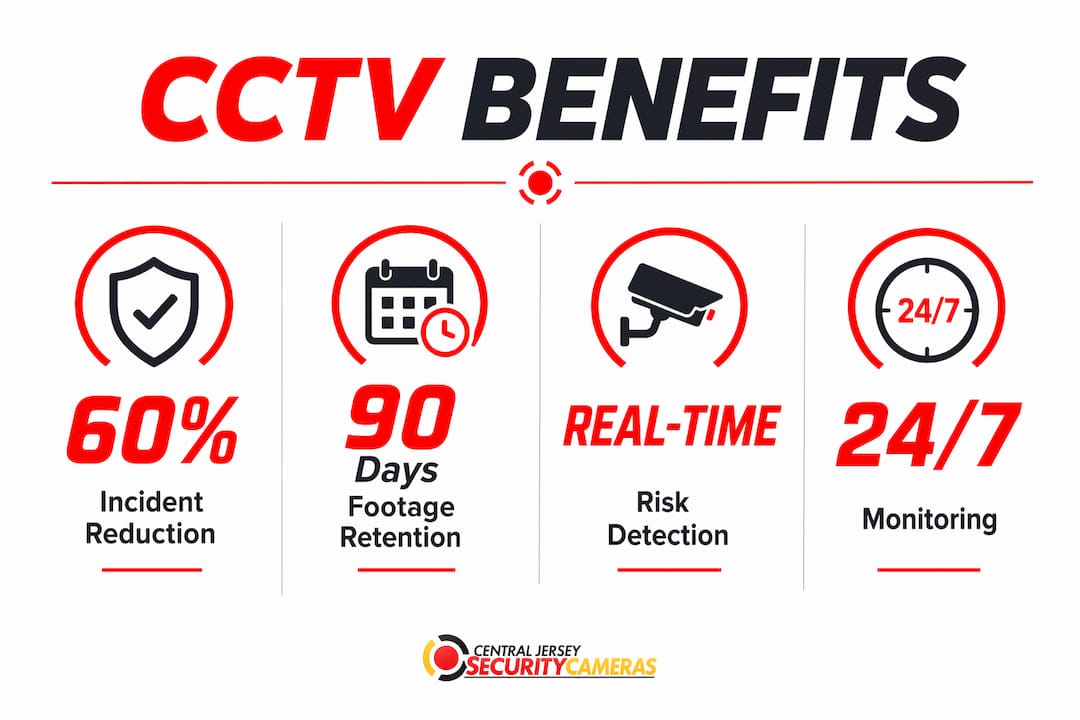
Clear, timestamped footage reduces costly workplace injury claims by helping determine liability accurately. This protects both the employer and the employee. A worker with a legitimate injury claim gets faster resolution. An employer facing a fraudulent claim has documented proof to contest it.
The investigation process itself becomes faster and more defensible when footage is available. Legal and compliance teams can pull recordings during audits, regulatory inspections, or litigation. This is especially valuable under OSHA recordkeeping requirements, where documentation of incident circumstances directly affects how cases are classified and resolved.
A structured approach to using CCTV footage in investigations:
- Preserve footage immediately after any reported incident, before automatic overwrite cycles delete the recording.
- Document the timestamp and camera ID for every clip used in an investigation to maintain chain of custody.
- Limit access to footage to designated HR personnel and legal counsel to protect employee privacy and evidentiary integrity.
- Cross-reference footage with incident reports to identify discrepancies or confirm reported facts.
- Store archived clips securely with access logs, especially for cases that may proceed to litigation or workers’ compensation hearings.
Pro Tip: Set your NVR or cloud storage retention policy to a minimum of 90 days for any area where injury or misconduct incidents are likely. Standard 30-day loops are often too short when legal timelines are involved.
How can modern CCTV systems proactively enhance employee safety?
The shift in 2026 is toward AI-enabled proactive video surveillance that flags early risk indicators rather than only recording incidents after they happen. This changes CCTV from a passive recorder into an active safety tool.
Modern AI-driven video analytics transform CCTV into a proactive sensor network that detects risks in real time. Algorithms can identify loitering near restricted zones, detect aggressive body language, flag unauthorized after-hours access, and alert security staff before a situation escalates. The practical result is faster response times and fewer incidents that reach the point of injury or confrontation.
Integration of CCTV with access control and alarms enhances the speed and accuracy of responses to emerging workplace risks. When a camera detects motion in a restricted area, an integrated system can simultaneously trigger an alarm, lock a door, and notify a supervisor. That coordinated response is impossible with cameras operating in isolation.
AI analytics also support pattern recognition over time. Reviewing near-miss footage, for example, reveals recurring hazards that training or infrastructure changes can address. CCTV footage helps identify root causes of near-misses, enabling proactive safety improvements based on the Safety Triangle theory, which holds that addressing near-misses prevents serious injuries.
| AI Feature | Safety Application | Benefit |
|---|---|---|
| Loitering detection | Restricted zones, parking lots | Early alert before threats escalate |
| Aggression recognition | Customer-facing areas, break rooms | Faster staff intervention |
| PPE compliance monitoring | Warehouses, industrial floors | Reduced regulatory violations |
| After-hours access alerts | Entry points, server rooms | Unauthorized access prevention |
| Near-miss pattern analysis | High-risk work areas | Proactive training and infrastructure fixes |
Alert overload is a common failure in CCTV systems. Success depends on fine-tuning detection thresholds and focusing alerts on exceptions that genuinely require a response. A system generating hundreds of false positives per day trains staff to ignore notifications, which defeats the purpose entirely.
What specialized CCTV considerations apply for high-risk workplaces?
Standard office cameras are not built for industrial environments. Factories, chemical plants, and warehouses expose equipment to heat, dust, moisture, and corrosive gases that destroy consumer-grade hardware within months.
Industrial CCTV cameras are built to withstand extreme conditions, including high temperatures, airborne particulates, and toxic environments. IP66 and IP67 ratings indicate dust-tight and waterproof enclosures. ATEX-certified cameras are required in explosive atmospheres, such as chemical storage areas or grain handling facilities. Deploying the wrong camera type in these environments is not just a hardware failure. It is a compliance failure.
Monitoring in hazardous zones also requires wide-angle coverage and low-light capability. Workers in these areas often operate during night shifts or in poorly lit sections of a facility. PTZ cameras with thermal imaging or infrared capability provide coverage that standard fixed cameras cannot.
| Environment | Camera Requirement | Regulatory Standard |
|---|---|---|
| Chemical plant | ATEX-certified, corrosion-resistant housing | OSHA 29 CFR 1910.119 |
| Warehouse | Wide-angle, low-light capable, IP66 rated | OSHA general industry standards |
| Food processing | Stainless steel housing, washdown rated | FDA facility requirements |
| Outdoor industrial | Vandal-resistant, weatherproof, IR capable | NEMA 4X enclosure standard |
CCTV in parking lots and exterior areas significantly improves employee safety perceptions during arrival and departure. This is one of the most overlooked coverage gaps in workplace security planning. Employees are most vulnerable when transitioning between their vehicles and the building, especially during early morning or late-night shifts.
What are practical steps for employers and HR to implement CCTV effectively?
Effective implementation starts with a safety-focused site audit, not a camera catalog. Identify the locations where employees face the greatest risk before selecting any equipment.
A structured implementation process:
- Conduct a vulnerability assessment covering entry points, parking areas, lone worker zones, cash handling stations, and any area with a history of incidents.
- Prioritize night-capable cameras for exterior coverage, parking lots, and any area where staff work after dark. Infrared and low-light cameras are non-negotiable for these zones.
- Configure real-time alerts for high-risk areas rather than relying on post-incident review. Alerts tied to motion detection or access control events give security staff time to respond.
- Develop a written privacy policy that explains what is recorded, who can access footage, how long it is retained, and under what circumstances it will be reviewed. Share this with all employees before the system goes live.
- Communicate the purpose clearly to staff. Employees who understand that cameras exist to protect them, not to monitor productivity, are more likely to view the system as a benefit rather than a threat to their autonomy.
CCTV provides virtual companionship for lone workers, reducing anxiety during isolated shifts and improving psychological safety. Remote monitoring solutions that allow a supervisor to check in on a lone worker in real time address both the physical and mental dimensions of workplace safety. This is particularly relevant for night-shift security staff, warehouse workers, and field technicians operating alone.
Key Takeaways
CCTV improves employee safety by deterring threats, providing objective incident evidence, and enabling proactive risk detection through AI-driven analytics and system integration.
| Point | Details |
|---|---|
| Deterrence reduces incidents | Visible cameras lower rates of theft, harassment, and safety violations before incidents occur. |
| Timestamped footage protects everyone | Objective recordings resolve disputes, support injury claims, and defend against fraudulent accusations. |
| AI analytics shift CCTV from reactive to proactive | Real-time detection of loitering, aggression, and PPE violations enables faster intervention. |
| Industrial environments need specialized hardware | ATEX-certified and IP-rated cameras are required for compliance and reliability in hazardous zones. |
| Implementation requires policy, not just hardware | Privacy policies, alert protocols, and employee communication determine whether a system actually works. |
What I’ve learned about CCTV and employee safety after years in the field
Most employers install cameras and consider the job done. That is the single biggest mistake I see. A camera that nobody monitors in real time, with footage stored on a 14-day loop and no alert configuration, is not a safety system. It is a recording device that gets reviewed after something goes wrong.
The employers who get the most value from surveillance treat it as a living system. They review near-miss footage regularly, not just incident footage. They adjust camera angles when workflows change. They integrate their cameras with access control so that a door alarm and a camera alert arrive at the same time, in the same dashboard. That integration is what separates a reactive recording setup from a genuine safety infrastructure.
The privacy concern is real and worth taking seriously. Employees who feel surveilled without explanation become less trusting and less engaged. The fix is straightforward: tell people why the cameras are there, what gets recorded, and who can see it. Transparency does not reduce the deterrent effect. It actually increases employee buy-in because staff understand the system is protecting them, not tracking them.
The long-term value of proactive monitoring far exceeds the cost of any camera system. One prevented workers’ compensation claim, one resolved harassment dispute, one avoided OSHA citation. Any one of those outcomes pays for a professionally installed system many times over.
— Tom
Workplace safety starts with the right surveillance system
Central Jersey Security Cameras designs and installs CCTV systems built specifically for employee protection across offices, warehouses, retail locations, and industrial facilities throughout Central New Jersey.

Every installation includes a site-specific camera placement plan, NVR configuration for appropriate footage retention, and options for AI-driven analytics and real-time alert integration. Whether you need commercial CCTV installation for a multi-site operation or a targeted upgrade to cover parking lots and lone worker areas, Central Jersey Security Cameras builds systems that work the way your safety program requires. Explore the best CCTV cameras for your workplace or contact us to schedule a security consultation.
FAQ
What is the primary role of CCTV in employee safety?
CCTV deters workplace threats, provides objective evidence during incident investigations, and supports real-time monitoring of hazardous areas. It protects employees from physical harm, false accusations, and unsafe working conditions.
Does CCTV actually reduce workplace incidents?
Yes. Visible surveillance reduces theft, harassment, and safety violations by creating accountability. AI-driven systems go further by detecting risks in real time and alerting staff before incidents escalate.
How long should workplace CCTV footage be retained?
A minimum of 90 days is recommended for areas with elevated risk of injury or misconduct. Standard 30-day retention cycles are often too short when workers’ compensation or legal proceedings are involved.
Are special cameras required for industrial workplaces?
Industrial environments require IP66-rated or higher cameras for dust and moisture resistance, and ATEX-certified cameras in explosive atmospheres. Standard commercial cameras fail quickly under these conditions and may not meet OSHA compliance requirements.
How should employers communicate CCTV use to employees?
Employers should provide a written policy explaining what is recorded, who accesses footage, retention periods, and the purpose of surveillance. Clear communication increases employee trust and reduces privacy concerns without diminishing the deterrent effect.