
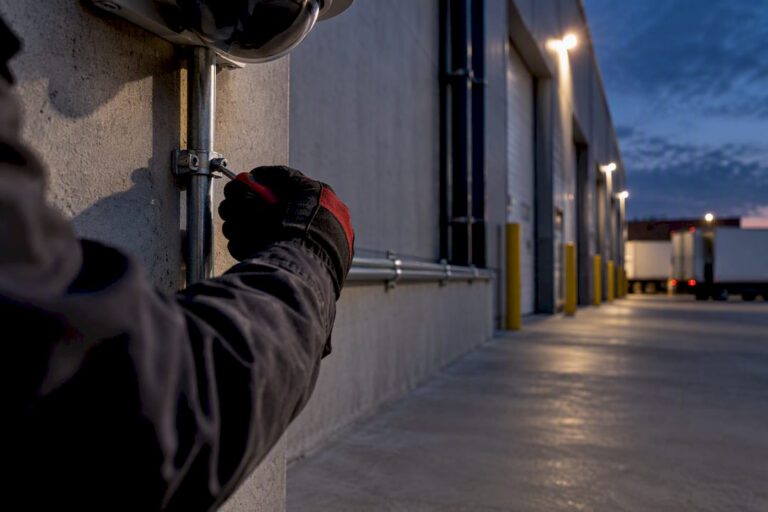
Vandal-resistant cameras pair an impact-rated housing (typically IK08 to IK10 under IEC 62262) with a system designed so cutting a cable or smashing the dome doesn’t kill your footage. They earn their name from steel or polycarbonate shells, tamper alerts, and backup power working together. If your camera sits within arm’s reach of the public, in a stairwell, parking deck, or storefront known for trouble, this category is worth the extra cost over a standard dome.
TL;DR:
- IK10 impact ratings protect cameras against roughly 50 joules of force, but they do not guarantee resistance to repeated impacts or prying attempts.
- Housing materials like steel or cast aluminum outperform plastic in high-abuse environments, with recessed lenses reducing exposure to direct strikes.
- Protecting cables and power supplies with concealed conduit, UPS backup, and locked recorders is essential to prevent footage loss during vandalism.
- Cybersecurity measures such as strong credentials, multi-factor authentication, and firmware updates are critical to prevent hacking, regardless of impact resistance.
- Installation context matters; choosing the correct impact and weather ratings, along with strategic housing and mounting methods, ensures effective vandal protection.
Table of Contents
- What Do IK and IP Ratings Actually Mean?
- Which Physical Features Actually Resist Vandalism?
- How Do You Protect the Wiring, Power, and Recorder?
- Does Cybersecurity Matter as Much as the Housing?
- How Do You Choose the Right System and Installer?
- What Do Installers Get Wrong on Vandal-Prone Sites?
- Ready for a Vandal-Resistant Camera System Installed Right?
- Sources
- FAQ
What Do IK and IP Ratings Actually Mean?
IK ratings measure how much blunt force an enclosure survives before cracking or losing function. The scale runs from IK00 (no protection) up to IK10, and the numbers refer to joules of impact energy a housing must absorb under IEC 62262 testing. An IK08 rating means the housing can take a 5-joule hit, roughly a solid kick or a swing from a small hand tool. IK10 jumps to 50 joules, closer to a direct strike from a hammer or a thrown brick, and it’s the rating you’ll see quoted on most cameras marketed as vandal proof.
IP ratings cover a different threat entirely: dust and water. IP66 means the housing resists powerful water jets and is fully dust tight; IP67 adds temporary submersion resistance. Neither rating tells you anything about impact resistance, which is why serious outdoor cameras list both numbers side by side, such as a unit rated IK10 alongside IP66 or IP67.
Here’s the part vendors gloss over: these ratings only test specific attacks under lab conditions.
- IK ratings measure a single blunt impact, not repeated blows or prying.
- IP ratings ignore mechanical tampering entirely.
- Neither standard accounts for someone spraying paint over the lens or yanking the whole unit off its bracket.
A high IK code is a good baseline, not a guarantee against every method a determined vandal might try.
Which Physical Features Actually Resist Vandalism?
The housing material sets the ceiling for durability. Cast aluminum or steel shells outperform plastic composites under sustained abuse, and a thick polycarbonate dome flexes and absorbs energy where glass simply shatters. Camera lenses set flush or recessed into the housing give an attacker less to grab and less surface area to strike directly.
Fasteners matter more than most buyers realize. Standard Phillips-head screws take about ten seconds to remove with a pocket screwdriver. Tamper-resistant fasteners, security torx heads, or captive screws that require a specific tool slow that down considerably, and housings with no exposed lip or seam eliminate an easy prying point.
- Steel or cast-aluminum housings outlast polycarbonate-only builds in high-abuse locations.
- Recessed lens designs reduce direct-strike exposure.
- Tamper-resistant or captive screws stop quick removal with common tools.
- Anti-ligature housings, no external cabling, and no exposed edges matter in correctional or behavioral health settings.
Mounting style changes the math too. A flush ceiling mount or a recessed corner mount gives a vandal almost no leverage to pull or twist the camera loose, while a pendant-style mount hanging on an arm is easier to grab and torque, even with a rugged housing on top.
Pro Tip: Check for a dome with a built in anti-lever ridge or a mounting base without an accessible seam. This single design detail stops the “screwdriver in the gap” trick that defeats plenty of otherwise sturdy domes.
How Do You Protect the Wiring, Power, and Recorder?
A vandal doesn’t need to touch the camera at all if the cable running to it sits exposed. Protecting the whole signal chain matters as much as the housing itself, and it comes down to three areas.
- Cable and conduit. Run cabling through concealed conduit wherever possible, and step up to rigid steel conduit in high-risk zones like loading docks or public stairwells. Tamper-resistant junction boxes stop someone from opening a splice point and cutting wires from inside a box that looks locked but isn’t.
- Power redundancy. PoE (Power over Ethernet) simplifies wiring, but pairing it with a UPS or local battery backup keeps cameras recording through a cut power line or a tripped breaker, which is one of the more common ways footage disappears right when you need it most.
- Recorder protection. The NVR itself needs to sit in a locked enclosure, ideally out of public reach entirely. Off-site or cloud backup of recorded footage, combined with a segmented network so the camera system isn’t sitting on the same subnet as office computers, keeps evidence intact even if someone finds and disables the recorder.
Skip any one of these three and a rugged camera housing becomes a much smaller obstacle than it looks.
Does Cybersecurity Matter as Much as the Housing?
A steel enclosure won’t help if the camera’s login credentials are still set to the factory default. Weak account security defeats a well-built system just as effectively as a hammer, and the fix is largely procedural, not hardware.
- Use unique, strong credentials for every camera and NVR login, never the factory default.
- Turn on multi-factor authentication wherever the platform supports it.
- Limit user roles so installers, staff, and admins each get only the access they need.
- Keep firmware current, since vendors regularly patch vulnerabilities that go unnoticed until exploited.
NIST’s guidance on IoT device security recommends trusted network onboarding and unique device credentials specifically because generic, shared logins are one of the most common ways connected devices get compromised. Pairing that with VLAN segmentation and port security on managed switches stops a compromised camera from becoming a doorway into the rest of a business network.
The FTC’s 2023 enforcement action against Ring is the cautionary tale worth knowing here. Investigators found that weak internal access controls let employees and, in some cases, outside attackers view customer video feeds without authorization, a failure that had nothing to do with camera housing strength and everything to do with account and employee-access policy. Storage choice plays into this too: local encrypted storage keeps footage off third-party servers entirely, while cloud storage adds convenience but shifts trust onto the provider’s own security practices.
How Do You Choose the Right System and Installer?
Start with the environment, not the spec sheet. A camera facing a public sidewalk needs a different rating profile than one mounted 20 feet up under an eave. Run through this checklist before buying anything:
- Minimum IK rating for the location (IK08 for moderate risk, IK10 for high-traffic public areas).
- IP66 or IP67 weather rating for anything outdoors.
- Housing material and fastener type, not just the impact number on the box.
- Mounting approach: flush or recessed wherever leverage is a concern.
- Cybersecurity features: MFA support, firmware update history, local role controls.
- Warranty length and what it actually covers, including labor if the unit needs replacement.
Cost varies widely depending on scope. A single DIY vandal dome typically runs from under $100 to a few hundred dollars for the camera alone, with no labor, no conduit work, and no recorder hardening included. A professionally installed multi-camera system costs more upfront because it factors in concealed wiring, a properly secured recorder, and a site survey that accounts for blind spots and mounting height, the details that actually determine whether footage survives an incident.
Pro Tip: Ask any installer for a written mounting plan before signing anything. If they can’t tell you where cable runs will be concealed or how the recorder will be secured, that’s a sign they’re selling hardware, not a system.
Red flags to watch for: no site visit before a quote, vague answers about cable routing, and no service or warranty plan covering future repairs.
What Do Installers Get Wrong on Vandal-Prone Sites?
The biggest failures seen on service calls almost never involve the camera housing cracking. More often, someone cut an exposed cable run near ground level, or a pendant mount got yanked because it was installed for looks instead of resistance to leverage. A rugged IK10 dome mounted on an easily grabbed arm is still a soft target.
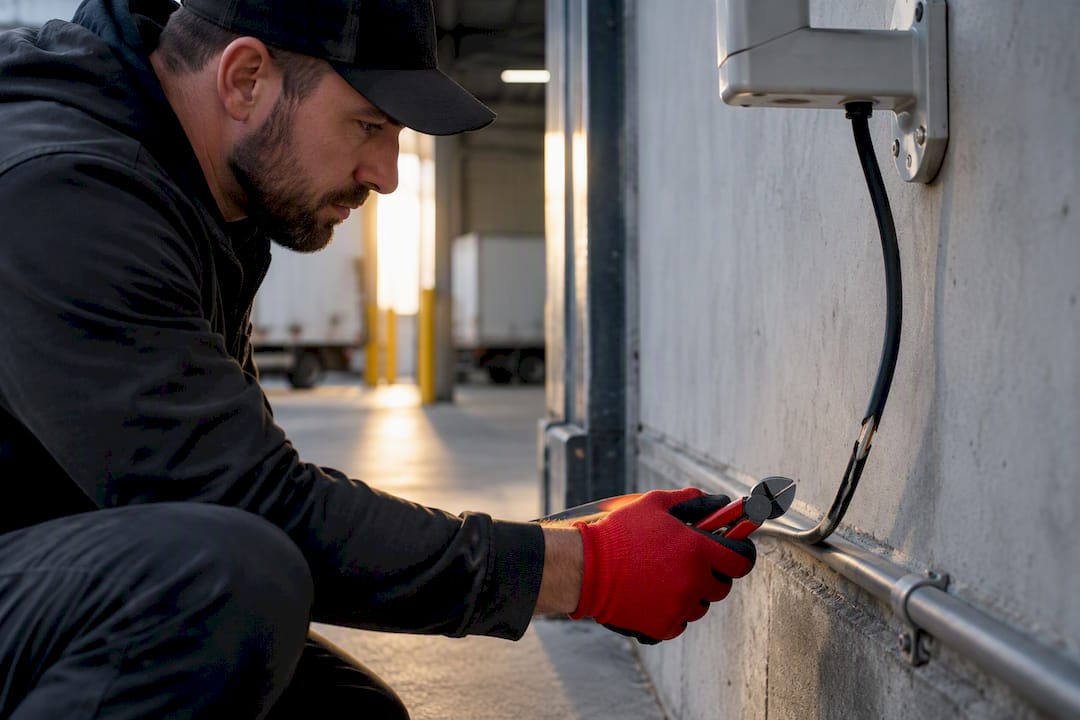
The mistake customers make most is buying based on the IK number alone and skipping the system-level questions: where does the wire run, how is the recorder locked down, is there battery backup if someone cuts power at the panel. A camera that survives a direct hit but goes dark the moment its cable gets clipped hasn’t solved the problem it was bought to solve.
Getting this right takes matching housing choice to mounting position, then protecting everything behind the lens with the same seriousness.
— Tom
Ready for a Vandal-Resistant Camera System Installed Right?
Reading the spec sheet only gets you halfway there. A well-designed system chooses the right IK and IP rating for each mounting point, conceals conduit so cable runs aren’t an easy target, locks down the recorder, and sets up power backup so a cut line doesn’t kill your footage during the exact incident you needed recorded.

A one-time installation fee starting around $99 covers professional setup on most jobs, and every project starts with a free on-site evaluation so we can spot the blind spots and leverage points a spec sheet won’t show you. Businesses looking for ongoing protection can pair a camera system with our commercial security installation and repair services, while homeowners can add monitored alarm services from $24.95 to $29.95 per month for round-the-clock coverage. Request a quote today and we’ll walk your property before we recommend a single camera.
Sources
- Degrees of protection provided by enclosures for electrical equipment against external mechanical impacts (IK code) — IEC 62262
- NIST Special Publication 800-213A: IoT Device Cybersecurity Guidance for the Federal Government
- FTC consumer alert: Ring’s privacy failures led to spying and harassment through home security cameras
- Vandal-proof security cameras — Pelco
- WV-S25500-F3L 5MP Vandal Resistant Outdoor Dome Network Camera — i-PRO product brief
FAQ
What Is a Vandal-Resistant Camera?
A vandal-resistant camera is a security camera built with an impact-rated housing, usually rated IK08 or IK10 under IEC 62262, along with tamper-aware mounting and cabling that keeps it recording after a deliberate attack. The rating alone isn’t the whole story; how the cable, power, and recorder are protected matters just as much.
Do Fake Security Cameras Deter Thieves?
Dummy cameras can discourage casual opportunists who don’t look closely, but anyone familiar with real hardware usually spots the difference in seconds, from a missing status light to an unrealistic mounting height. Deliberate vandals and repeat offenders, the people vandal-resistant cameras are built for, are far less likely to be fooled by a decoy.
What Does Vandal Resistant Mean in Practice?
It means the camera housing and its mounting are built to withstand deliberate physical attacks like strikes, prying, and forced removal, not just accidental bumps. A camera earns the label through IK-rated construction, tamper-resistant fasteners, and a mounting position that limits leverage, not marketing language alone.
Why Are People Getting Rid of Ring Cameras?
Some homeowners moved away from consumer cloud cameras after the FTC’s 2023 enforcement action against Ring exposed weak employee access controls that let unauthorized parties view private footage. That case pushed many buyers toward systems with local encrypted storage, stronger account controls, and clearer data-access policies.
How Much Does a Vandal-Resistant Camera Cost?
A single DIY vandal dome typically runs under a few hundred dollars for the hardware alone, without labor or wiring work. Professionally installed systems through Central Jersey Security Cameras start with a one-time installation fee around $99, which covers proper mounting, concealed cabling, and recorder setup.