
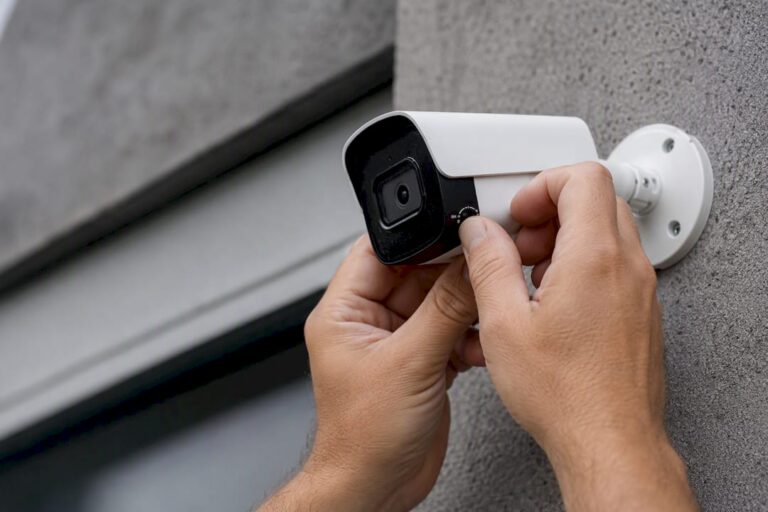
Yes, workplace cameras are legal in New Jersey, but the rules split sharply along one line: video and audio. Video-only surveillance in common work areas is generally lawful because employees don’t have a reasonable expectation of privacy there. Audio is where employers get burned. Recording sound without proper consent can trigger criminal charges and civil lawsuits under the state’s wiretapping statute, so the safest systems stay video-only, get documented in writing, and follow New Jersey’s specific notice rules for vehicle tracking.
TL;DR:
- Cameras in public work areas like lobbies, hallways, and outside perimeters are generally legal, but hidden cameras in private spaces like restrooms or lockers are prohibited.
- Recording audio without explicit consent exposes employers to criminal and civil liability, especially since most commercial cameras ship with audio enabled by default, making audits essential.
- Employers must provide written notice when installing vehicle tracking devices, and a comprehensive written policy covering camera purpose, footage retention, and access is recommended for all monitoring.
- Surveillance that interferes with employee organizing or targets break rooms during sensitive conversations can be considered unlawfully intrusive under labor laws and may trigger NLRB scrutiny.
- Proper footage management requires a defined retention schedule, restricted access, encryption, and immediate documentation if a data breach occurs to prevent liability under privacy laws.
Table of Contents
- Where Can Employers Put Cameras Under NJ Workplace Camera Laws?
- Does New Jersey Require Consent to Record Audio at Work?
- What Notice and Policy Rules Apply to Workplace Monitoring?
- How Should Employers Handle Footage, Retention, and NJDPA Rules?
- A Compliance Checklist for New Jersey Employers
- How Central Jersey Security Cameras Approaches Privacy-Aware Installs
- Get a Privacy-Aware Camera System Built for Your New Jersey Business
- Sources
Where Can Employers Put Cameras Under NJ Workplace Camera Laws?
The entire legal framework hinges on a phrase courts use constantly: “reasonable expectation of privacy.” If a judge believes a reasonable person would expect privacy in a given space, a camera pointed at it is a problem, no matter how good the intentions behind it are. New Jersey doesn’t have one tidy statute that governs workplace video specifically. Instead, courts blend wiretapping law, voyeurism statutes, and general privacy principles to figure out whether a camera placement crosses the line, according to RecordingLaw’s breakdown of New Jersey surveillance rules.
In practice, that test sorts most workplaces into two clear buckets.
Lawful in most cases:
- Lobbies, entryways, and hallways
- Warehouse floors, production lines, and loading docks
- Retail sales floors and checkout areas
- Parking lots and exterior perimeters
- Break rooms with clear signage (though this one deserves caution, covered below)
Prohibited, essentially without exception:
- Restrooms
- Locker rooms and changing areas
- Lactation rooms
- Any space where employees change clothes or reasonably expect solitude
The gray zone is where employers actually get into trouble. A closed private office might feel like fair game, but if an employee has an implicit or explicit understanding that the space is theirs, a hidden camera there invites a lawsuit. Break rooms sit in a similar spot. Signage helps establish notice, but it doesn’t override the underlying privacy expectation. As RecordingLaw notes, a sign on the wall can’t legalize a camera in a restroom, because the location itself carries an objective privacy expectation that no disclaimer erases.
Covert cameras raise the compliance bar even higher. Hidden surveillance can survive a legal challenge, but only when there’s a documented, specific business justification and the target area carries no reasonable expectation of privacy. Skip the documentation, and you’ve built yourself a lawsuit.
Does New Jersey Require Consent to Record Audio at Work?
Video and audio are governed by completely different rules, and this is where most employers get tripped up. New Jersey is a one-party consent state under its wiretapping statute, N.J.S.A. 2A:156A-1 et seq. That means at least one participant in a conversation must consent to it being recorded, but if no one in the room has agreed, capturing that audio can expose you to criminal charges and civil liability, according to the Reporters Committee’s guide to New Jersey recording law.
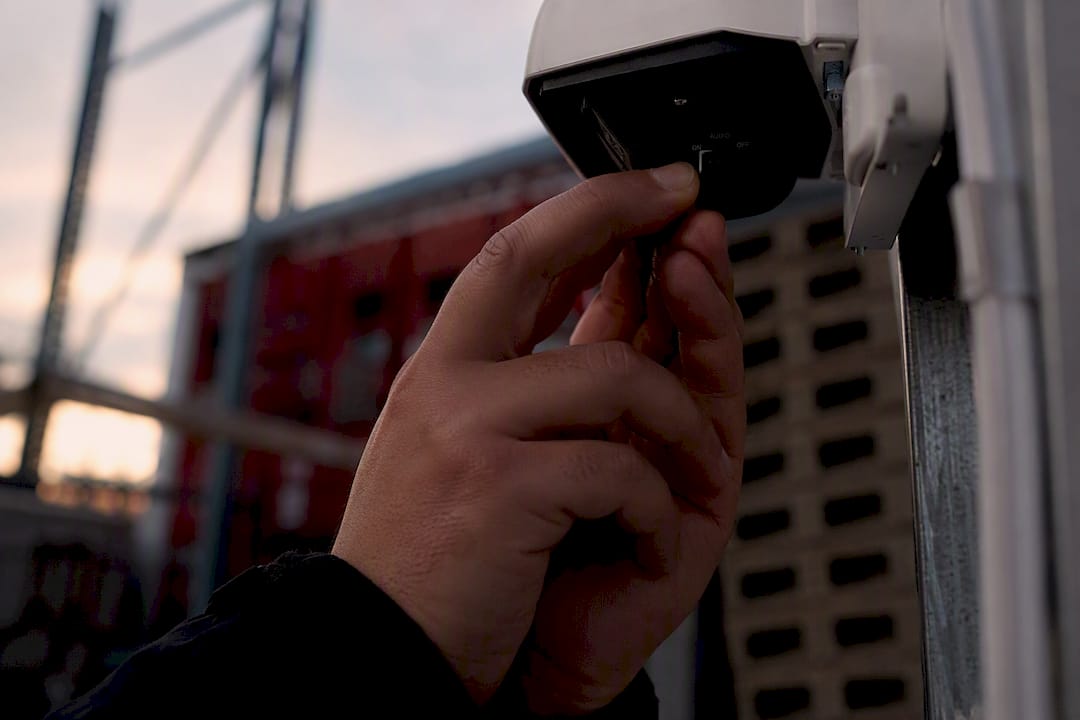
Here’s the trap for employers: plenty of modern security cameras ship with audio recording enabled by default. A camera installed purely for video monitoring can quietly become a wiretapping violation if its microphone is left active and nobody in the recorded conversation consented. Many businesses don’t even realize their system is capturing sound until a complaint or lawsuit surfaces.
Penalties aren’t theoretical. New Jersey treats unlawful interception as a crime, and the people recorded without consent can also sue for civil damages. For a business, that’s a costly way to learn a setting was left on by default. The fix is simple: audit every camera’s audio setting and disable it unless there’s a specific, documented, legally reviewed reason to keep it on.
What Notice and Policy Rules Apply to Workplace Monitoring?
New Jersey doesn’t leave notice requirements entirely to guesswork. For one specific category, vehicle tracking, the law is explicit. Under N.J.S.A. 34:6B-22, employers must provide written notice before installing GPS or tracking devices in vehicles their employees use, and failing to do so can result in civil fines, as outlined in Day Pitney’s employee privacy summary.
For general video monitoring, there’s no identical blanket notice statute, but skipping written policy is still a mistake. A defensible monitoring policy typically covers:
- The specific business purpose for each camera
- Which areas are covered and which are explicitly excluded
- How long footage is retained
- Who can access recordings and under what circumstances
- A signed employee acknowledgment confirming they’ve seen the policy
Pro Tip: Treat every camera’s audio and analytics settings as a legal decision, not a technical default. Configure new installs to video-only from day one, and require a documented sign-off before anyone turns audio or facial analytics on.
Labor law adds another layer employers often overlook. The National Labor Relations Board treats surveillance that tends to interfere with employees’ organizing or protected group activity as presumptively unlawful, per its General Counsel memo on electronic surveillance. Cameras aimed at break rooms during union conversations, or monitoring that ramps up right after employees start discussing workplace conditions, can draw NLRB scrutiny regardless of the camera’s stated purpose. On top of that, employees who report illegal surveillance are protected from retaliation under New Jersey’s Conscientious Employee Protection Act, so firing or demoting someone for flagging a rogue microphone is its own separate legal problem, according to RecordingLaw’s video surveillance guide.
How Should Employers Handle Footage, Retention, and NJDPA Rules?
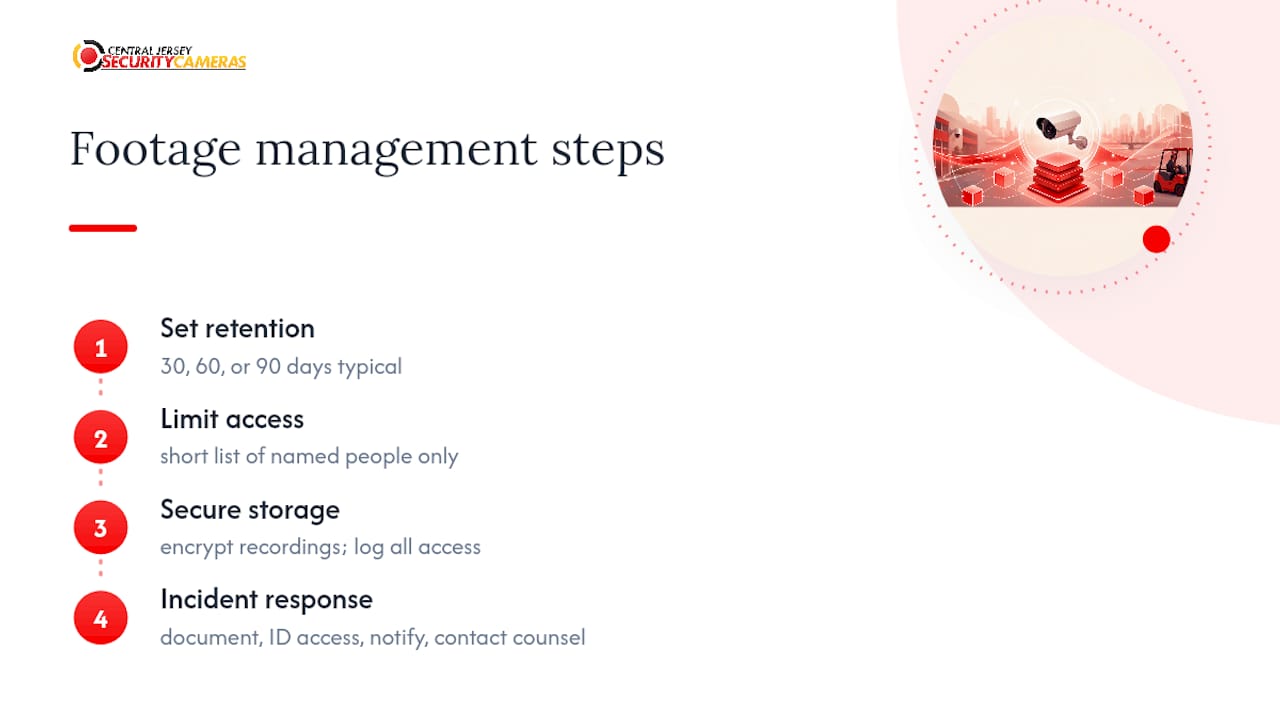
Footage isn’t just security material. It’s a data liability the moment it’s recorded, and treating it casually is how small mistakes turn into legal exposure. Set a defined retention schedule (30, 60, or 90 days is typical for most businesses), restrict access to a short list of named people, and store recordings behind encryption with logged access. If you can’t say exactly who touched a clip and when, you don’t have a real access control system.
The New Jersey Data Privacy Act intersects with camera footage in ways many employers haven’t considered. If a business qualifies as a covered controller under the NJDPA’s volume thresholds, footage used to identify specific individuals, especially through facial recognition or similar analytics, can shift from ordinary video into sensitive or biometric data territory. That reclassification brings tighter handling obligations, according to Central Jersey Security Cameras’ guide on CCTV and employee safety. Plain motion-triggered recording without identification analytics carries far less regulatory weight than a system running face-matching software.
If footage ever gets disclosed without authorization, don’t wait to act. Document what happened immediately, identify who accessed the footage and why, notify affected employees if personal data was exposed, and loop in legal counsel before making any public statement. A fast, documented response is often the difference between a contained incident and a drawn-out liability fight.
A Compliance Checklist for New Jersey Employers
Getting workplace surveillance right isn’t complicated once you break it into steps. Most legal exposure comes from skipping documentation, not from bad intentions.
- Complete a written privacy risk assessment for every camera position before installation, noting the specific business purpose.
- Default every camera to video-only and disable audio unless a documented, legally reviewed need exists.
- Avoid covert cameras unless there’s a specific justification and no reasonable expectation of privacy in that spot.
- Build a camera inventory with location, field of view, purpose, retention period, and who approved each deployment.
- Limit footage access to named roles, train supervisors on the policy, and schedule a compliance audit at least once a year.
| Risk Area | What to Document | Why It Matters |
|---|---|---|
| Camera placement | Business purpose per location | Defends against privacy claims |
| Audio settings | Written approval before enabling | Avoids wiretapping exposure |
| Retention | Fixed schedule and access log | Limits data exposure window |
| Vehicle tracking | Written employee notice | Required under N.J.S.A. 34:6B-22 |
A documented, camera-by-camera privacy risk assessment isn’t paperwork for paperwork’s sake. It’s the record you’ll want in hand if a placement ever gets challenged.
How Central Jersey Security Cameras Approaches Privacy-Aware Installs
We treat compliance as part of the installation, not an afterthought bolted on later. Every project starts with a site survey where we map camera placement against the same privacy factors covered here, flagging any spot that risks crossing into restrooms, changing areas, or other protected zones before equipment goes up.
Our default configuration is video-only. Audio stays off unless a client has a documented, specific reason to enable it, and we coordinate directly with HR or legal teams when a business wants that extra layer of sign-off on retention and access policy. It’s a straightforward way to keep a security investment from becoming a liability.
— Tom
Get a Privacy-Aware Camera System Built for Your New Jersey Business
Reading the rules is one thing. Installing a system that actually respects them is another, and that’s the gap Central Jersey Security Cameras closes for businesses across Ocean, Monmouth, Middlesex, Mercer, and Burlington counties. Instead of handing you a generic kit and a manual, we run a full site survey, map every camera position against New Jersey’s privacy rules, and configure each system video-only by default unless you have a specific, documented reason to change that.

Our installs come with a written camera inventory covering placement, purpose, and retention, so you have the documentation on hand if a placement is ever questioned. We build secure NVR and cloud storage setups with role-based access, and we’re glad to loop in your HR or legal team when you want their sign-off baked into the policy from the start. If you’re ready to put a compliant, professionally designed system in place, start with our home security camera installation services and get a site review scheduled for your property.
This article is general information, not a substitute for advice from a qualified lawyer. Consult a qualified legal professional about your own circumstances before acting on anything here.
Sources
- Reporters Committee — New Jersey recording laws (one-party consent)
- RecordingLaw — New Jersey surveillance camera laws
- NLRB — General Counsel memo on unlawful electronic surveillance
- Day Pitney Q&A on employee privacy in New Jersey (tracking and surveillance summary)