
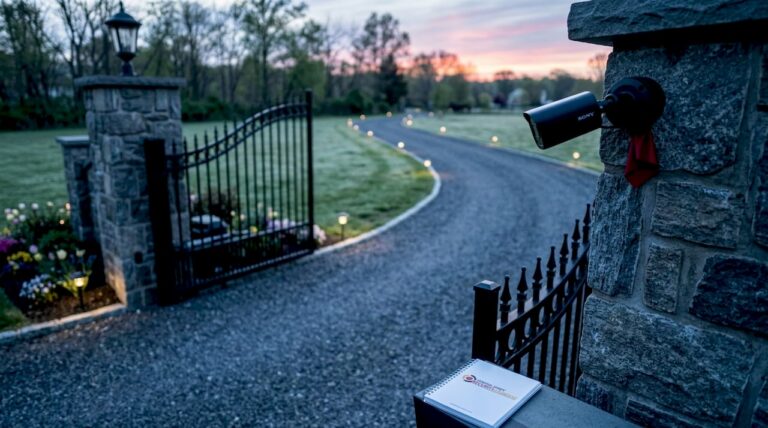
Security cameras for gated driveways are specialized CCTV surveillance devices installed at property entry points to monitor vehicle and pedestrian access, capture license plate and facial details, and deter criminal activity before it starts. Visible cameras deter roughly 60% of burglars and can reduce crime by up to 51% in monitored zones. That figure is not abstract. It means a properly equipped gate entrance is one of the most effective crime prevention tools a property owner can deploy. This guide covers the camera types, placement rules, and technology features that deliver real results for gated residential and commercial properties in 2026.
1. How to choose the best security cameras for gated driveways
Choosing the right camera starts with your driveway’s length and layout. A short suburban driveway has different demands than a long rural entry with a remote gate. Getting this match right determines whether your footage is useful evidence or a blurry image that helps no one.
Fixed bullet and varifocal cameras
Fixed cameras are the foundation of any gated entry system. A bullet camera mounted at the gate captures a consistent, unobstructed view of every vehicle and visitor. Varifocal cameras go further: you adjust the lens angle during installation to match the exact distance and width of your specific approach. For driveways longer than 50 feet, 4K resolution is the minimum standard for capturing reliable facial and license plate details. Lower resolution cameras produce footage that looks adequate on a monitor but fails under scrutiny.
Dedicated license plate recognition cameras
License plate recognition (LPR) cameras are purpose-built for entry points. They use a narrow field of view and high shutter speed to freeze plate characters even on moving vehicles. A standard wide-angle camera almost always misses plate details when a car is moving or the light is poor. LPR cameras solve that problem directly. They are not a luxury for gated properties. They are the difference between identifying a vehicle and guessing at partial characters.
Intercom cameras vs. dedicated CCTV cameras
Intercom cameras lack the resolution and field of view needed to capture license plates or clear facial features. Their job is communication, not evidence. Treating an intercom camera as your primary security device leaves a critical gap. Every gated entry needs at least one dedicated CCTV camera positioned independently of the intercom unit. The two systems serve different functions and should never be merged into one.
PTZ cameras as supplements
PTZ (pan-tilt-zoom) cameras can rotate, tilt, and zoom on demand. They are useful for scanning a wide property or tracking movement across a large area. Fixed cameras at gates are mandatory for consistent evidence capture. PTZ units supplement that coverage but cannot replace it. A PTZ camera that is panning away from the gate when a vehicle arrives captures nothing useful. Use PTZ cameras for overview and patrol, not as your primary gate camera.
Wireless vs. wired systems
Wired systems deliver the most reliable signal over long distances. For driveways under 150 feet with clear line of sight, a quality wireless IP camera system performs well. Wireless systems must maintain signal up to 500–1,000 feet without heavy obstructions to stay reliable. Metal gates, dense trees, and concrete walls all degrade wireless signals significantly. For long rural driveways, a wired NVR system or a 4G-connected camera is the more dependable choice.
Solar and 4G cameras for remote gates
Some gated driveways sit too far from the main structure to run cable economically. Solar or 4G-powered cameras solve that problem for remote or hard-to-wire locations. Solar cameras charge during daylight and store power for overnight operation. 4G cameras transmit footage over a cellular network, eliminating the need for a local Wi-Fi connection entirely. Both options require careful placement to maximize sun exposure or cellular signal strength.
Camera count by driveway type
Short driveways need 1–2 cameras, while long rural or gated properties need 2–4 cameras covering the gate, pedestrian access points, and vehicle waiting areas. That count is not arbitrary. Each zone has a different angle, distance, and lighting condition that a single camera cannot handle. A multi-camera setup eliminates blind spots that a single wide-angle camera always creates.
Pro Tip: Mount one camera to capture the driver’s face as they approach the intercom, and a second camera angled to capture the rear plate as they exit. Most systems only cover the front approach and miss the exit entirely.
2. Installation and placement best practices
Placement determines whether your cameras produce usable evidence or decorative footage. The most expensive camera in the wrong position fails. The right camera in the right position works every time.
-
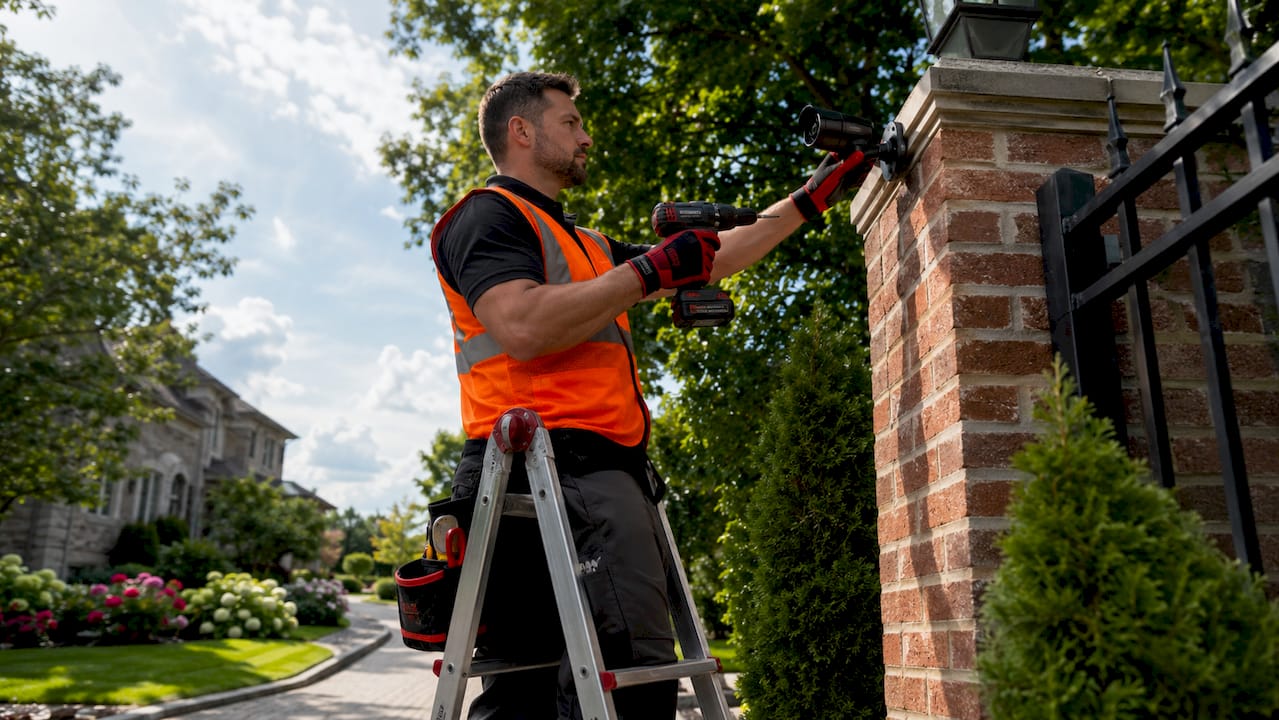
Mount cameras at 7–10 feet high. Mounting height of 7–10 feet captures faces and license plates at the correct angle. Too high and you see the tops of heads. Too low and cameras become easy targets for tampering.
-
Set motion sensors at 3–4 feet. Motion sensors positioned at 3–4 feet distinguish vehicles and people from small animals. A sensor mounted too high misses low-profile vehicles. A sensor mounted too low triggers on every passing cat.
-
Cover three zones: gate line, driveway approach, and waiting area. Treating a long driveway as one scene with a single camera creates coverage gaps. Each zone needs its own dedicated camera tuned for that specific distance and angle.
-
Position cameras to cover pedestrian side gates. Vehicle gates get most of the attention, but pedestrian side gates are a common entry point for trespassers. A camera covering the pedestrian gate is not optional on any property with a separate foot access point.
-
Account for obstacles before going wireless. Metal gates and dense tree lines block wireless signals. Map your signal path before installation. If obstacles exist, run cable or use a 4G camera rather than fighting a weak wireless connection.
-
Add visible warning signage. Signage paired with cameras increases perceived detection risk and strengthens deterrence. A camera without a sign is less effective than a camera with one. Place signs at eye level near the gate and at the driveway entrance.
Pro Tip: Avoid wide-angle lenses at the gate itself. A 90-degree or wider lens distorts faces and plates at the edges of the frame. Use a narrower lens, around 60 degrees or less, for gate-level evidence cameras.
3. Features and technologies that improve gate camera performance
The right features turn a basic camera into a reliable security tool. Not every feature matters equally for gated driveways. These are the ones that do.
- 4K resolution. Anything below 4K struggles to capture usable plate or facial detail beyond 50 feet. 4K is the floor for gate cameras, not a premium upgrade.
- Color night vision. Standard infrared night vision produces black-and-white footage that makes vehicle color identification impossible. Color low-light technology, such as cameras with large image sensors and wide apertures, captures color detail in near-darkness.
- Motion-triggered alerts. Alerts sent to your phone when motion is detected at the gate let you respond in real time rather than reviewing footage after the fact. Tune sensitivity settings to reduce false alarms from wind-blown foliage or passing animals.
- Active deterrence features. Active deterrence cameras emit a visible light flash or audible warning when motion is detected. That immediate response stops many trespassers before they reach the gate.
- Remote viewing via app. IP camera systems connected to an NVR allow you to monitor your driveway remotely from any smartphone or tablet. Remote access is particularly useful for property managers overseeing multiple locations.
- Professional alarm monitoring integration. Passive recording deters less than active monitoring. Connecting your camera system to a professional monitoring service means a trained dispatcher responds to alerts, not just a notification on your phone.
- Cloud and local storage. NVR-based local storage keeps footage on-site and accessible without a subscription. Cloud backup adds a second copy that survives physical damage or theft of the recorder.
| Feature | Best use case |
|---|---|
| 4K fixed camera | Gate line and license plate capture |
| Color night vision | Low-light driveways without strong exterior lighting |
| PTZ camera | Wide property overview and patrol supplement |
| Active deterrence | High-risk entry points needing immediate response |
| 4G or solar camera | Remote gates without cable or Wi-Fi access |
4. How cameras deter crime and complement your gate security system
Cameras work because criminals calculate risk. A visible camera at a gated entry raises the perceived cost of an attempt and pushes opportunistic offenders toward easier targets.
“Cameras placed at defined entry and exit points with clear operator response create the strongest deterrence effect. Active monitoring reduces crime by up to 51%, compared to passive recording systems that offer significantly weaker deterrence.” Surveillance cameras and crime prevention
Opportunistic burglars avoid homes with visible cameras at a rate of roughly 60–70%. That behavior is consistent across research. Cameras at chokepoints like gated driveways are especially effective because offenders must make a quick decision at a single, unavoidable point. There is no way around a gate camera without being recorded.
Lighting and signage multiply that effect. A well-lit gate with a visible camera and a clear warning sign creates an environment where detection feels certain. Criminals respond to perceived risk, not actual risk. Anything that raises the perception of being caught reduces the likelihood of an attempt.
Cameras also serve a practical function after an incident. Footage from a gated entry provides investigators with vehicle descriptions, plate numbers, and timestamps. Insurance claims supported by clear video evidence are resolved faster and with less dispute. Combining cameras with an electronic gate system, a professional alarm, and an intercom creates a layered defense where each component reinforces the others.
Key takeaways
A professionally installed, multi-camera system at a gated driveway is the single most effective way to deter trespassers, capture evidence, and monitor access in real time.
| Point | Details |
|---|---|
| Use 4K resolution at the gate | Anything below 4K fails to capture usable plate or facial detail beyond 50 feet. |
| Separate intercom from CCTV | Intercom cameras cannot replace dedicated security cameras for evidence capture. |
| Cover three zones | Gate line, driveway approach, and waiting area each need a dedicated camera. |
| Mount cameras at 7–10 feet | This height captures faces and plates without exposing cameras to easy tampering. |
| Pair cameras with signage and lighting | Visible deterrence elements raise perceived detection risk and reduce criminal attempts. |
What I’ve learned from years of gated driveway camera installs
The most common mistake property owners make is treating the intercom camera as their security camera. I understand the logic. The intercom is already at the gate, it already has a lens, and it already records. But intercom cameras lack the resolution to produce evidence-grade footage. When something goes wrong and you pull the footage, you get a blurry image that tells you almost nothing.
The second mistake is trying to cover an entire long driveway with one wide-angle camera. A single camera cannot do the job of three. You end up with a wide shot that shows something happened but not what, who, or which vehicle was involved. Multi-zone coverage with dedicated cameras per zone is the only approach that holds up when you actually need the footage.
My honest recommendation for any gated property is this: start with two fixed cameras at the gate, one for the approach and one for the exit, then add zone cameras as the driveway length demands. Get the gate right first. Everything else is secondary. Professional installation matters here because camera angle, lens selection, and mounting height are decisions that are very hard to undo after the fact.
— Tom
Gated driveway security solutions from Central Jersey Security Cameras
Central Jersey Security Cameras designs and installs custom surveillance systems for gated residential and commercial properties throughout Central New Jersey, including Ocean County, Monmouth County, Middlesex County, and Mercer County.
Whether your property needs a two-camera gate setup or a full multi-zone NVR system with license plate recognition and active deterrence, the team at Central Jersey Security Cameras builds it to your specific layout. Every system includes professional mounting, proper cable management, and remote viewing setup. Browse the best CCTV cameras for gated driveways or contact the team directly for a property assessment and quote. For properties that need home security cameras installed in NJ, Central Jersey Security Cameras handles the full project from design through commissioning.
FAQ
What is the best camera resolution for a gated driveway?
4K resolution is the minimum for any gate camera covering distances beyond 50 feet. Lower resolution cameras cannot reliably capture license plate characters or facial features at typical driveway lengths.
Can I use my intercom camera as my main security camera?
Intercom cameras lack the resolution and field of view to capture usable security evidence. A dedicated CCTV camera installed separately from the intercom is required for reliable footage.
How many cameras does a gated driveway need?
Short driveways typically need 1–2 cameras, while long or rural gated properties need 2–4 cameras covering the gate line, driveway approach, and vehicle waiting area as separate zones.
Do security cameras actually deter trespassers?
Visible cameras deter approximately 60% of opportunistic burglars. Deterrence increases further when cameras are paired with warning signage, exterior lighting, and active monitoring.
Are wireless cameras reliable for remote gates?
Wireless cameras work well for shorter distances with clear line of sight, but metal gates and dense vegetation disrupt signals over long distances. Solar or 4G-powered cameras are the better choice for remote gates without reliable Wi-Fi coverage.