
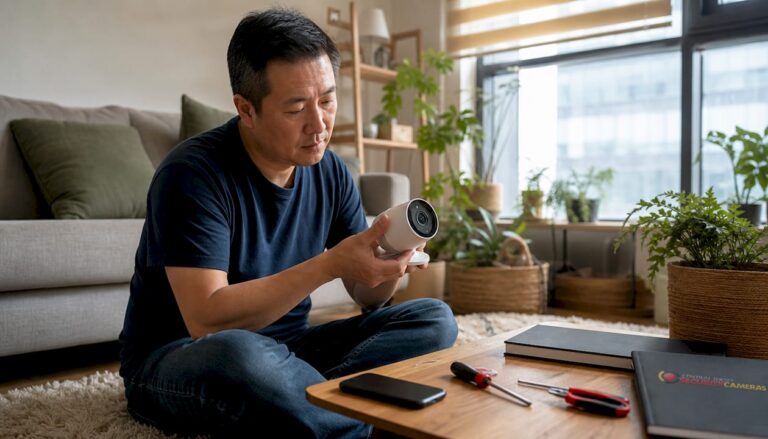
Security cameras for condo units are surveillance devices installed inside or at the entry of a privately owned condo to monitor activity without recording shared or neighboring spaces. Unlike single-family homes, condos operate under HOA bylaws, lease agreements, and state privacy laws that strictly limit where cameras can point and what they can record. The right system covers your front door, interior entry points, and living areas while staying fully compliant with building rules. This guide covers the key features, legal requirements, camera types, and real benefits condo owners need to know before buying or installing any surveillance equipment.
1. What are the key features to look for in security cameras for condo units?
The best condo surveillance cameras combine privacy compliance, flexible installation, and clear video quality. Not every feature that works in a house translates to a shared building environment.
Privacy zones and field-of-view control are the most critical features for condo use. A camera with customizable privacy zones lets you block out sections of the frame, so the lens never captures a neighbor’s door, window, or balcony. Without this feature, even a well-placed camera can create legal exposure.
Resolution and storage matter more than most condo owners expect. A 1080p or 4K camera captures enough detail to identify a face or read a package label. Pair that with local storage via a microSD card or NVR, and you avoid monthly cloud subscription fees while keeping footage off third-party servers.
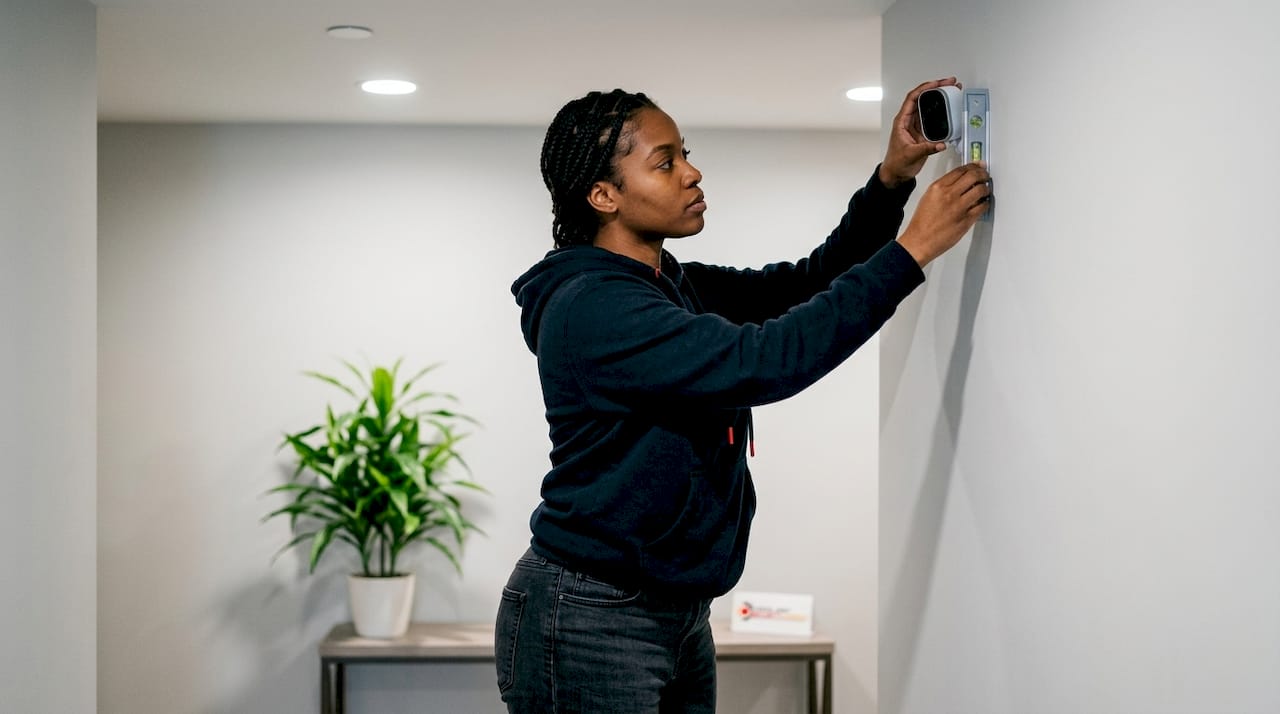
Power and mounting options determine whether installation is practical in a condo setting. Wireless, battery-powered cameras require no drilling into shared walls and no running cables through common areas. Adhesive mounts and door-frame brackets protect surfaces and satisfy most HOA damage policies.
- Privacy zone masking to block neighbor sightlines
- 1080p or 4K resolution for clear identification
- Battery or plug-in power to avoid permanent wiring
- Local storage option to reduce cloud dependency
- Wide-angle lens (110–130 degrees) for full doorway coverage
- Motion detection with adjustable sensitivity zones
- Two-way audio with the option to disable the microphone
Pro Tip: Disable the audio recording feature entirely if you live in a two-party consent state. Several US states classify audio recording without all parties’ consent as a felony, and a simple toggle in the camera’s app settings removes that risk completely.
Modern condo security systems are modular and renter-friendly, allowing owners to relocate systems easily when moving or when HOA rules change.
2. How to install security cameras in condo units legally and effectively
Legal compliance is not optional. Installing a camera incorrectly in a condo can result in HOA fines, neighbor disputes, or criminal liability under state privacy law.
Step 1: Review your HOA bylaws and lease agreement. Many condo owners mistakenly assume they have full rights to mount cameras at their front doors. Verifying bylaws first is non-negotiable, because hallways and shared entryways are typically off-limits without written board approval.
Step 2: Check your state’s audio recording laws. Two-party consent laws require all parties to know they are being recorded. If your state is on that list, disable audio on every camera you install or post a visible notice at your unit’s entrance.
Step 3: Choose damage-free mounting hardware. Removable, non-permanent mounts protect your security deposit and comply with most HOA surface-damage policies. Adhesive strips rated for outdoor use, over-the-door mounts, and tension-based brackets all work without drilling.
Step 4: Position cameras to face inward only. Interior cameras should be positioned to avoid capturing footage of other units or common areas. Point cameras at your own front door from inside, at interior hallways within your unit, or at windows facing private outdoor space you control.
Step 5: Test the field of view before finalizing placement. Use the camera’s live view app to confirm the frame does not capture any shared space. Adjust the angle or activate privacy zone masking until only your private space appears on screen.
Step 6: Document your setup. Take photos of camera placement and save a copy of any HOA approval you received. This protects you if a neighbor files a complaint later.
Pro Tip: A DIY condo security camera system can typically be installed in about 30 minutes without professional help. Choosing a system designed for quick setup means you spend less time on installation and more time confirming legal compliance.
3. What types of cameras work best for different condo areas?
Condo security prioritizes access control and interior monitoring over perimeter defense. Each area of your unit calls for a different camera type.
Front door and entryway: Battery-powered video doorbells with wide-angle views are the top choice for renters and condo owners alike. They mount without drilling, record motion at the threshold of your private space, and connect to your phone for real-time alerts. The key is positioning the doorbell to face your door directly, not the shared hallway.
Interior living areas: A compact indoor Wi-Fi camera with pan-tilt capability covers a wide room from a single corner mount. Pan-tilt models rotate remotely, so you can check different parts of a room without installing multiple units. These cameras work well for monitoring package drop-off areas inside your unit or watching over a home office.
Balcony: Balcony cameras require the most care. The lens must face inward toward your sliding door or across your own balcony space only. Pointing a camera outward risks capturing a neighbor’s balcony, which violates both privacy expectations and most HOA agreements. A narrow field-of-view camera or one with aggressive privacy zone masking solves this problem.
Package and delivery monitoring: A small indoor camera placed near your front door, facing inward toward where packages land after delivery, records theft without ever pointing into the hallway. This setup is fully compliant and highly effective.
A recommended multi-layered approach combines entry sensors, smart locks, and in-unit cameras focused on entry points. That combination covers the most common threat scenarios without requiring any permanent modifications.
4. What are the benefits and limitations of condo security cameras?
Condo cameras deliver real security value, but they also come with constraints that single-family homeowners never face. Understanding both sides helps you set realistic expectations.
Benefits include deterrence at your unit’s entry point, remote monitoring via smartphone, and recorded evidence in the event of a break-in or package theft. Tenants and owners can install cameras inside their units and at their own front doors, giving them meaningful control over their immediate space. A visible camera at your door also signals to opportunistic thieves that your unit is monitored.
Limitations are significant. You cannot record common hallways, lobbies, or neighbor balconies without explicit HOA approval. Local and state laws are evolving to balance tenant privacy with safety, and some jurisdictions now require property owners to handle common-area surveillance directly. That means the burden of shared-space security falls on the building, not on individual unit owners.
| Factor | Benefit | Limitation |
|---|---|---|
| Entry monitoring | Covers your front door 24/7 | Cannot record shared hallways |
| Audio recording | Two-way communication with visitors | Illegal without consent in many states |
| Cloud storage | Remote access from anywhere | Monthly fees and third-party data risk |
| Local storage | No subscription, footage stays private | Requires physical access to retrieve video |
| Installation | Damage-free, renter-safe options available | Permanent wiring prohibited in most condos |
Cost is another real factor. DIY wireless systems cost less upfront and carry no installation fees. Professional installation from a company like Central Jersey Security Cameras adds cost but delivers properly configured systems that account for HOA rules and local regulations from day one.
Key takeaways
Effective condo surveillance requires cameras that cover your private entry points and interior spaces while staying fully compliant with HOA bylaws, state privacy laws, and building damage policies.
| Point | Details |
|---|---|
| Privacy zones are non-negotiable | Choose cameras with masking features to block neighbor sightlines from the frame. |
| Check bylaws before mounting | HOA rules often prohibit cameras in hallways or shared entryways without written approval. |
| Disable audio in consent states | Two-party consent laws make audio recording without notice a criminal offense in several states. |
| Use damage-free mounting | Adhesive strips and door mounts protect your deposit and satisfy most HOA surface policies. |
| Layer your security approach | Combine entry sensors, smart locks, and interior cameras for the most effective condo setup. |
What I’ve learned after years of condo camera installs
The single biggest mistake condo owners make is buying a camera before reading their HOA documents. I’ve seen it happen repeatedly. An owner mounts a doorbell camera in the hallway, a neighbor complains, and the HOA sends a removal notice within a week. The camera was fine. The placement was the problem.
The second mistake is treating audio as a default feature. Most cameras ship with audio enabled. In states like California, Florida, and Illinois, recording audio without all parties’ consent creates real legal exposure. Turning off the microphone takes 30 seconds in the app and removes the risk entirely.
What actually works in condos is a focused, minimal setup. One battery-powered doorbell camera at your unit’s threshold, one interior camera covering your entry area from inside, and a smart lock on your front door. That combination covers the realistic threat scenarios without touching any shared space.
I’ve also noticed that condo owners underestimate how much privacy zone masking changes what a camera can legally do. A camera that would otherwise capture a neighbor’s door can be fully compliant with two clicks in the settings menu. That feature alone makes many otherwise borderline placements workable.
The privacy law landscape is shifting fast. Evolving laws mandate transparency and limits on surveillance recording, balancing safety and tenant privacy in ways that favor individual unit owners who stay within their own space. Staying informed about your state’s current rules is as important as choosing the right hardware.
— Tom
How Central Jersey Security Cameras supports condo owners
Choosing the right camera system for a condo is straightforward when you have professional guidance from the start. Central Jersey Security Cameras designs and installs surveillance systems built for residential multi-unit settings, including condos throughout Ocean County, Monmouth County, Middlesex County, and surrounding areas.
Every installation accounts for HOA requirements, local privacy laws, and building-specific constraints before a single camera goes up. Whether you need a single professionally installed home camera or a complete entry-and-interior system, the team at Central Jersey Security Cameras configures each setup to cover your private space without creating legal exposure. Contact Central Jersey Security Cameras for a consultation and get a system that works within your building’s rules from day one.
FAQ
Can I install a security camera in my condo hallway?
Tenants and owners cannot record common hallways without explicit HOA approval. Recording shared spaces without permission violates building rules and, in many cases, state privacy law.
What is the best type of camera for a condo front door?
Battery-powered video doorbells with wide-angle lenses are the top choice for condo front doors. They install without drilling, avoid shared-surface damage, and point at your unit’s threshold rather than the hallway.
Do I need HOA permission to install a security camera?
You need HOA permission for any camera that faces or could capture shared spaces. Cameras placed entirely inside your unit and pointed inward typically do not require approval, but reviewing your specific bylaws first is the safest approach.
Are audio recording features legal on condo security cameras?
Audio recording is illegal without all parties’ consent in several US states. Disabling the microphone in your camera’s app settings or posting a visible notice at your entry point removes the legal risk.
How long does it take to install a DIY condo security camera system?
A DIY condo security camera system can typically be installed in about 30 minutes. Wireless, battery-powered systems require no wiring and use adhesive or bracket mounts that attach without drilling.