
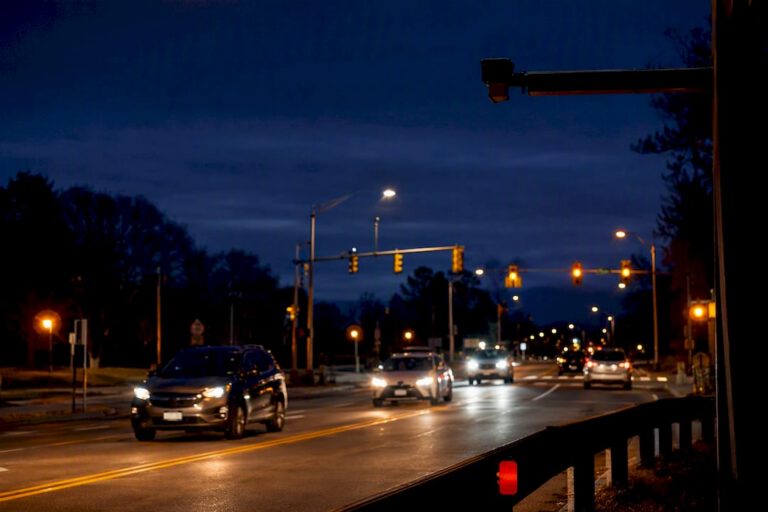
New Jersey permits police to use automated license plate readers for defined law-enforcement purposes, but access to that data is tightly restricted, agencies must maintain written policies and audits, and several pending bills would force a hard two-year retention cap and new limits on sharing plate data across state lines. For private homeowners and businesses, plain video capture is legal statewide, though adding audio or biometric features triggers a different, stricter set of rules entirely.
TL;DR:
- Most law enforcement ALPR use in New Jersey is limited by AG guidelines requiring documentation, regular audits, and updated BOLO integration, not by law.
- Pending bills would establish a two-year automatic purge for stored ALPR data and ban sharing plate data with out-of-state investigators probing reproductive health issues.
- Private homeowners and businesses can legally record plain video but must disable audio and biometric features to avoid stricter regulations and legal exposure.
- Agency policies currently set variable retention periods, but the proposed laws would impose a fixed two-year purge, overriding local discretion once enacted.
- Property owners should document camera purpose, disable audio, limit access, and coordinate registration with local police to ensure compliance and protect against legal challenges.
Table of Contents
- License Plate Reader Laws New Jersey: What The AG Directive Requires
- Pending New Jersey Bills That Would Rewrite ALPR Retention Rules
- Private Camera Rules: Registries, Data Protection, and Audio Limits
- How Retention, Access Controls, and Interstate Sharing Actually Work Today
- A Compliance Checklist For New Jersey Property Owners And Installers
- What A Local Installer Sees On The Ground
- Get A Compliant LPR Camera System Installed The Right Way
- Sources
License Plate Reader Laws New Jersey: What The AG Directive Requires
The state’s operational rulebook for law enforcement ALPR use comes from the Attorney General, not the legislature. AG Directive No. 2022-12-Technology.pdf) updated the earlier 2010 guidelines and remains the governing framework agencies must follow today.
The directive splits ALPR use into two categories. “Alert” hits, where a scanned plate matches a BOLO (be on the lookout) list tied to a warrant, stolen vehicle, or Amber Alert, trigger an immediate notification to the officer. “Non-alert” data, meaning every other plate scanned and stored, can only be queried for specific investigative purposes and requires documentation of why the search happened.
Agencies using ALPR technology in New Jersey must maintain:
- A written departmental ALPR policy consistent with the Attorney General’s guidelines
- Access logs showing who queried the system and why
- Periodic audits of system use, conducted internally and reported upward
- Refresher training for authorized personnel every two years as required
- Technical capability to receive and act on updated BOLO lists, including API support where required
That last point matters more than it sounds. A camera that scans plates but can’t sync BOLO updates isn’t compliant, regardless of image quality.
Pending New Jersey Bills That Would Rewrite ALPR Retention Rules
Two bills moving through Trenton would convert what is currently AG policy into hard statutory law, and the distinction matters because a directive can be amended by the Attorney General’s office; a statute requires a legislative vote to change.
Bill S3035 proposes a flat two-year retention period for stored ALPR data. After 24 months, agencies would have to purge records unless a specific authorization, such as an active investigation, justifies keeping them longer. That’s a meaningful shift from current practice, where retention timelines are set agency by agency under AG guidance rather than fixed by law.
Bill S4963 takes a narrower but pointed approach: it would bar New Jersey agencies from sharing ALPR data with out-of-state investigators probing reproductive health care that remains legal in New Jersey. This follows a broader national pattern of states trying to wall off plate data from cross-border legal disputes.
Key things to track as these bills move:
- Neither bill has been enacted as of this writing; both remain in the introduction/committee stage
- A retention statute would override agency-level policy discretion once signed into law
- Legislative tracking services show New Jersey is more legislatively active on ALPR issues than most states, even though only a handful of states passed new ALPR laws in the most recent legislative cycle nationwide
Private Camera Rules: Registries, Data Protection, and Audio Limits
Homeowners and businesses installing LPR-capable cameras face a different legal layer than police departments, built around municipal registration options, the state’s data privacy statute, and audio recording restrictions.
Municipalities can establish a voluntary private camera registry under Title 40 §40:48-1.7. Registering typically means giving local police your contact information and camera locations so they know where footage might exist during an active investigation. Registry data isn’t public record and can’t be pulled by anyone except law enforcement, or through a subpoena or court order.
A few practical rules govern private capture:
- Registering does not grant police standing access to your footage on demand
- The New Jersey Data Privacy Act treats footage used for biometric identification differently than plain video, often requiring a data protection assessment before deployment
- Audio capture on any camera system, including LPR units, falls under one-party consent rules via the Wiretapping and Electronic Surveillance Control Act
- Covert recording aimed at capturing someone in a state of undress or intimate activity can trigger New Jersey’s criminal voyeurism statute (N.J.S.A. 2C:14-9), regardless of camera type
Pro Tip: If your camera system has a built-in microphone, disable it during installation unless you have a documented, lawful reason to record audio. Plate-capture cameras almost never need audio, and leaving it active is the single most common way property owners accidentally create legal exposure.
How Retention, Access Controls, and Interstate Sharing Actually Work Today
Right now, retention is governed by agency policy under AG directives rather than a fixed statutory clock. That’s the gap S3035 aims to close. Until it passes, retention periods vary from department to department, though most align loosely with a retention window similar to the one proposed in the bill.
Access controls under the current framework require:
- Named, authorized users only, with every query logged by identity and timestamp
- Documented case justification for any non-alert data pull tied to a crime-scene investigation
- Supervisor sign-off before running broader crime-trend analysis on aggregated, non-alert plate data
By the numbers: the two-year purge window in S3035 would be the first statutory (not policy-based) retention limit New Jersey has applied to ALPR data, a structural change from the current system where the Attorney General’s directive leaves retention length to individual agencies.
Interstate sharing sits in similarly unsettled territory. Nothing in current AG policy explicitly bars sharing plate data with out-of-state agencies, which is exactly the gap S4963 targets for reproductive health investigations specifically, rather than attempting a blanket interstate sharing ban.
A Compliance Checklist For New Jersey Property Owners And Installers
Whether you’re a homeowner adding a plate-capture camera at your driveway or a business securing a parking lot, the same core steps keep you on the right side of New Jersey’s patchwork of rules.
- Map camera placement against reasonable-expectation-of-privacy zones. A camera aimed at your own driveway is very different, legally, from one that captures a neighbor’s yard.
- Write down the purpose of each camera before installation. Plate capture for gate access differs from general perimeter monitoring, and documentation protects you later.
- Disable audio unless you have a specific lawful reason to record it, given New Jersey’s one-party consent framework.
- Set a retention schedule now, even informally, rather than waiting for S3035 to force the issue.
- Use role-based access so only specific people can pull footage, and log every access event.
- Check with your municipal police department before registering under the Title 40 private camera registry, and read the fine print on what registration actually obligates you to share.
Pro Tip: Keep a one-page “privacy rationale” for each camera on file, noting why it’s positioned where it is and what data it captures. If you ever face a complaint or subpoena, that document does more to protect you than any technical feature the camera itself offers.
What A Local Installer Sees On The Ground
Most residential and small-business clients don’t need audio or biometric recognition. We default new LPR-capable installations to video-only mode, disable audio at setup, and mask fields that aren’t necessary for the stated purpose. Every client gets a placement review, a signed scope of work, and retention and access language written directly into the service agreement. If a client specifically wants audio or recognition features beyond plate capture, we flag it as a separate conversation requiring its own legal review before we touch the configuration.
— Tom
Get A Compliant LPR Camera System Installed The Right Way
Reading the statutes is one thing. Configuring a system that actually holds up under a municipal audit or a legal complaint is another. Central Jersey Security Cameras designs and installs license plate recognition camera systems across Central New Jersey with privacy-first defaults built in from the first site visit, not bolted on afterward.
We serve homeowners and businesses throughout Ocean, Monmouth, Middlesex, Mercer, and Burlington counties, and every installation includes a written placement rationale and retention policy language you can hand to a municipal officer or your own attorney without scrambling to reconstruct it later. If you’re weighing a home security camera installation with plate-capture capability, or upgrading a commercial lot with parking night surveillance cameras, schedule a site assessment with our team and get a configuration built around New Jersey’s actual legal requirements, not generic defaults.
This article is general information, not a substitute for advice from a qualified lawyer. Consult a qualified legal professional about your own circumstances before acting on anything here.
Sources
- NJ bill S3035 (legislative text / summary)
- NJ Rev Stat § 40:48-1.7 — Private outdoor video surveillance camera registry
- Recording Law — New Jersey surveillance camera laws