
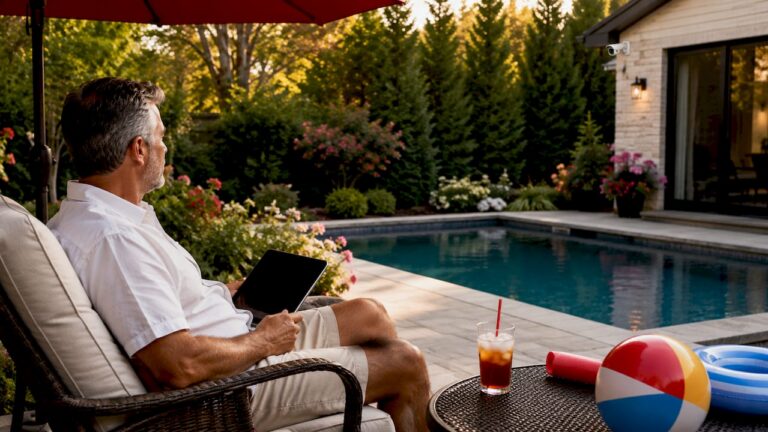
Security cameras for pool areas are specialized outdoor surveillance devices designed to monitor aquatic environments with weather resistance, wide coverage, and advanced detection features that standard indoor cameras cannot provide. The U.S. Consumer Product Safety Commission reports 357 child drowning fatalities annually at residential pools, with 74% occurring in residential settings. That number makes pool surveillance one of the highest-stakes camera applications a homeowner can invest in. The right system does two distinct jobs: it deters unauthorized access and, if AI-enabled, it can alert you to a swimmer in distress before a tragedy unfolds.
What are the top criteria for effective pool-area security cameras?
Choosing the right pool surveillance system starts with understanding what separates a capable camera from one that will fail you when it matters most.
Weather resistance is the baseline requirement. Any camera mounted near a pool must carry an IP65 rating or higher. IP65 means the unit is fully dust-tight and protected against water jets from any direction. Pools generate splash, humidity, and chemical vapor year-round, and a camera rated below IP65 will corrode or fog within one season.
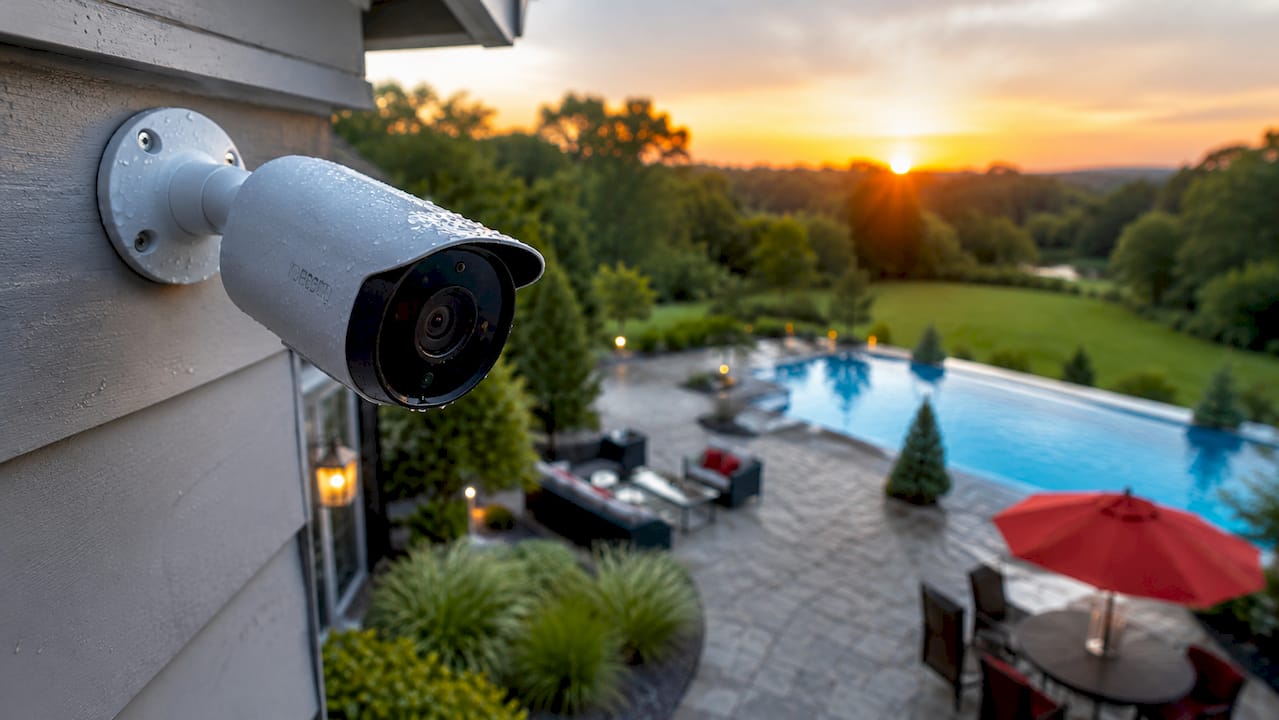
AI detection capability separates life-safety systems from standard security cameras. Standard cameras only detect motion, lacking the ability to analyze body posture or submersion duration. Only AI-enabled systems can recognize a swimmer who has stopped moving or sunk below the surface. If drowning detection is your goal, motion-only cameras will not deliver it.
Processing location affects both alert speed and privacy. Edge AI processing on on-site hubs delivers alerts in under 2 seconds and keeps footage off third-party servers. Cloud-based systems depend on your internet connection, which can fail during a storm or power fluctuation.
Certification standards tell you whether a system has been independently tested for pool safety. Look for cameras or systems certified to ASTM F2208, ASTM F3698-24, or NF P90-307. These are recognized pool safety standards, and certification means a third party has verified the system’s detection claims.
Additional criteria worth evaluating:
- Field of view: A wide-angle lens (100 degrees or broader) covers more pool surface with fewer cameras.
- Night vision: Infrared or color night vision extends monitoring to evening hours when many unauthorized entries occur.
- Alarm integration: The best systems connect directly to audible alarms or push notifications so you receive alerts instantly.
- Glare resistance: Pools reflect sunlight intensely. Cameras with polarized lenses or adjustable angle mounts handle this better than fixed units.
Pro Tip: Before purchasing, confirm whether the camera’s AI runs locally on a hub or requires a cloud subscription. Local processing keeps your footage private and your alerts fast, even when your Wi-Fi goes down.
1. Purpose-built AI pool safety systems
Purpose-built AI pool safety systems are the gold standard for drowning detection and unauthorized access monitoring. These systems use dedicated on-site hubs with edge AI to analyze swimmer behavior in real time. Systems certified to ASTM F2208 and NF P90-307 have passed independent testing for detection accuracy. They start at approximately $899, which reflects the specialized hardware and software required. For homeowners with young children or frequent pool guests, this category is the right investment.
2. Budget AI pool safety cameras
Budget AI options bring drowning detection to homeowners at a lower entry point, starting around $550. These systems typically use lighter AI models that may have slightly longer alert times than premium units. Some are certified to ASTM F3698-24, the newer standard specifically addressing AI-based drowning detection. They represent a meaningful upgrade over standard security cameras while keeping costs manageable for most households.
3. Standard outdoor security cameras with pool-suitable features
Standard outdoor pool security systems in the $100–$300 range offer solid perimeter monitoring and unauthorized access deterrence. They carry IP65 or higher waterproof ratings, wide-angle lenses, and infrared night vision for 24/7 coverage. What they cannot do is detect drowning. Use these cameras to monitor pool gates, fencing, and the surrounding yard rather than as life-safety devices.
4. PTZ cameras for large pool areas
Pan-tilt-zoom cameras give property managers the ability to cover large pool decks and surrounding areas with a single unit. A PTZ camera can rotate 360 degrees, tilt vertically, and zoom in on specific zones without losing image quality. This makes them well suited for community pools, hotel pools, and large residential properties where fixed cameras would require multiple units to achieve the same coverage. Central Jersey Security Cameras installs PTZ systems configured to patrol preset zones automatically, which reduces the need for manual monitoring.
5. Dome cameras for covered pool structures
Dome cameras work well under pergolas, pool houses, and covered patios where a discreet profile matters. Their vandal-resistant housing makes them difficult to redirect or damage. The dome lens design also makes it harder for someone to tell exactly where the camera is pointing, which adds a deterrence advantage. For indoor pool enclosures, dome cameras with wide dynamic range handle the contrast between bright pool water and darker surrounding areas better than standard box cameras.
6. Wireless cameras for pool monitoring
Wireless cameras for pool monitoring eliminate the need to run conduit across pool decks or through landscaping. They connect via Wi-Fi and store footage locally on an NVR or in the cloud. The trade-off is battery life and signal reliability. For pools located far from the home’s router, a Wi-Fi extender or a wired PoE camera may be more dependable. Wireless units work best for temporary setups or properties where trenching cable is not practical.
7. 4K resolution cameras for detailed footage
4K cameras capture enough detail to identify faces, license plates, and clothing at distances where 1080p footage becomes blurry. Near a pool, this matters when reviewing footage of an unauthorized entry or an incident. The higher resolution also allows digital zoom during playback without losing clarity. Central Jersey Security Cameras offers 4K camera installations for homeowners who want footage that holds up for insurance claims or law enforcement review.
8. Active deterrence cameras
Active deterrence cameras combine visible LED lights and a built-in speaker with motion detection. When someone enters the pool area after hours, the camera triggers a strobe light and an audible warning. This stops unauthorized access in real time rather than simply recording it. For homeowners concerned about teenagers or strangers using their pool without permission, active deterrence cameras are among the most effective tools available.
9. License plate recognition cameras for gated pool access
Community pools and properties with shared driveways benefit from license plate recognition cameras at entry points. These cameras log every vehicle that enters and exits, creating a time-stamped record of who accessed the property. When combined with a gate system, they can restrict access to registered vehicles automatically. This is a practical solution for HOA pools and multi-family properties where managing access manually is not feasible.
10. How should you position cameras to maximize pool safety?
Camera placement determines whether your system actually works. Sunlight glare and reflections from pool water cause false alarms and degrade footage quality. Positioning errors are the leading cause of detection failures in pool surveillance systems. Follow these steps to get placement right:
- Mount cameras on the north or east side of the pool to avoid direct afternoon sun hitting the lens.
- Angle cameras downward at 15–30 degrees to capture the pool surface without catching sky glare.
- Use shading hoods or camera housings with sun shields on south-facing mounts where repositioning is not possible.
- Place cameras at 8–10 feet of mounting height for the best combination of coverage angle and detail.
- Create overlapping coverage zones so no area of the pool deck sits in a blind spot between two cameras.
- Reassess placement seasonally because the sun’s angle changes significantly between summer and winter, shifting glare patterns.
Pro Tip: Walk your pool area at noon on a sunny day and look at where the water reflects light most intensely. Mount cameras so those reflection zones fall outside the direct line of sight.
How do pool cameras complement overall pool safety?
Security cameras supplement but do not replace physical pool barriers and adult supervision. The U.S. Consumer Product Safety Commission and pool safety experts consistently describe cameras as an additional layer of protection, not a standalone solution. A four-foot fence with a self-latching gate, required by most state codes, stops unauthorized entry before it happens. A camera records or alerts after someone has already entered.
The distinction between security monitoring and life-safety monitoring is critical. A standard motion-detecting camera will alert you when someone enters the pool area. It will not alert you when a swimmer stops moving. Only dedicated AI systems reliably detect drowning by analyzing body posture and submersion patterns. Homeowners who install standard cameras and assume they are covered for drowning detection are operating under a dangerous misconception.
Legal considerations also apply. Most states and municipalities regulate where cameras can be placed near pools, particularly regarding neighbor sightlines and privacy. Before installation, check local ordinances and HOA rules. A professional installer familiar with New Jersey regulations can confirm compliant placement before any hardware goes up.
The most effective pool safety strategy layers multiple protections:
- Physical barriers: fencing, self-closing gates, and door alarms on home exits that lead to the pool
- Adult supervision: a designated watcher whenever children are in or near the water
- AI-enabled cameras: for real-time drowning alerts and unauthorized access detection
- Standard security cameras: for perimeter monitoring, recording, and deterrence
- Audible alarms: pool surface alarms and wearable wrist alarms as backup alert systems
Understanding AI security for homes helps homeowners make informed decisions about which layer of technology fits their specific risk profile and budget.
Key takeaways
The most effective pool surveillance strategy combines AI-enabled cameras for drowning detection with weather-resistant security cameras for perimeter monitoring, proper placement, and physical barriers.
| Point | Details |
|---|---|
| AI cameras vs. standard cameras | Only AI-enabled systems detect drowning; standard cameras monitor access and record activity only. |
| Certification matters | Look for ASTM F2208, ASTM F3698-24, or NF P90-307 certification to verify detection claims. |
| Placement drives performance | Avoid sunlight glare and reflections by mounting cameras on north or east-facing positions at 8–10 feet. |
| Cameras are one layer | Physical barriers, supervision, and alarms must work alongside cameras for complete pool safety. |
| Budget shapes the right choice | Purpose-built AI systems start at $899; standard outdoor cameras run $100–$300 for perimeter use. |
What I’ve learned from watching homeowners get pool cameras wrong
The most common mistake I see is homeowners buying a standard outdoor camera, pointing it at the pool, and believing they have covered their safety bases. They have not. A motion-detecting camera will tell you someone entered the pool area. It will not tell you a child has been underwater for 30 seconds.
The second mistake is poor placement. Most people mount cameras where they are easiest to install, not where they perform best. A camera pointed west over a pool on a summer afternoon is fighting direct sun glare for six hours a day. The footage is washed out, the AI cannot read body shapes accurately, and false alerts pile up until the homeowner disables notifications entirely. At that point, the system is decorative.
What actually works is treating the camera decision the same way you would treat any other safety system in your home. You would not install a smoke detector without checking its UL certification. Apply the same standard to pool cameras. If a system claims to detect drowning, ask which certification standard it meets. If the answer is vague, keep looking.
Budget is a real constraint for most homeowners. If a purpose-built AI system is out of reach, a well-placed standard camera with active deterrence and a pool surface alarm is a meaningful combination. The goal is layered protection, not perfection. A $200 camera in the right position with a $100 pool alarm covers more ground than a $900 system mounted where the sun blinds it every afternoon.
Professional installation is not a luxury for pool cameras. It is where placement expertise, local code knowledge, and system integration come together. The camera is only as good as where it sits and how it connects to the rest of your safety setup.
— Tom
Pool area camera installation from Central Jersey Security Cameras
Choosing the right camera is only half the job. Where it goes and how it connects to your overall security system determines whether it actually protects your property.
Central Jersey Security Cameras designs and installs pool area surveillance systems for homeowners and property managers throughout Ocean County, Monmouth County, Middlesex County, Mercer County, and Burlington County. Every installation includes a site assessment to identify optimal camera positions, avoid glare and blind spots, and confirm compliance with New Jersey placement regulations. Whether you need a single 4K camera covering a residential pool gate or a multi-camera system for a community pool facility, the team at Central Jersey Security Cameras builds systems matched to your property and your budget. Contact Central Jersey Security Cameras to schedule a consultation.
FAQ
What is the difference between a pool safety camera and a security camera?
A pool safety camera uses AI to detect drowning by analyzing body posture and submersion duration, while a standard security camera only detects motion. Standard cameras are effective for monitoring access and recording activity but cannot alert you to a swimmer in distress.
What IP rating do pool cameras need?
Pool cameras require a minimum IP65 rating, which means the unit is fully dust-tight and protected against water jets from any direction. Cameras rated below IP65 are not suitable for the humidity, splash, and chemical exposure near a pool.
How much do security cameras for pool areas cost?
Purpose-built AI pool safety systems start at approximately $899, budget AI options run around $550, and standard outdoor security cameras range from $100 to $300. The right choice depends on whether drowning detection or perimeter security is your primary goal.
Where is the best place to mount a pool camera?
Mount cameras on the north or east side of the pool at 8–10 feet of height, angled downward at 15–30 degrees to avoid sunlight glare and water reflections. Reassess placement seasonally because sun angles shift and glare patterns change throughout the year.
Do pool cameras replace fencing and supervision?
No. Security cameras are an additional layer of protection, not a replacement for physical barriers or adult supervision. Pool fencing, self-latching gates, and a designated adult watcher remain the primary defenses against unauthorized access and drowning.