
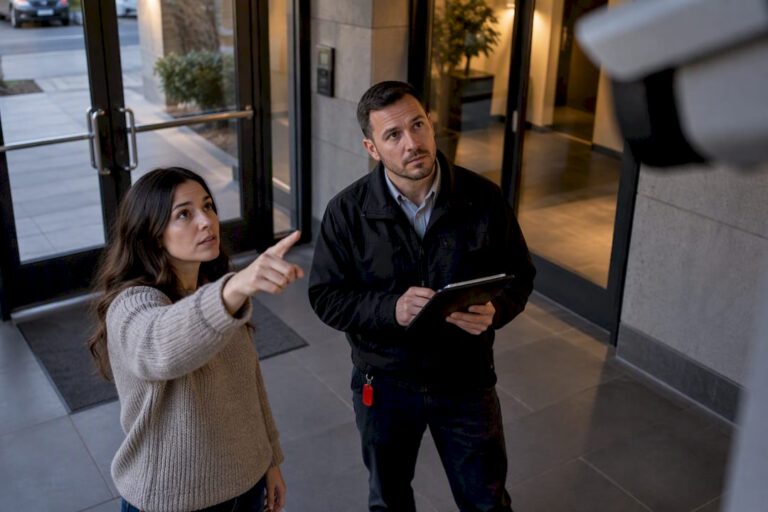
Cameras in New Jersey rental properties are legal when they cover exteriors, entrances, and shared common areas without capturing private spaces like bedrooms or bathrooms. The line into illegal surveillance is crossed with hidden devices, cameras aimed at intimate areas, or unauthorized audio capture, all of which can trigger criminal liability under N.J.S.A. 2C:14-9. Disputes over placement or footage access should be documented in writing before they escalate.
TL;DR:
- Cameras pointed at shared entrances, driveways, and common areas are generally legal, but aiming into private rooms like bedrooms or bathrooms crosses into illegal surveillance.
- Disguised or hidden cameras face suspicion, especially if they face private spaces; tenants should photograph suspicious devices and note their positions.
- Audio recording is risky unless all parties involved have given explicit consent, and default settings with audio enabled can easily lead to violations.
- Registering outdoor cameras with municipal authorities does not waive privacy protections or give law enforcement unchecked access to footage.
- Criminal charges for illegal recording can result in prison time and hefty fines, with recent court rulings emphasizing the importance of intent and proper consent.
Table of Contents
- Legal overview: NJ statutes and constitutional rules on surveillance
- Audio recording, doorbell cams, and one-party consent rules
- Where cameras belong and where they cross the line
- What municipal camera registries actually do
- Handling lease clauses and escalating a camera dispute
- Penalties, enforcement, and what NJ courts have decided
- Best practices installers use to keep systems compliant
- Why the placement debate matters more than the camera debate
- Sources
- FAQ
Legal overview: NJ statutes and constitutional rules on surveillance
Three legal frameworks govern almost every camera dispute in a New Jersey rental. The first is New Jersey’s invasion of privacy statute, N.J.S.A. 2C:14-9, which criminalizes recording someone’s intimate parts or exposed body without consent, particularly through hidden or disguised devices. The second is the municipal registry law, N.J.S.A. 40:48-1.7, which lets towns set up voluntary outdoor camera registries to assist police investigations. The third is the Fourth Amendment, which limits how police can obtain footage from a landlord’s system without a warrant or valid consent.
These three pieces interact constantly in real disputes:
- N.J.S.A. 2C:14-9 defines what a landlord or neighbor cannot record, regardless of where the camera sits.
- N.J.S.A. 40:48-1.7 governs whether a camera owner’s participation in a local registry changes police access to footage.
- Fourth Amendment protections mean police generally need a warrant or documented, voluntary consent before pulling footage from a landlord’s recorder.
Together, these rules mean location, intent, and consent all matter more than the mere presence of a camera.
Audio recording, doorbell cams, and one-party consent rules
New Jersey is a one-party consent state, meaning a recording is lawful as long as one participant in the conversation, which can include the property owner installing the device, knows the audio is being captured. That protects a landlord recording their own conversation with a tenant, but it does not cover situations where a camera captures conversations between third parties who never consented and have no idea the microphone exists. Video-only footage of a hallway or porch carries far less risk than continuous audio recording near a tenant’s door, where private conversations are easily swept up without anyone’s knowledge.
Doorbell cameras and outdoor units with built-in microphones are the most common source of accidental violations, since many ship with audio enabled by default.
- Disable audio recording on exterior and common-area cameras unless every likely party has given consent.
- Post visible signage at entrances when audio capture is active, and mention it in the lease.
- Treat any camera near a shared porch, hallway, or laundry room as an audio risk zone, not just a video one.
Pro Tip: If you’re unsure whether a camera’s microphone should stay on, turn it off. Video alone covers most security needs without the added legal exposure. For a deeper look at how audio settings create liability, see this breakdown of wiretapping risks tied to recording devices.
Where cameras belong and where they cross the line
Placement decides most legal outcomes faster than any other factor. A camera pointed at a shared entrance is almost always defensible; the same camera angled through a bedroom window is not.
- Front doors, driveways, and parking areas are standard, low-risk placements that courts and tenant-rights guides consistently treat as lawful common-area coverage.
- Shared hallways, lobbies, and laundry rooms are generally acceptable, though multi-unit buildings deserve extra care since expectation-of-privacy questions get more complicated when several tenants share the same space.
- Bedrooms, bathrooms, and any interior space where a tenant expects full privacy are off-limits entirely, and a camera placed or aimed there can expose a landlord to charges under N.J.S.A. 2C:14-9.
- Concealed devices disguised as everyday objects, such as chargers, clocks, or smoke detectors, are treated with heavy suspicion in NJ courts, especially when they face a bed or shower.
Tenants who spot a suspicious device should photograph its exact position, note what it can see from that angle, and check for disguises like a camera built into a wristwatch or wall outlet, which has shown up in real NJ criminal cases.
What municipal camera registries actually do
Some New Jersey towns run voluntary registries for privately owned outdoor cameras under N.J.S.A. 40:48-1.7. Registering does not mean handing over footage on request, and it does not waive any constitutional or statutory privacy protection an owner or tenant otherwise has.
- Registries help police identify which properties nearby have cameras when investigating a crime.
- Owners keep full control over their footage even after registering.
- Some municipalities, like Long Beach Township, pair registry rules with local ordinances covering camera height, placement, and distance from property lines.
Registration is a convenience for investigators, not a shortcut around the warrant and consent rules that still govern footage access.
Handling lease clauses and escalating a camera dispute
Most leases say little or nothing about cameras, which leaves tenants and landlords to sort out expectations on their own. A reasonable lease disclosure names the general locations of exterior cameras and confirms whether audio is active, without listing exact technical specs that could help someone defeat the system.
When a tenant believes a camera has crossed into unlawful territory, a clear sequence works best:
- Document the device with photos or video showing its position and what it appears to capture.
- Note the date and time the camera was discovered or first noticed, and keep a written log if it moves.
- Send a written request to the landlord asking for an explanation, repositioning, or removal, and keep a copy.
- Preserve every reply, including texts and e-mails, since these become evidence if the dispute escalates.
- File a complaint with the New Jersey Department of Community Affairs or local police if the landlord refuses to cooperate, and consider a Special Civil Part filing for damages or injunctive relief.
Pro Tip: Written requests carry far more weight than phone calls in any later legal proceeding, so put every camera complaint in an e-mail or letter, even if you also speak in person.
Relief through Special Civil Part can include an order to remove or reposition a camera, and in more serious cases, damages tied to emotional distress or invasion of privacy. Timelines vary by county caseload, so tenants should expect weeks rather than days for a hearing date.
Penalties, enforcement, and what NJ courts have decided
Violating New Jersey’s invasion of privacy statute is not a minor infraction. Under N.J.S.A. 2C:14-9, third-degree offenses carry several years in prison and fines up to several thousands, while second-degree offenses, which apply to more aggravated conduct, carry longer terms and higher fines.
- Courts have upheld convictions where concealed cameras, including one disguised as a wristwatch, recorded intimate activity without consent.
- A 2024 appellate decision clarified the state’s burden for proving intent and the required mental state in these cases.
- In a separate 2024 ruling, a court suppressed surveillance footage because police failed to prove a landlord’s consent to search a DVR was valid and voluntary.
For landlords, the practical risk ranges from criminal exposure to civil suits and suppressed evidence in any case built on improperly obtained footage. For tenants, these same rulings are the basis for both criminal complaints and civil claims when a camera oversteps its bounds.
Best practices installers use to keep systems compliant
Professional installers build compliance into the system before it ever records a frame. Camera angles get mapped to cover approaches and property lines while avoiding windows, decks, or any sightline into a private unit.
- Point exterior cameras at doors, driveways, and shared walkways, never toward windows of occupied units.
- Leave audio disabled unless every party likely to be recorded has given consent.
- Set a defined retention window and log who accesses stored footage and when.
Property owners considering a system should ask an installer for a line-of-sight diagram and a written policy on who can review recordings.
Why the placement debate matters more than the camera debate
The real argument in New Jersey is not whether landlords can use cameras. It is where those cameras point. Most disputes that reach a courtroom trace back to one bad placement decision, not a blanket refusal to allow surveillance. Tenants who focus their energy on demanding “no cameras at all” often lose that argument, since exterior and common-area coverage is well within a landlord’s rights.
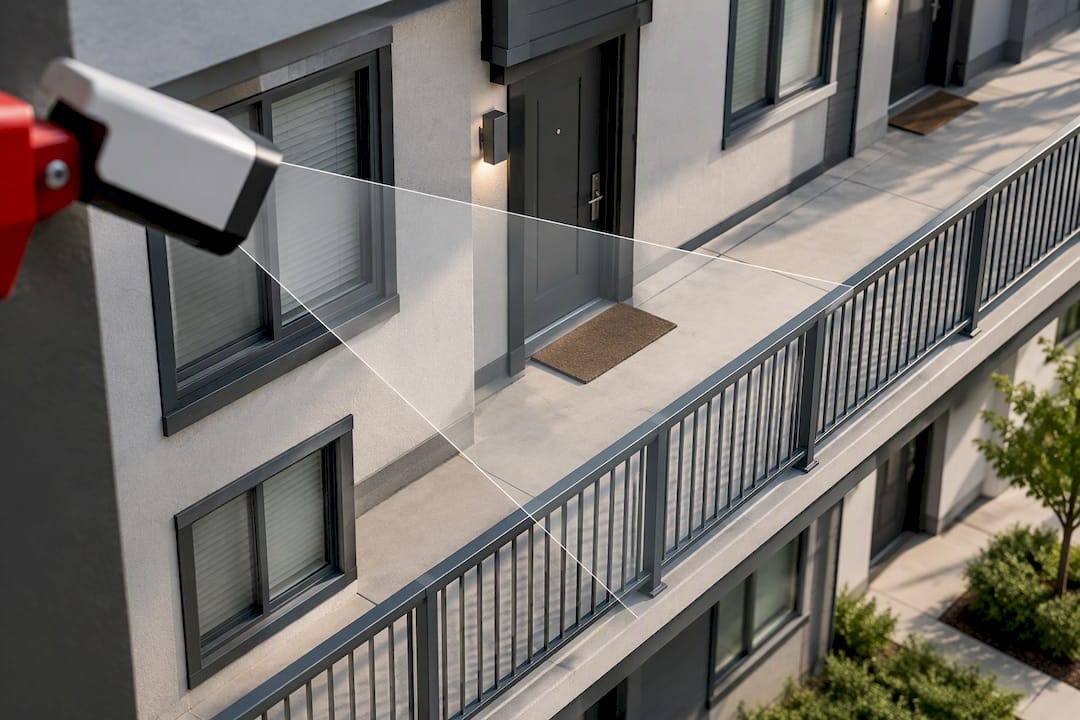
The more useful fight is over angle and audio. A camera aimed at a shared hallway is fine; the same unit tilted two inches toward a bedroom window is a different legal animal entirely, and few tenants check for that distinction before assuming the worst. Landlords, meanwhile, tend to underestimate how much a single unlabeled microphone can cost them if it picks up a conversation nobody agreed to record.
If there is one habit worth adopting on both sides, it is documentation before confrontation. A dated photo of a camera’s angle, or a written note disabling audio, does more to prevent a dispute than any lease clause ever will.
— Tom
This article is general information, not a substitute for advice from a qualified lawyer. Consult a qualified legal professional about your own circumstances before acting on anything here.
Sources
- NJ courts opinion (2020) — hidden-camera invasion of privacy case
- NJ Rev Stat § 40:48-1.7 (Private outdoor video surveillance camera registry)
FAQ
Can a landlord watch you on camera?
A landlord can generally watch common areas and exteriors like entrances, hallways, and parking lots, since tenants have a limited expectation of privacy there. Cameras cannot lawfully view inside a tenant’s private unit, especially bedrooms or bathrooms, without consent.
What are the laws regarding surveillance cameras in New Jersey?
New Jersey surveillance law centers on N.J.S.A. 2C:14-9, which criminalizes recording someone’s intimate parts without consent, and N.J.S.A. 40:48-1.7, which allows towns to run voluntary outdoor camera registries. Audio recording is separately governed by the state’s one-party consent rule.
Can my landlord tell me I can’t have cameras?
A landlord can generally restrict tenant-installed cameras in shared or common areas of the building since those affect other residents. Restrictions on a camera inside a tenant’s own private space are less clear-cut and often depend on lease terms and the specific area being recorded.
Can someone record me without my consent in NJ?
Video recording in public view or common areas without audio is often permitted, but recording someone’s intimate parts or private activity without consent violates N.J.S.A. 2C:14-9. Audio recording of a private conversation generally requires at least one participant’s consent under New Jersey’s one-party consent rule.