
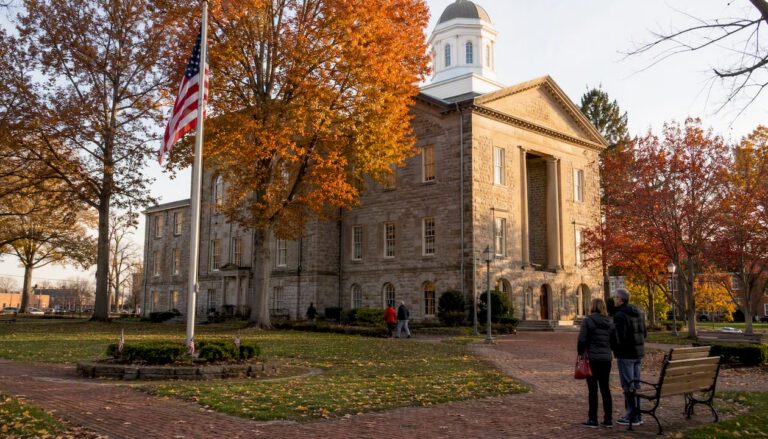
Burlington County is New Jersey’s largest county by land area, with its county seat in Mount Holly. Located in South Jersey and anchored to the Philadelphia metro area by the Delaware River to its west, the county recorded a 2020 census population of 461,860, and the U.S. Census Bureau estimates the population will reach 481,439 in 2025. For current news, services, and department contacts, the Burlington County official website is the single best starting point.
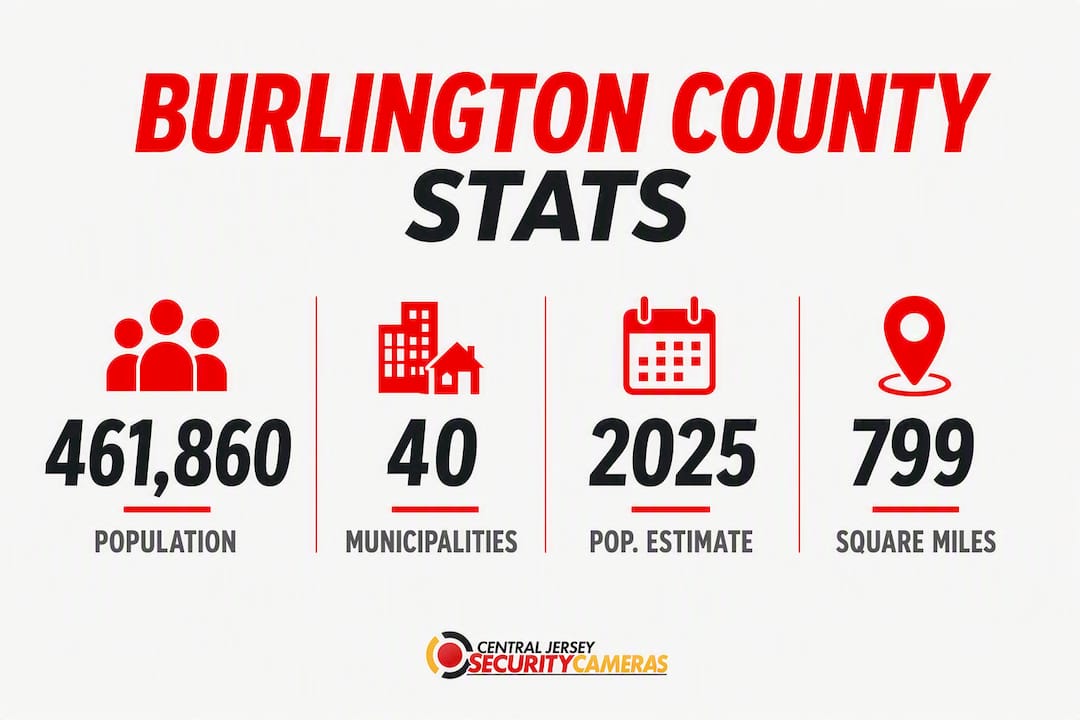
Table of Contents
- What makes up Burlington County, NJ?
- What do the demographics of Burlington County look like?
- Where is Burlington County, and what is the terrain like?
- A brief history of Burlington County
- What drives Burlington County’s economy?
- How is Burlington County’s government organized?
- What schools serve Burlington County residents?
- How do you get around Burlington County?
- What parks and cultural sites should you visit in Burlington County?
- Where do you find official Burlington County resources?
- Is Burlington County a good place to live?
- How does Burlington County engage its residents through local programs?
- Key Takeaways
- Burlington County from a local security perspective
- Useful sources for Burlington County residents
What makes up Burlington County, NJ?
Burlington County contains 40 municipalities, a mix of townships, boroughs, and one city. The county seat, Mount Holly, sits near the geographic center of the county and houses most county government offices. The largest municipalities by population are Evesham Township, Mount Laurel Township, and Medford Township, all of which sit in the county’s more suburban southwestern corridor closest to Philadelphia.

Largest towns and municipalities
| Municipality | Type |
|---|---|
| Evesham Township | Township |
| Mount Laurel Township | Township |
| Medford Township | Township |
| Moorestown Township | Township |
| Mount Holly | Township (county seat) |
| Pemberton Township | Township |
| Burlington City | City |
Other municipalities include Bordentown City, Bordentown Township, Chesterfield Township, Cinnaminson Township, Delanco Township, Eastampton Township, Edgewater Park Township, Fieldsboro Borough, Florence Township, Hainesport Township, Lumberton Township, Mansfield Township, Maple Shade Township, Marlton (part of Evesham), Medford Lakes Borough, New Hanover Township, North Hanover Township, Palmyra Borough, Riverside Township, Riverton Borough, Shamong Township, Southampton Township, Springfield Township, Tabernacle Township, Washington Township, Westampton Township, Woodland Township, and Wrightstown Borough, among others.
Pro Tip: Municipal services (building permits, local zoning, trash pickup) are handled by your specific township or borough office, not the county. County offices handle courts, parks, health, and social services. The Burlington County official website includes a municipal directory to help you find the right office fast.
What do the demographics of Burlington County look like?
The county’s 2020 census count of 461,860 places it among the mid-sized New Jersey counties by population, even though it is the largest by land. The 2025 estimate of 481,439 reflects steady, consistent growth over the past five years.
| Demographic Indicator | Figure |
|---|---|
| 2020 Census Population | 461,860 |
| 2025 Population Estimate | 481,439 |
| Land Area | ~799 sq mi |
| Median Age | ~40 years |
| Largest Racial/Ethnic Group | White (non-Hispanic), majority |
| Black or African American | Significant share |
| Hispanic or Latino | Growing share |
The county’s age profile skews slightly older than the New Jersey average, with a meaningful share of residents over 65 and a strong family-age cohort in the suburban townships. For town-level breakdowns, the U.S. Census Bureau’s data.census.gov portal lets you pull detailed tables by municipality, age band, income, and housing tenure.
Where is Burlington County, and what is the terrain like?
Burlington County sits in the heart of South Jersey, bordered by the Delaware River to the west (and Pennsylvania across it), Mercer and Monmouth counties to the north, Ocean County to the east, and Camden and Gloucester counties to the south. The county does not have direct Atlantic Ocean frontage. Its southeastern corner reaches tidal estuaries that connect toward New Jersey’s Great Bay, which itself links to the Atlantic, but the county’s shoreline is estuarine, not open ocean.
Major physical features include:
- Delaware River: Forms the entire western border; multiple bridges connect to Pennsylvania.
- Rancocas Creek: Runs through the county’s midsection, draining into the Delaware near Delanco.
- Mullica River: Flows through the Pine Barrens in the county’s eastern half.
- Pine Barrens (Pinelands): A large portion of the county’s eastern and central area falls within the Pinelands National Reserve, a federally designated region of coastal plain forest and wetlands.
- Total land area: Approximately 799 square miles, the largest of any New Jersey county.
Pro Tip: If waterfront activities are your priority, the Delaware River corridor (Burlington City, Bordentown, Florence) offers boat launches and riverside trails. For hiking and paddling in a wilder setting, the Mullica River and Wharton State Forest in the Pine Barrens are the better choice, though both sit partly outside county park jurisdiction.
A brief history of Burlington County
Burlington County was founded in 1694, making it one of New Jersey’s oldest counties. It was named after the town of Burlington, which served as one of the two capitals of colonial New Jersey (alternating with Perth Amboy). The county’s early economy centered on Quaker settlement, agriculture, and river trade along the Delaware.
Key historical developments:
- 1694: County established by the colonial legislature; Burlington City served as the original seat.
- 1796: County seat moved to Mount Holly, where it remains today.
- 19th century: Several partitions reduced the county’s original territory; Ocean County (1850) and other adjustments carved out neighboring jurisdictions.
- Civil War era: Burlington County was a notable stop on the Underground Railroad, with Quaker communities providing shelter to freedom seekers.
The Burlington County Prison Museum, a National Historic Landmark in Mount Holly, is one of the most tangible connections to that history. Built in 1811, it operated as a working prison for over 150 years and now opens to the public Thursday through Saturday, 10 AM to 4 PM, and Sunday noon to 4 PM. Small groups of six or fewer can request reservations on days the museum is typically closed, which makes it a practical option for private educational tours.
The Burlington County Lyceum of History and Natural Sciences is undergoing a significant transformation into a living museum, with permanent exhibits planned to open in early 2026, housed in the historic Langstaff Mansion. For deeper historical research, the county’s historic division pages and the Lyceum itself are the best starting points.
What drives Burlington County’s economy?
The county’s economy is diverse, drawing from agriculture, light manufacturing, logistics, retail, healthcare, and government employment. Its position between Philadelphia and the Jersey Shore creates a natural commuter economy, with many residents working in Philadelphia, Camden, or Trenton while living in the county’s suburban townships.
Key economic drivers include:
- Agriculture: Burlington County is one of New Jersey’s top agricultural counties. The Burlington County Agricultural Center anchors local farming activity with a farmers market, community gardens, culinary classes, and event rental space.
- Logistics and distribution: The county’s highway network (I-295, U.S. 130, NJ Turnpike) makes it attractive for warehousing and distribution operations, particularly in the Burlington City and Florence Township areas.
- Healthcare: Large health systems operate major facilities within the county, employing thousands of residents.
- Retail and services: Suburban growth in Evesham, Mount Laurel, and Moorestown has produced significant retail corridors and service-sector employment.
- Government: County, municipal, and school-district employment represents a stable employment base throughout the region.
The Pine Barrens portion of the county, while sparsely populated, supports eco-tourism and cranberry and blueberry farming, both of which are historically significant to South Jersey’s agricultural identity.
How is Burlington County’s government organized?
Burlington County is governed by a five-member Board of County Commissioners, elected at-large to three-year terms. The commissioners oversee county departments, set the county budget, and manage county-owned properties and services. All county government offices are based in Mount Holly.
Key county offices and contacts:
- Board of County Commissioners: Policy and budget authority; contact through the county website.
- Burlington County Prosecutor’s Office: Handles criminal prosecution for the county.
- Burlington County Sheriff’s Office: Law enforcement, civil process, and courthouse security.
- Burlington County Superior Court: Part of the New Jersey Superior Court system; handles civil, criminal, and family matters for the county vicinage.
- Burlington County Clerk: Records deeds, handles elections administration, and issues various licenses.
- Burlington County Health Department: Public health services, inspections, and emergency preparedness.
- Burlington County Board of Social Services: Benefits, assistance programs, and social services.
For a current list of commissioners, department heads, and direct phone numbers, the Burlington County Quick Links page is the fastest route. The county distinguishes clearly between county services (parks, courts, health, social services) and municipal services (zoning, local permits, trash), so knowing which level of government handles your issue saves time.
What schools serve Burlington County residents?
Burlington County operates under a local-control model for K–12 education, meaning each municipality generally has its own school district or participates in a regional district. There is no single county-wide school district. The county does operate the Burlington County Institute of Technology (BCIT), a vocational-technical school with campuses in Medford and Westampton that serves students from across the county in career and technical education programs.
Notable school districts and institutions:
- Evesham Township School District: One of the larger elementary districts in the county.
- Lenape Regional High School District: Serves several municipalities including Medford, Evesham, and Shamong at the high school level.
- Moorestown Township Public Schools: Consistently ranked among the top-performing districts in New Jersey.
- Burlington City School District: Serves Burlington City’s urban population.
- Pemberton Township School District: One of the county’s larger districts by enrollment.
- Burlington County Institute of Technology (BCIT): Vocational-technical programs for high school students and adults.
For higher education, Rowan College at Burlington County (RCBC) is the county’s community college, with its main campus in Mount Laurel and additional sites in the region. RCBC offers associate degrees, transfer programs, and workforce training. Rutgers University and several private colleges are accessible within a 30-to-45-minute drive for residents seeking four-year programs.
School district boundary maps and state performance data are available through the New Jersey Department of Education at nj.gov/education.
How do you get around Burlington County?
The county’s road network is its primary transportation infrastructure. Several major highways converge here, making it one of the better-connected counties in South Jersey.
Major routes:
- Interstate 295: Runs north-south through the western portion of the county, connecting to Philadelphia via the Betsy Ross and Burlington-Bristol bridges.
- New Jersey Turnpike (I-95): Passes through the county’s western corridor with exits serving Burlington City and Bordentown.
- U.S. Route 130: A major commercial corridor running parallel to the Delaware River through the county’s western townships.
- U.S. Route 206: Runs north-south through the county’s interior, connecting Mount Holly to Bordentown and Hammonton.
- Garden State Parkway: Clips the county’s southeastern corner near Tuckerton, connecting to the Shore region.
- Route 38 and Route 70: East-west corridors serving the suburban midsection of the county.
For public transit, NJ Transit operates bus routes through Burlington County, with connections to Philadelphia’s PATCO Speedline and rail network at nearby stations. The River LINE light rail runs along the Delaware River from Trenton to Camden, with stops in Burlington City, Bordentown, and Riverside, offering a car-free commute option for residents in the western corridor. Park-and-ride lots are available at several River LINE stations.
Rush-hour traffic on I-295 and U.S. 130 heading toward the Delaware River bridges can be heavy on weekday mornings. Residents in the eastern Pine Barrens townships typically rely entirely on personal vehicles.
What parks and cultural sites should you visit in Burlington County?
The Burlington County Parks system is one of the county’s most visible public assets, offering trails, historic sites, and family programming across multiple locations.
Major parks and cultural destinations
- Historic Smithville Park: A 312-acre centerpiece of the county parks system in Eastampton, featuring Smithville Lake (22 acres), upland forests, wetlands, trails, picnic pavilions, and museum spaces. Pavilions are reservable for private events.
- Crystal Lake Park: Connects to the Delaware River Heritage Trail; the main lot off Axe Factory Road has full facilities and trailer parking, while the smaller Rt. 130 North lot offers limited access. Choose based on your activity.
- Burlington County Prison Museum: A National Historic Landmark in Mount Holly. Open Thursday through Saturday, 10 AM to 4 PM, and Sunday noon to 4 PM. Small groups can arrange off-hours visits by reservation.
- Burlington County Lyceum of History and Natural Sciences: — Housed in the Langstaff Mansion, the Lyceum is being redeveloped into a living museum with permanent exhibits expected to open in early 2026.
County parks programs and events are designed to be affordable and family-friendly, with registration handled through the county’s online portal at secure.rec1.com.
Pro Tip: At Historic Smithville Park, pavilion reservations through the county portal guarantee exclusive use, which matters on summer weekends when walk-in spots fill early. At Crystal Lake Park, if you’re bringing a horse trailer or need restrooms, go straight to the Axe Factory Road lot, not the Rt. 130 entrance.
Where do you find official Burlington County resources?
The county’s official website is the hub for nearly every public service. Here are the most useful pages to bookmark:
- County homepage: burlingtoncountynj.gov — news, department directory, and service links.
- Parks and recreation programs: Programs & Events page — event calendar and program listings.
- Online registration portal: secure.rec1.com — register for county programs and reserve pavilions.
- Quick Links page: burlingtoncountynj.gov/QuickLinks.aspx — direct links to the Sheriff, Clerk, Health Department, Social Services, and emergency contacts.
- County Clerk: Handles deed recording, election information, and license applications.
- Burlington County Health Department: Public health services, restaurant inspections, and emergency preparedness contacts.
- Burlington County Superior Court: Civil, criminal, and family court filings and scheduling.
How to register for a county program or reserve a pavilion
- Go to secure.rec1.com/NJ/burlington-county-nj-/catalog.
- Browse by category (parks, classes, events) or search by park name.
- Create or log in to your account.
- Select your program or pavilion date and complete the registration form.
- Pay any applicable fee online; you will receive a confirmation email.
For non-emergency county contacts, the Quick Links page lists direct numbers for every major department. For emergencies, dial 911; the Burlington County Office of Emergency Management coordinates county-level emergency response.
Is Burlington County a good place to live?
For many residents, the answer is yes, and the population growth from 461,860 in 2020 to an estimated 481,439 by 2025 reflects that. The county offers a mix of suburban townships with good schools, rural sections with large lots and farmland, and small historic towns along the Delaware River.
Key quality-of-life factors:
- Housing: The county’s housing stock ranges from dense suburban neighborhoods in Evesham and Mount Laurel to rural properties in Woodland and Tabernacle townships. Median home prices are generally lower than in Monmouth or Morris counties, making it attractive for first-time buyers and families relocating from Philadelphia.
- Healthcare: Major health systems serving the county include Virtua Health, which operates hospitals and outpatient facilities throughout Burlington County, and Jefferson Health, with facilities accessible in the region.
- Libraries: The Burlington County Library System operates multiple branches across the county, with digital resources, programming, and interlibrary loan access through the New Jersey State Library network.
- Local media: Residents follow The Burlington County Times and NJ.com’s Burlington County section for local news, along with county social media channels for real-time updates on road closures, events, and emergency alerts.
The county’s median age of approximately 40 years and steady population growth signal a stable, family-oriented community. Commutes into Philadelphia average 30 to 50 minutes depending on your municipality and mode of transport, which is competitive for the region.
How does Burlington County engage its residents through local programs?
The county’s parks and cultural institutions do more than provide open space. They function as active community hubs, and the programming reflects that.
Historic Smithville Park runs seasonal events tied to the site’s industrial history, including guided tours of the historic district and interpretive programs about the 19th-century manufacturing village that once operated on the property. The park’s combination of natural amenities and historic structures makes it one of the more layered destinations in the county parks system.
The Burlington County Agricultural Center takes a similar approach to agricultural heritage. Rather than treating farming as a spectator activity, the center runs hands-on culinary classes, gardening workshops, and community garden plots that let residents participate directly. The weekly farmers market draws producers from across the region, and the center’s event rental program makes it a venue for private gatherings, corporate events, and community fundraisers.
The Lyceum’s transformation into a living museum is the most ambitious cultural project currently underway in the county. Housed in the Langstaff Mansion, the new exhibits planned for early 2026 are designed to be interactive and permanent, not rotating displays. That distinction matters for residents who want a cultural anchor they can return to repeatedly, not just a one-time visit.
Pro Tip: If you’re planning a private event, county facilities including pavilions at Historic Smithville Park and spaces at the Agricultural Center can be rented through the county’s reservation portal. Fee schedules are listed on the individual park pages at burlingtoncountynj.gov. Booking early is especially important for summer weekends and fall harvest season, when demand at the Agricultural Center spikes.
Key Takeaways
Burlington County is New Jersey’s largest county by land area, with a population that grew from 461,860 in 2020 to an estimated 481,439 in 2025, a strong parks system, and a full range of county services accessible through its official website.
| Point | Details |
|---|---|
| County seat and size | Mount Holly is the county seat; Burlington County covers ~799 sq mi, the largest in New Jersey. |
| Population growth | The 2020 census counted 461,860 residents; the 2025 estimate reached 481,439. |
| Top parks and attractions | Historic Smithville Park, Crystal Lake Park, the Agricultural Center, and the Prison Museum are the flagship destinations. |
| Official services hub | The county website and secure.rec1.com portal handle program registration, pavilion reservations, and department contacts. |
| Living here | Suburban and rural housing mix, strong school districts, Virtua Health facilities, and a 30-to-50-minute Philadelphia commute define daily life for most residents. |
Burlington County from a local security perspective
Working across Burlington County’s neighborhoods, from the suburban corridors of Evesham and Mount Laurel to the rural stretches near Tabernacle and Woodland, gives you a clear picture of how varied the security needs are here. Suburban homes near major retail corridors deal with package theft and vehicle break-ins. Agricultural properties and event venues face different challenges: perimeter monitoring, parking lot coverage, and after-hours deterrence for facilities that host public events.
County-owned parks, farmers markets, and event venues like the Agricultural Center are exactly the kinds of properties where a professionally designed camera system pays for itself quickly. The combination of open grounds, seasonal crowds, and limited on-site staffing creates real coverage gaps that a well-placed set of security cameras addresses directly.
Central Jersey Security Cameras serves Burlington County residents and property owners with custom-designed CCTV and IP camera systems, from single-family homes to commercial properties and municipal facilities. If you own property in the county and want a straight assessment of what coverage makes sense for your situation, reach out for a consultation.

Useful sources for Burlington County residents
These are the authoritative sources to bookmark for current information about the county:
- Burlington County Official Website: Department directory, news, permits, and county services. The first stop for any county-level question.
- Burlington County Quick Links: Direct access to the Sheriff, Clerk, Health Department, Social Services, and emergency contacts.
- Programs & Events — Burlington County Parks: Full calendar of county park programs, classes, and events with registration links.
- Secure.rec1.com — County Registration Portal: Online registration for programs and pavilion reservations.
- Historic Smithville Park: Park details, trail maps, and pavilion reservation information.
- Crystal Lake Park: Trail access, parking lot details, and Delaware River Heritage Trail connections.
- Burlington County Prison Museum: Hours, admission, and group reservation options for this National Historic Landmark.
- Burlington County Lyceum of History and Natural Sciences: Updates on the living museum redevelopment and upcoming exhibit openings.
- Burlington County Agricultural Center: Farmers market schedule, class listings, community garden information, and event rental inquiries.
- Burlington County, New Jersey — Wikipedia: Sourced overview of population, geography, history, and municipal list for quick reference.
- U.S. Census Bureau — data.census.gov: Town-level demographic tables, housing data, and income statistics updated with each census and American Community Survey release.
The county website updates its event calendar and department contacts regularly. For real-time alerts on road closures, emergency declarations, and park closures, follow Burlington County’s official social media channels linked from the homepage.