
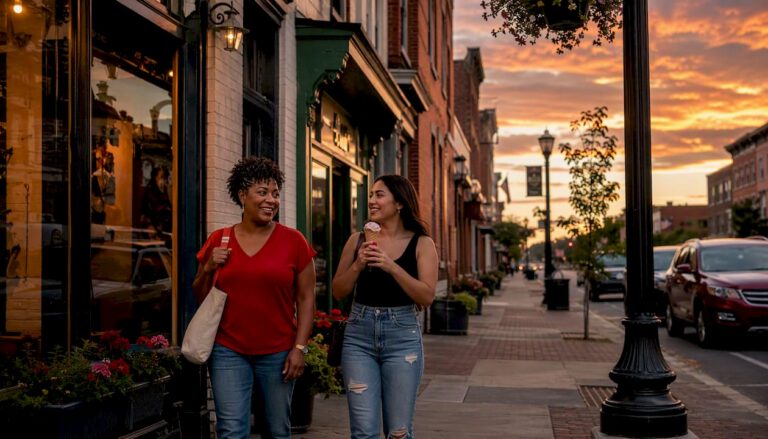
Bordentown, NJ is a one-square-mile historic riverfront city in Burlington County, sitting on the Delaware River roughly 5.8 miles south of Trenton and 27 miles northeast of Center City Philadelphia. With a 2020 U.S. Census population of 3,993, it is genuinely small, but its history punches well above that number. Revolutionary War episodes, a former king of Spain, Clara Barton’s first schoolhouse, and a preserved mid-19th-century downtown make Bordentown one of the most historically dense small cities in New Jersey.
Quick reasons to keep reading:
- History buffs: Colonial-era architecture, Joseph Bonaparte’s estate, and the Clara Barton Schoolhouse are all within walking distance of each other.
- Day visitors from Philadelphia or Trenton: A 30–45 minute drive lands you in a walkable downtown with antique shops, cafes, and river views.
- Commuters: US-130, US-206, and nearby I-295 access, plus an NJ Transit River Line station, make Bordentown a practical base for work in Trenton or Philadelphia.
- Prospective residents: Small-town scale, historic housing stock, and a tight-knit community with its own school district.
Table of Contents
- What are the fast facts about Bordentown, NJ?
- How did Bordentown, NJ get its history and character?
- Where exactly is Bordentown, and what’s the terrain like?
- What do the demographics tell you about Bordentown?
- How is Bordentown governed, and where do you get official help?
- What’s the downtown like, and what can you find on Farnsworth Avenue?
- What are the best things to do in Bordentown?
- How do you get to Bordentown, and how do you get around?
- What schools serve Bordentown, NJ families?
- Is Bordentown a good place to live?
- Who are the notable people connected to Bordentown?
- Where do you find community resources and official contacts?
- A short walking tour of historic Bordentown
- Key Takeaways
- Why Bordentown rewards a slower visit than most people give it
- Useful sources and official links
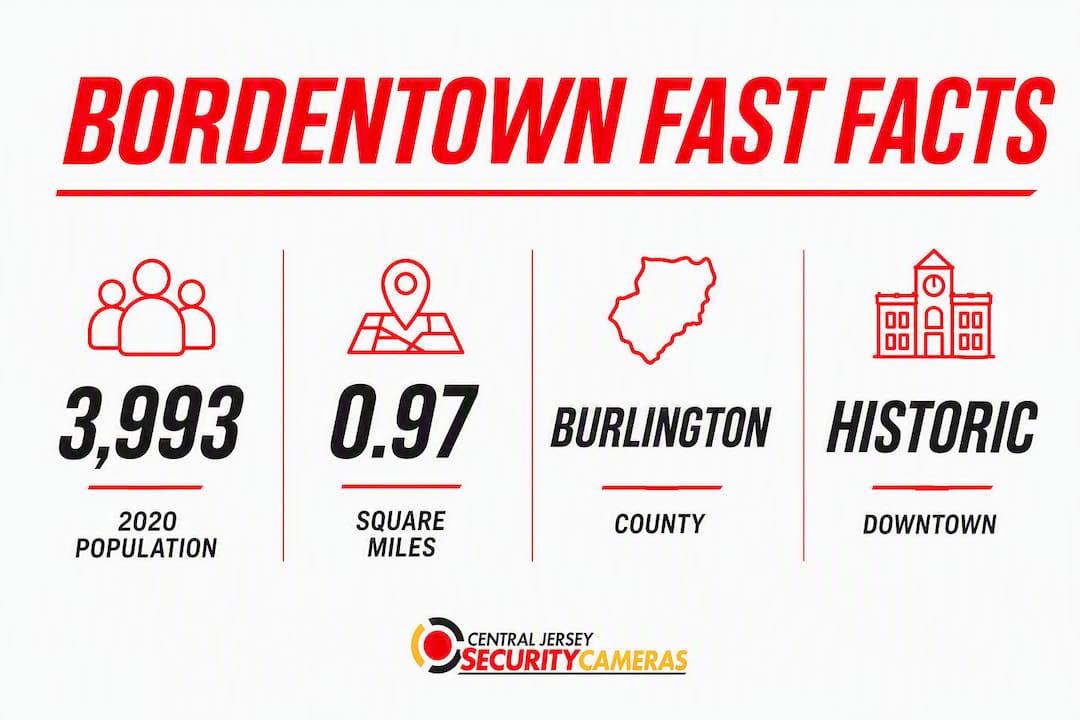
What are the fast facts about Bordentown, NJ?
| Fact | Detail |
|---|---|
| County | Burlington County, New Jersey |
| Total area | 0.97 sq mi (all land) |
| 2020 population | 3,993 |
| ZIP code | 08505 |
| Form of government | Walsh Act three-commissioner commission |
| Major routes | US-130, US-206, I-295 (nearby) |
| Nearest city | Trenton, NJ (≈5.8 miles north) |
| NJ Transit access | River Line (light rail), Bordentown Station |
The city’s official municipal website handles permits, tax payments, and department contacts. One important note for newcomers: Bordentown City and Bordentown Township are two legally separate municipalities. If you live in the township, you use a different municipal portal for taxes and permits. Getting that wrong costs time.
Major roads converge near the city: US-130 runs along the riverfront corridor, US-206 passes through, and I-295 interchanges sit just minutes away. The NJ Transit River Line connects Bordentown to Trenton to the north and Camden to the south, with a station walkable from Farnsworth Avenue.
How did Bordentown, NJ get its history and character?
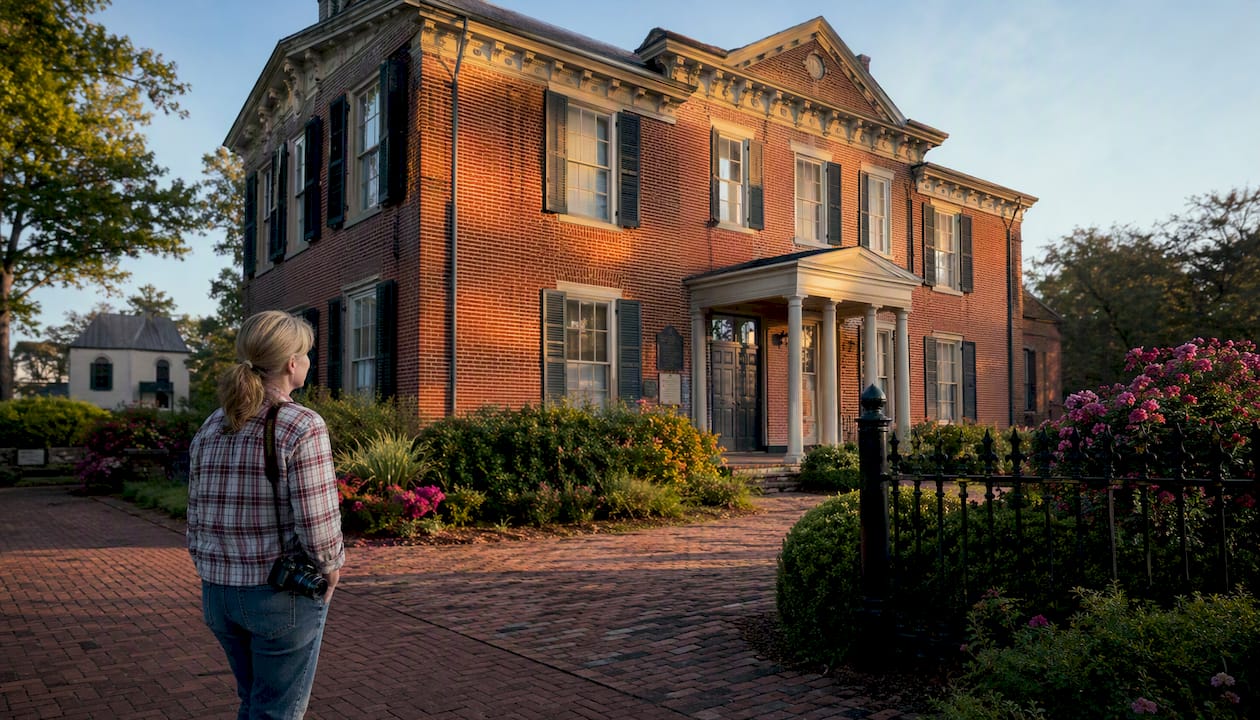
Bordentown’s history explains almost everything about how it looks and feels today. The city’s founding in 1682 as Farnsworth’s Landing by Thomas Farnsworth, a Quaker settler, established it as a river crossing and trading point. Joseph Borden later developed the settlement into a stagecoach and packet-boat hub, and the town took his name.
Long before European settlement, the Lenni Lenape people inhabited this region. Archaeological evidence from the area places Indigenous presence going back thousands of years, a heritage the Bordentown Historical Society acknowledges in its interpretive materials.
The city’s colonial-era importance came from a geographic advantage: it sat on the shortest overland route between Philadelphia and New York via Perth Amboy. That made it a natural stop for travelers, merchants, and, eventually, armies.
Key moments in the city’s timeline:
- 1682: Thomas Farnsworth settles the site; it becomes Farnsworth’s Landing.
- Early 1700s: Joseph Borden establishes stagecoach and boat services; the town is renamed Borden’s Town.
- 1776–1778: Revolutionary War activity intensifies. The Battle of the Kegs (January 1778) takes place on the Delaware River near Bordentown, and British forces raid and burn parts of the town.
- 1816–1839: Joseph Bonaparte, former King of Spain and brother of Napoleon, builds his Point Breeze estate on the bluffs above the Delaware. He becomes a prominent local figure and hosts notable visitors from across the Atlantic world.
- 1851: Clara Barton, who would later found the American Red Cross, opens one of New Jersey’s first free public schools in Bordentown. The schoolhouse still stands.
- Mid-1800s: The Camden and Amboy Railroad passes through the region; the John Bull locomotive, one of America’s earliest operational steam engines, ran on this line.
Historic sites still standing today:
- Clara Barton Schoolhouse (142 Crosswicks Street): The 1851 schoolhouse where Barton established free public education in New Jersey. Stewarded by the Bordentown Historical Society.
- Old City Hall (Farnsworth Avenue): A preserved civic landmark at the heart of the downtown district.
- Point Breeze / Bonaparte Park: The grounds where Joseph Bonaparte’s estate once stood. The original mansion is gone, but the parkland and historical markers remain.
- Gilder House / Bellevue: Associated with Richard Watson Gilder, poet and editor of The Century Magazine, who had family roots in Bordentown.
For authority on these sites, both Britannica’s entry on Bordentown and the Bordentown Historical Society’s records are the go-to references.
Where exactly is Bordentown, and what’s the terrain like?
Bordentown sits on a bluff above the Delaware River at the point where Blacks Creek and Crosswicks Creek meet the river. That elevated position gave the city its strategic value in the colonial era and still shapes the character of the riverfront today.
The city covers just 0.97 square miles, all land. Bordentown Township wraps around it on three sides, and Hamilton Township, Mercer County sits across the Delaware to the west. That enclave geography means the city has very defined edges and a density that rewards walking.
| Geographic detail | Value |
|---|---|
| Total area | 0.97 sq mi |
| Water area | 0 sq mi (city proper) |
| Adjacent waterways | Delaware River, Blacks Creek, Crosswicks Creek |
| Neighboring municipality | Bordentown Township (Burlington County) |
| Across the Delaware | Hamilton Township, Mercer County |
The climate is classic Mid-Atlantic: cold winters, warm and humid summers, with spring and fall offering the most comfortable conditions for outdoor activity. Walking tours and outdoor festivals run best from April through October. Summer weekends draw visitors to the riverfront, while fall brings the most photogenic light to the downtown storefronts.
Transit orientation is straightforward. Trenton is about 10 minutes north by car. Philadelphia is roughly 35–40 minutes via I-295. New York City is about 90 minutes on a clear run up the New Jersey Turnpike.
What do the demographics tell you about Bordentown?
The 2020 Census counted 3,993 residents, up from 3,924 in 2010, a growth rate of 1.8%. That near-flat trajectory over a decade tells you something real: Bordentown is stable, not booming. It is not a city absorbing waves of new development or rapid population turnover. The people who live here tend to stay.
| Demographic indicator | Value |
|---|---|
| Population estimate (recent) | just under 4,000 |
| Growth since 2010 | minimal |
| Trend | stable population |
| Total area | 0.97 sq mi |
| Population density | Approximately 4,100 per sq mi |
What those numbers mean for daily life:
- At roughly 4,100 people per square mile, Bordentown is denser than most New Jersey suburbs but far less congested than Trenton or Camden.
- Slow population growth keeps housing demand relatively stable, though the city’s small size means inventory is always limited.
- A stable, older housing stock and a tight community means small businesses here serve repeat customers, not just tourist foot traffic.
- The city’s size supports a single school district, a single downtown commercial corridor, and a community where most residents know their neighbors.
For small businesses, the density-to-size ratio is actually favorable: a concentrated customer base within walking distance of Farnsworth Avenue, with visitor traffic layered on top during event weekends.
How is Bordentown governed, and where do you get official help?
Bordentown uses the Walsh Act commission form of government, which means three elected commissioners collectively run the city, with one serving as mayor. The mayor is selected from among the commissioners rather than elected separately. This structure keeps local government compact and directly accountable.
Key municipal contacts and services:
- City Hall: 324 Farnsworth Avenue, Bordentown, NJ 08505. The City of Bordentown’s official website lists current hours, department contacts, and online payment portals.
- Public Safety: Police and fire departments operate under the commission’s public safety portfolio. Non-emergency contacts are listed on the city website.
- Public Works: Handles road maintenance, recycling schedules, and utility services.
- Revenue and Finance: Tax payments, permit applications, and fee schedules are managed here. Residents can pay municipal court fines through the NJ Municipal Court Direct portal.
- Municipal Clerk: Handles elections, public records requests, and meeting agendas.
Critical distinction: Bordentown City and Bordentown Township hold separate elections, maintain separate tax rolls, and operate separate municipal websites. If you live in the township and submit a permit application to the city, it will be rejected. Confirm your municipality before filing anything.
Commissioners stand for election every four years. The city’s commission meetings are open to the public and schedules are posted on the official site. For state-level services and department contacts, nj.gov is the authoritative starting point.
What’s the downtown like, and what can you find on Farnsworth Avenue?
Farnsworth Avenue is Bordentown’s Main Street in every sense. The storefronts running through the downtown district are largely restored mid-19th-century buildings, and the mix of businesses reflects both the city’s historic identity and its current role as a destination for day visitors from the Philadelphia and Trenton metro areas.
What you’ll find downtown:
- Antique dealers and vintage shops, some of the best-stocked in Burlington County
- Independent cafes and coffee shops
- Restaurants ranging from casual American to more polished dining
- Art galleries and boutique retail
- A bookstore or two, depending on the season
- Seasonal farmers markets and pop-up vendor events
The downtown operates as a designated historic district, which means exterior renovations require approval and the streetscape stays consistent. That consistency is exactly what draws visitors: it looks like a 19th-century river town because it largely is one.
Recurring events drive significant foot traffic. The Bordentown City Farmers Market runs seasonally on Farnsworth Avenue. Holiday parades and special downtown festivals, including the annual Cranberry Festival, bring crowds from across Burlington and Mercer counties. The Visit Bordentown City site keeps the most current event calendar.
Parking is available in municipal lots off Farnsworth Avenue and on side streets. Weekday mornings are the quietest time to browse; Saturday afternoons during market season are the busiest.
Pro Tip: If you’re visiting for the first time, arrive on a Saturday morning when the farmers market is running, then walk the full length of Farnsworth Avenue before the lunch crowd arrives. You’ll cover the best of downtown in under two hours and still get a table at a restaurant without waiting.
For downtown business owners, the walkable scale of Farnsworth Avenue means foot traffic from one anchor business spills naturally to neighboring storefronts. A well-timed event weekend can drive more sales than a month of ordinary Tuesdays.
What are the best things to do in Bordentown?
Bordentown’s attractions concentrate within a few blocks of each other, which is part of what makes it such a good day trip. You can cover the major historic sites, walk the riverfront, and have lunch on Farnsworth Avenue without ever moving your car.
Top attractions:
- Clara Barton Schoolhouse (142 Crosswicks Street): Built in 1851, this is where Clara Barton established one of New Jersey’s first free public schools. The Bordentown Historical Society stewards the building; check their site for current access hours and guided tour availability.
- Bordentown Historical Society / Friends Meeting House: The Historical Society maintains archives, rotating exhibits, and a self-guided walking tour map covering more than a dozen historic sites. Their 2022 self-guided walking tour is the best single resource for first-time visitors.
- Old City Hall: A preserved civic landmark on Farnsworth Avenue, worth a stop for the architecture alone.
- Point Breeze / Bonaparte Park: The grounds of Joseph Bonaparte’s former estate. The mansion is long gone, but the parkland offers river views and historical markers explaining the site’s significance.
- Delaware Riverfront: The riverfront park and access points below the bluff offer views across to Hamilton Township and a sense of the geography that made Bordentown strategically important for two centuries.
- Farnsworth Avenue Historic District: The street itself is an attraction, with intact 19th-century commercial architecture and a walkable scale that few New Jersey downtowns match.
Seasonal recommendations:
- Spring (April–May): Best weather for walking tours; the Historical Society typically opens Clara Barton Schoolhouse for guided visits.
- Summer (June–August): Riverfront events, outdoor dining on Farnsworth Avenue, and the farmers market in full swing.
- Fall (September–October): The Cranberry Festival and other downtown events; foliage along the river bluffs.
- Winter (November–March): Holiday parades and quieter streets; good for photography of the historic architecture without crowds.
Travel guides and tourism listings suggest that most visitors spend one to three days exploring Bordentown’s highlights, though a focused day trip from Philadelphia or Trenton can cover the main sites comfortably. For current hours and ticketing on specific sites, the Bordentown Historical Society’s website and Visit Bordentown City are the most reliable sources.
How do you get to Bordentown, and how do you get around?
Bordentown is easy to reach by car and reasonably accessible by transit. The city sits near the intersection of several major routes, and its compact size means you rarely need a car once you arrive.
Commute distances from Bordentown:
- Trenton, NJ: approximately 5.8 miles north (10–15 minutes by car)
- Center City Philadelphia: approximately 27 miles southwest (35–45 minutes via I-295).
- New York City: approximately 54 miles northeast (80–100 minutes depending on traffic and route)
Getting there by road:
- US-130 runs along the riverfront corridor and is the primary surface route through the area.
- US-206 passes through Bordentown and connects north toward Princeton and south toward Mount Holly.
- I-295 interchanges sit just minutes from the city center, providing fast access to Philadelphia and Trenton.
By transit:
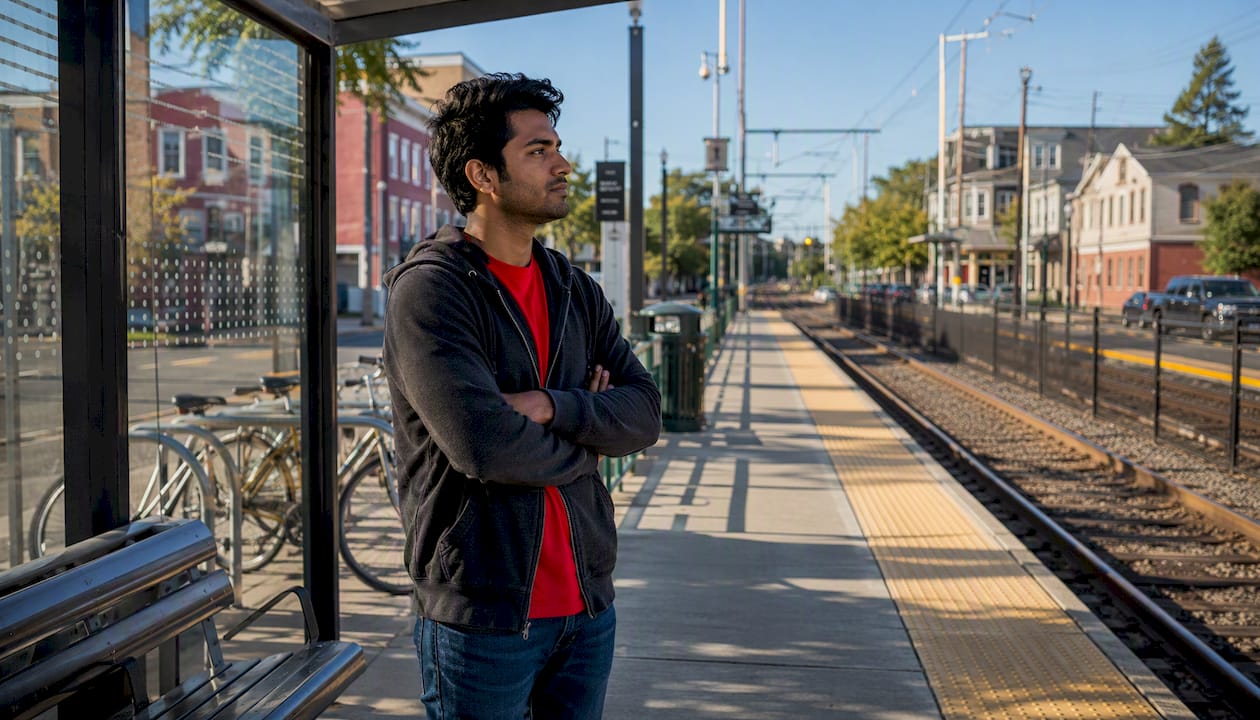
The NJ Transit River Line light rail stops at Bordentown Station, within walking distance of Farnsworth Avenue. The River Line connects north to Trenton (where SEPTA and NJ Transit rail connections to Philadelphia and New York are available) and south to Camden. For visitors coming from Philadelphia, the PATCO Speedline to Camden followed by the River Line north is a viable car-free option.
Parking:
Municipal lots off Farnsworth Avenue handle most visitor parking. Street parking is available on side streets. On event days, arrive early; the downtown fills quickly during the Cranberry Festival and holiday weekends.
Pro Tip for day-trippers from Philadelphia: Take the River Line from Trenton (reached via SEPTA Regional Rail) to Bordentown Station. The walk from the station to Farnsworth Avenue takes about 10 minutes and passes through the historic residential streets, which are worth seeing on their own.
What schools serve Bordentown, NJ families?
The Bordentown Regional School District serves both Bordentown City and Bordentown Township, covering students from kindergarten through 12th grade. The district operates multiple schools across the two municipalities, with a regional high school serving the combined student population.
District structure at a glance:
| School level | Notes |
|---|---|
| Elementary | Serves K–5 students across the city and township |
| Middle school | Grades 6–8, regional enrollment |
| High school | Bordentown Regional High School, grades 9–12 |
Key contacts and resources:
- The Bordentown Regional School District maintains its own website with enrollment information, school calendars, and contact directories for each building.
- The district office handles registration, special education services, and transportation inquiries.
- For families moving to the area, confirming whether your address falls within Bordentown City or Bordentown Township matters for enrollment purposes, since the district serves both but the municipal boundaries affect other services.
The Clara Barton Schoolhouse connection gives the district a genuine piece of educational history: Barton’s 1851 free school in Bordentown was one of the earliest examples of publicly funded education in New Jersey, a legacy the community still references.
For higher education, Rider University in Lawrenceville is roughly 10 miles north, and Rowan College at Burlington County has a campus in nearby Mount Holly. Thomas Edison State University in Trenton serves adult and non-traditional learners in the region.
Is Bordentown a good place to live?
Bordentown suits a specific kind of resident well: someone who wants a walkable, historic downtown, a short commute to Trenton or Philadelphia, and a genuine small-town community rather than a suburban subdivision. It is not the right fit for everyone, but for the people it fits, it fits well.
Pros:
- Historic housing stock, including Federal and Victorian-era homes, many within walking distance of downtown
- Walkable scale: most daily errands and dining are reachable on foot
- Commuter access to Trenton (10 minutes), Philadelphia (35–40 minutes), and New York (90 minutes)
- Strong community identity, active historical society, and regular local events
- Visit Bordentown City and the downtown association support local business and community programming
Cons:
- Housing inventory is limited; the city’s 0.97-square-mile footprint means very few properties come to market at any given time
- Older homes require more maintenance; many are in or near the historic district, which adds renovation constraints
- Flood considerations near Blacks Creek and the Delaware River affect some properties
- Limited large-format retail; major shopping requires a drive to Hamilton or Burlington
Pro Tip: If you’re buying in Bordentown’s historic district, budget for a specialist home inspector who has experience with pre-1900 construction. Knob-and-tube wiring, original plaster walls, and fieldstone foundations are common, and a standard inspection may miss issues that a specialist catches immediately. The home security buying guide from Central Jersey Security Cameras also covers what new homeowners in older New Jersey properties should consider for surveillance and alarm systems.
Healthcare access: The nearest full-service hospitals are Capital Health Regional Medical Center in Trenton (approximately 8 miles) and Jefferson Health New Jersey in Sewell (approximately 30 miles). Urgent care facilities operate in nearby Bordentown Township and Hamilton Township.
Who are the notable people connected to Bordentown?
For a city of under 4,000 people, Bordentown has an improbable roster of historically significant residents and visitors. The Britannica entry on Bordentown highlights several of them, and the Historical Society’s materials fill in the rest.
Notable figures:
- Thomas Paine: The author of Common Sense and The American Crisis owned property in Bordentown and lived here periodically during and after the Revolutionary War.
- Joseph Bonaparte (1816–1839): Former King of Naples and Spain, and Napoleon’s older brother, built his Point Breeze estate on the Bordentown bluffs after Napoleon’s defeat. He became a respected local figure and hosted European dignitaries and American politicians.
- Clara Barton: Taught in Bordentown from 1851 to 1853, establishing one of New Jersey’s first free public schools before going on to found the American Red Cross.
- Richard Watson Gilder: Poet and influential editor of The Century Magazine during the Gilded Age, with family connections to Bordentown.
- Benjamin Franklin: Visited Bordentown and corresponded with local figures; his connection to the city is noted in historical records, though he was not a resident.
These figures are commemorated through preserved buildings, historical markers on Farnsworth Avenue and surrounding streets, and the Historical Society’s interpretive materials. Point Breeze carries a historical marker, and the Clara Barton Schoolhouse is the most visited single site in the city.
Where do you find community resources and official contacts?
Start with the City of Bordentown’s official website for anything involving permits, taxes, utilities, or municipal services. Everything else flows from there.
Key contacts:
- Bordentown Historical Society: — bordentownhistory.org — archives, walking tour maps, site access schedules
- Municipal Court / Fine Payments: Use the NJ Municipal Court Direct portal for online payments
| Resource | Where to find it |
|---|---|
| Permits and tax payments | cityofbordentown.com |
| Event calendar | visitbordentowncity.com |
| Historical research | bordentownhistory.org |
| School district | Bordentown Regional School District website |
| State services | nj.gov |
| Municipal court fines | NJ Municipal Court Direct portal |
Seasonal recycling schedules and parking permit applications are posted on the city website, typically updated each spring. Residents who need to distinguish between city and township services should check the municipal boundary map on the city site before submitting any application.
A short walking tour of historic Bordentown
The entire historic core of Bordentown is walkable in 60–90 minutes. The Bordentown Historical Society’s self-guided walking tour covers more than a dozen sites; the route below hits the essential stops for a first visit.
-
Start at the Bordentown Historical Society / Friends Meeting House (10 minutes): Pick up a walking tour map here if you haven’t downloaded one. The building itself is historically significant, and the staff can point you toward any sites with special access on the day you visit.
-
Walk to Old City Hall on Farnsworth Avenue (5 minutes): The building anchors the downtown streetscape. Take a few minutes to walk the full length of Farnsworth Avenue in both directions, noting the intact 19th-century storefronts.
-
Clara Barton Schoolhouse, 142 Crosswicks Street (15 minutes): A short walk from Farnsworth Avenue. The 1851 schoolhouse is the city’s most visited historic site. Check the Historical Society’s website for current access hours before you go.
-
Farnsworth Avenue lunch stop (30 minutes): Return to the main street for lunch or coffee. The concentration of independent restaurants and cafes means you have real options within a two-block stretch.
-
Delaware Riverfront and Point Breeze area (20 minutes): Walk toward the river to see the bluff geography that shaped the city’s history. The Point Breeze historical marker explains the Bonaparte estate; the river views from the bluff are worth the walk on their own.
-
Return loop through residential streets (10 minutes): The blocks between Farnsworth Avenue and the riverfront contain some of the best-preserved Federal and Victorian residential architecture in Burlington County. Walk back to your starting point via a different street than you came.
Pro Tip: Weekday mornings before 10 AM give you the quietest streets and the best light for photos of the historic storefronts. If you’re visiting on a weekend, the farmers market on Farnsworth Avenue adds energy but also crowds; plan the riverfront and residential sections first, then finish on the main street when the market is winding down.
Key Takeaways
Bordentown, NJ is a compact historic riverfront city of 3,993 residents that rewards both day visitors and prospective residents with walkable downtown charm, genuine Revolutionary War history, and practical commuter access to Trenton and Philadelphia.
| Point | Details |
|---|---|
| Small but historically significant | Population of 3,993 in 2020; one square mile packed with preserved colonial and 19th-century architecture. |
| Commuter-accessible location | Roughly 5.8 miles from Trenton, 27 miles from Philadelphia, and 54 miles from New York City via US-130, I-295, and the NJ Transit River Line. |
| Downtown walkability | Farnsworth Avenue’s restored mid-19th-century storefronts, antique shops, restaurants, and seasonal markets are all within a short walk of each other. |
| Rich historic attractions | Clara Barton Schoolhouse, Point Breeze, Old City Hall, and the Bordentown Historical Society’s self-guided walking tour cover the essential sites. |
| Know your municipality | Bordentown City and Bordentown Township are separate; use cityofbordentown.com for city permits, taxes, and services. |
Why Bordentown rewards a slower visit than most people give it
Most people who pass through Bordentown do exactly that: pass through. They catch Farnsworth Avenue for an hour, maybe stop for lunch, and leave without understanding what they actually walked past. That’s a real loss.
The city’s scale tricks visitors into underestimating it. One square mile sounds like nothing. But that square mile contains the schoolhouse where Clara Barton invented free public education in New Jersey, the grounds where a deposed European king built an estate grand enough to host American presidents, and a downtown streetscape that has barely changed since the 1850s. You don’t need a full day to see it, but you need more than an hour to feel it.
My honest recommendation: treat it as a half-day trip rather than a quick stop. Walk the residential streets between the historical sites, not just Farnsworth Avenue. The Federal-style houses on the side streets, the river views from the bluff, the scale of the whole thing — that’s where the city’s character actually lives. The antique shops and restaurants are good. The architecture is better.
Useful sources and official links
For official business, historical research, and visitor planning, these are the authoritative sources to bookmark.
Official and primary sources:
- City of Bordentown official website: Permits, tax payments, municipal contacts, and department directories
- Bordentown Historical Society: Local archives, historic site stewardship, and the self-guided walking tour
- Bordentown Historical Society Walking Tour: Downloadable map and site descriptions for self-guided visits
- Visit Bordentown City: Event calendar, visitor guides, and downtown business listings
- Britannica: Bordentown: Authoritative reference entry for historical facts and notable figures
- NJ Transit River Line: Schedules and fares for the light rail connecting Bordentown to Trenton and Camden
- NJ.gov: State-level services, department contacts, and regulatory information
- NJ Municipal Court Direct: Online portal for municipal court fine payments
| Need | Best source |
|---|---|
| Permits, taxes, city services | cityofbordentown.com |
| Historical research and site access | bordentownhistory.org |
| Visitor planning and events | visitbordentowncity.com |
| Transit schedules | njtransit.com (River Line) |
| State services and regulations | nj.gov |
| Reference and historical facts | britannica.com/place/Bordentown |
Living or doing business in Bordentown? Security is a practical concern for both historic homeowners and downtown business owners. Central Jersey Security Cameras designs and installs professional home security camera systems across New Jersey, including Burlington County properties. Whether you’re protecting a 19th-century rowhouse on Farnsworth Avenue or a commercial storefront, a professionally installed CCTV system built for your specific property is a different product than anything off a retail shelf.