
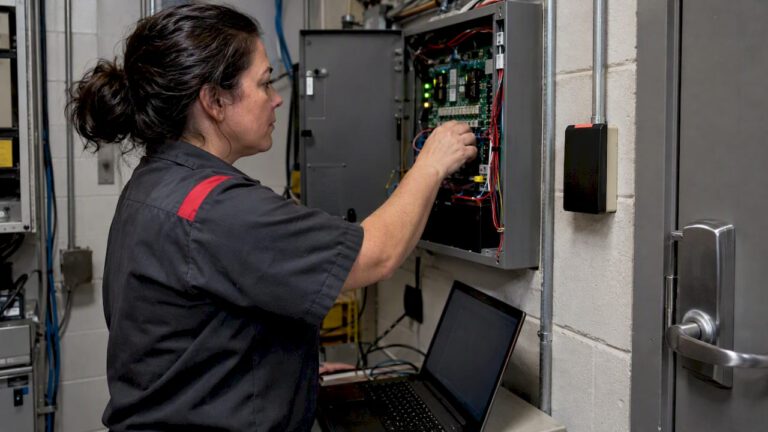
Access control maintenance is a routine mix of hardware inspections, power and battery checks, software and database cleanup, cybersecurity upkeep, and safety-compliant procedures. Start today by adopting a prioritized checklist and setting recurring service intervals. Hand any electrical or life-safety task to a qualified technician, and keep everything else on a written schedule you actually follow.
TL;DR:
- Check high traffic entrances daily, test locks, readers, exit devices, and intercoms monthly, review firmware and accounts quarterly, and inspect panels and batteries annually.
- Audit access after major staffing changes and annually, promptly removing departed staff; combine rated door checks with the yearly fire door inspection.
- Only qualified, authorized technicians should handle electrical or life safety work; isolate hazardous energy, verify power is off, and never bypass door interlocks.
- Replace default credentials, give technicians unique accounts, enable multifactor authentication for remote access, and log login failures with lockouts after repeated attempts.
- When several credentials fail, isolate the reader or controller; call a professional for recurring faults, failed life safety interlocks, or work requiring lockout procedures.
Table of Contents
- What should your access control maintenance checklist include?
- How often should access control systems be serviced?
- What safety rules apply when you maintain access control?
- How do you keep access control software and network secure?
- How do you troubleshoot common access control problems?
- What should a maintenance contract include?
- What we see most often in the field
- We can inspect and maintain your access control system
- FAQ
- Sources
What should your access control maintenance checklist include?
Many access control problems can be spotted before a door stops working. Walk the system with this list and log what you see.
Visual inspection
- Panel enclosure: closed, dry, free of dust, with no signs of tampering
- Wiring: no abrasion, loose terminations or pinched cable at door frames
- Readers and keypads: faceplates intact, keys not worn smooth, no cracked housings
- Intercoms: audio clear in both directions, call button working
Power
- Confirm mains status and inline power supply output
- Check battery voltage and charger operation, and note the install date so replacement is scheduled rather than reactive
- Test the UPS on any controller or recorder that depends on one
Doors and hardware
- Strike alignment, latch engagement, closer speed and gap clearances
- On rated fire doors, confirm nothing has been added that blocks latching
Readers and credentials
- Test several credentials, including prox cards and mobile credentials
- Record reader firmware versions
Network and recorders
- Check NVR health, storage utilization and timestamp accuracy
- Verify that backups restore, not just that they run
Then work the log in this order:
- Record each finding with date, door or device ID and the technician’s name.
- Note firmware versions next to each device.
- Write down the corrective action and who completed it.
- Re-test the device and sign off.
Pro Tip: Photograph each panel interior once a year. A side-by-side comparison exposes added wires, swapped parts and moisture damage that a quick glance misses.
How often should access control systems be serviced?
Match the task to the risk. High-use doors wear faster, so check them more often.
- Daily: a quick visual pass at high-traffic entrances, looking for damaged readers or doors that fail to latch
- Monthly: functional tests of locks, readers, request-to-exit devices and intercoms
- Quarterly: firmware review and a user-database review to remove stale accounts
- Annually: a full inspection of panels, power supplies and batteries, plus fire-door alignment checks
Run a complete access audit whenever staffing changes sharply, and at least once a year. Offboarding is the most common gap: a badge that still works after someone leaves is a hole in the system. A task checklist tool such as CentriOps can help small teams tie onboarding and offboarding steps to access reviews. Where fire doors are present, schedule the annual access control check alongside the annual fire-door inspection so one visit covers both.
What safety rules apply when you maintain access control?
Electrical work on a security system falls under federal safe-work rules. OSHA’s lockout/tagout requirements, found in 29 CFR 1910.147, call for isolating, locking out and tagging out hazardous energy during servicing. Only qualified and authorized people should adjust locking hardware or life-safety components.
OSHA’s 1910.333 work practices require verification of a deenergized condition before work begins and limit work on exposed energized parts to qualified persons.
What that means in practice:
- Stored energy, such as battery backup, must be released or isolated, and the deenergized state verified before anyone starts and before reenergizing.
- Staff who are not qualified should limit themselves to visual checks, credential tests and log keeping.
- Never defeat a hold-open device or life-safety interlock to make a door “work better.”
Fire doors carry their own rules. NFPA guidance on NFPA 80 and NFPA 101 calls for inspection right after installation and at least annually afterward by a qualified person, covering labels, damage, clearances, operability and latching. Treat any magnetic lock or electric strike on a rated opening as part of that inspection.
How do you keep access control software and network secure?
Physical upkeep means little if the controller sits open on the network. CISA’s advisory treats cybersecurity maintenance, including firmware updates and multifactor authentication for remote access, as important as physical maintenance.
- Keep firmware and system software current, and record every version change in the maintenance log.
- Change every default manufacturer credential before a device touches the network, and give each technician a unique service account.
- Turn on multifactor authentication for remote and vendor access, and disable remote access when nobody needs it.
- Log failed logins and logins from unusual locations, and decide in advance who responds to an alert.
CISA also recommends logging failed logins, enforcing lockouts after repeated failures and using passphrases of 15 or more characters where feasible. For administrative access, its guidance on remote access for control systems favors least-privilege roles and VPN or jump-server connections.
Pro Tip: Schedule firmware updates for a quiet window and keep the previous version on hand, so a bad update can be rolled back without leaving doors unsecured.
How do you troubleshoot common access control problems?
Start with the cheapest explanation and move toward the system’s complex parts.
- Power loss: Check mains, power supplies, fuses, UPS output and battery voltage. Do not touch energized parts unless you are qualified.
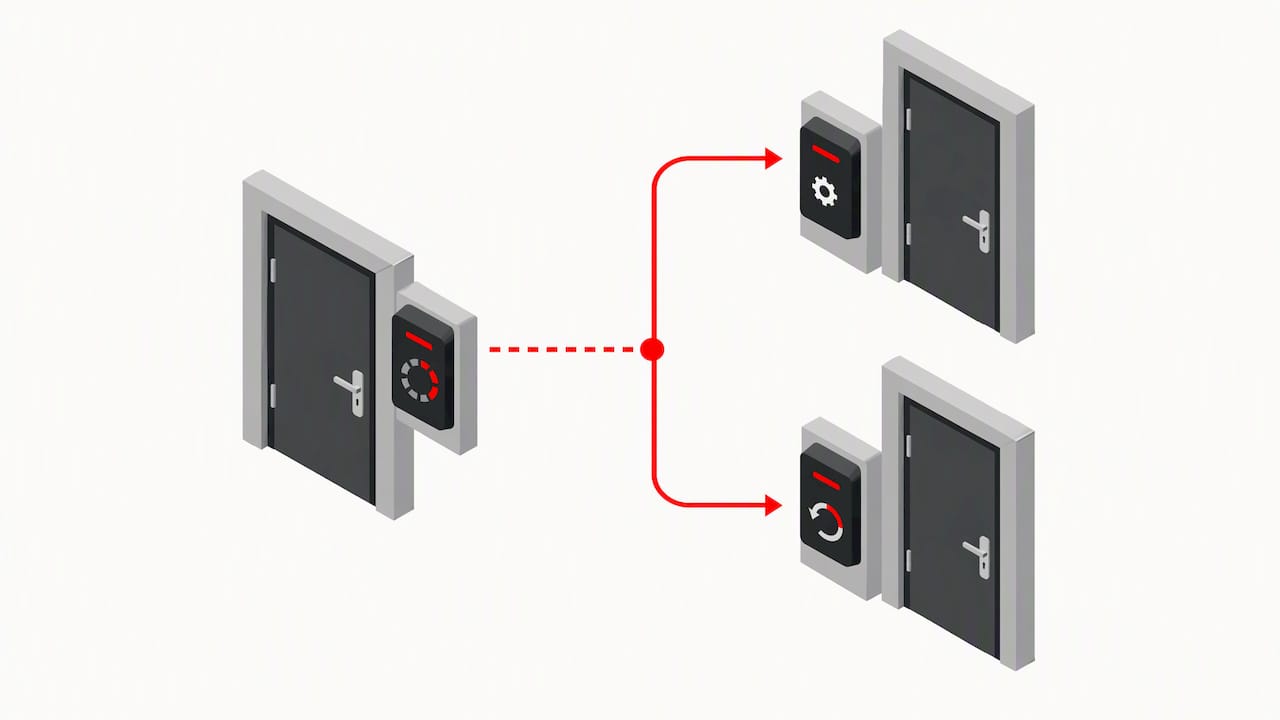
- Reader or credential faults: Test with several credentials. If only one fails, suspect the credential. If all fail, swap the reader or controller to isolate the device, then inspect connector pins and wiring.
- False alarms: Review recent changes first. Then check sensor placement and wiring, and confirm the time and date are right and power is stable.
- Escalation: Call a professional for repeated intermittent faults, any life-safety interlock failure, or anything that needs lockout/tagout.
Keep a small stock of spare batteries and common parts so a simple fix does not wait on shipping. An inventory tool like Findle Inventory can track what is on the shelf.
What should a maintenance contract include?
A contract turns this checklist into someone else’s calendar. Look for:
- Scheduled inspections at the frequencies above
- Emergency service windows with a stated response time
- Clear parts and labor terms
- Firmware and software update coverage
- Written documentation after each visit
The payoff is less downtime, prioritized response and a paper trail that supports compliance. Before you sign, ask each provider how fast they respond, who is qualified for electrical and life-safety work, and what liability and insurance coverage they carry. If a vendor can’t answer those plainly, keep looking.
What we see most often in the field
Check backup batteries regularly and log when they need replacing. Keep firmware up to date, and make sure fire doors aren’t propped open with devices that prevent latching. These issues can be addressed through scheduled maintenance. If you want a local team to run that schedule, Central Jersey Security Cameras handles inspections and maintenance across Central New Jersey.
— Tom
We can inspect and maintain your access control system
We install and maintain access control for homes and businesses in New Jersey. A typical visit ends with an inspection report, a firmware log and recommended corrective actions. Schedule an evaluation through our access control page and we’ll build the maintenance plan with you.
FAQ
How often should access control systems be serviced?
Plan on quick checks at busy doors daily, functional tests monthly, software reviews quarterly and a full inspection annually. High-use or life-safety doors may need more frequent attention.
Who is allowed to work on access control power and wiring?
Only qualified persons should work on exposed energized parts, and servicing that involves hazardous energy requires lockout/tagout under OSHA 1910.333. Non-qualified staff can do visual checks and credential tests.
How do you secure an access control system against cyberattacks?
Update firmware, replace default credentials, enable multifactor authentication for remote access and turn on logging for failed logins. CISA’s advisory treats these steps as equal in importance to physical maintenance.
Do fire doors need separate inspections?
Yes. NFPA 80 guidance calls for inspection after installation and at least annually by a qualified person, so pair it with your annual access control check.