
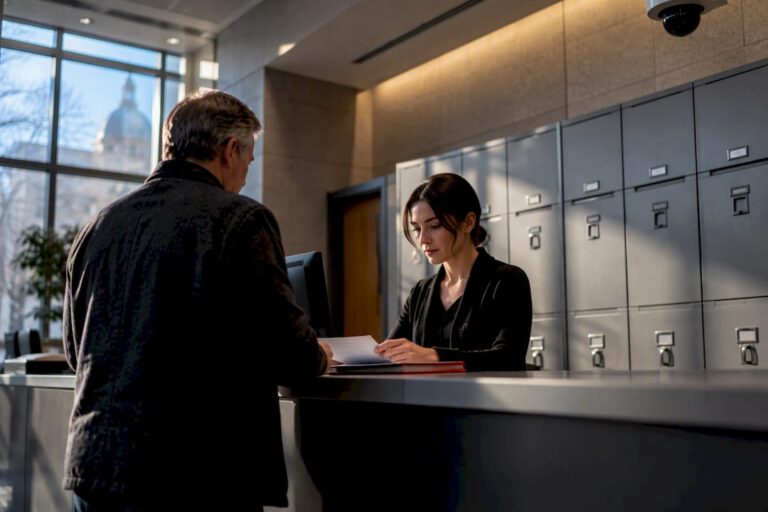
Yes, video cameras are generally legal on private property in New Jersey. The bigger risks come from what your camera records and where it points. Audio recording falls under the state’s one-party consent law, which can create criminal exposure if handled wrong, and pointing a lens into a bathroom, bedroom, or other space where someone expects privacy can violate invasion-of-privacy statutes regardless of your intent.
TL;DR:
- Cameras aimed at public spaces like streets or driveways generally pose minimal legal risk, but targeting private interiors or neighbors’ yards can lead to invasion-of-privacy issues.
- Disabling microphones on cameras reduces criminal exposure under New Jersey’s one-party consent law, especially when capturing conversations among third parties.
- Indoor or private-space recordings, including bathrooms and bedrooms, are illegal without explicit consent, regardless of whether the camera is placed on your property.
- Municipal programs and data privacy laws mainly affect larger businesses; homeowners should focus on proper camera placement and footage access controls to avoid disputes.
- Communicate with neighbors before installation and set camera angles to avoid capturing private spaces, which helps prevent legal conflicts and disputes.
Table of Contents
- Legal basics: the statutes that govern cameras in New Jersey
- Where you can and cannot place cameras
- Audio rules: when a microphone creates legal risk
- Workplace, landlord, and HOA rules carry extra restrictions
- Municipal registries and the new data privacy law
- If a neighbor’s camera invades your privacy, follow this checklist
- An installer’s approach to privacy-forward camera setup
- Why privacy-aware installation prevents disputes
- Professional installation that keeps privacy in mind
- Authoritative statutes and guidance
- Sources
- FAQ
Legal basics: the statutes that govern cameras in New Jersey
New Jersey does not have one single “camera law.” Instead, several statutes work together to define what is allowed. The wiretapping statute, N.J.S.A. 2A:156A-1 et seq., governs audio recording of conversations and sets the state’s one-party consent standard. The invasion-of-privacy statute, N.J.S.A. 2C:14-9, criminalizes observing or recording someone in a place and manner where they have a reasonable expectation of privacy, even without audio.
Courts generally look at whether a person had a legitimate expectation of privacy in the location filmed, not just whether a camera was running. That standard shifts depending on where the lens points.
- A camera aimed at your own porch or driveway rarely raises privacy concerns.
- The same camera aimed through a neighbor’s bedroom window can trigger liability.
- Municipalities and homeowners associations can layer their own rules on top of state law.
Where you can and cannot place cameras
Camera placement is the single biggest factor in whether a system creates legal exposure. The safest setups keep the field of view on your own property.
- Front porch and entry points: doorbell and porch cameras that capture your walkway, mailbox, or front door are standard and low risk.
- Driveway and yard facing your own lot: coverage of your own parking area or fenced yard is fine as long as it does not sweep into a neighbor’s private space.
- Public-facing angles toward the street: sidewalks and streets are public space, so incidental footage of passersby is generally acceptable.
- Bathrooms, locker rooms, and bedrooms: recording in these spaces, even in your own home if someone else uses them without knowledge, can fall under voyeurism statutes.
- Neighbors’ windows or fenced private yards: a camera that captures a neighbor’s private outdoor space or interior through a window is high risk even if unintentional.
- Condo and HOA common areas: shared hallways, lobbies, or parking structures typically need board approval before you install anything.
Pro Tip: Walk your property line with your phone camera before installation and check exactly what each proposed angle actually captures on the other side of the fence.
Audio rules: when a microphone creates legal risk
Video is usually the easy part. Audio is where cameras get people into trouble. New Jersey is a one-party consent state, meaning you can legally record a conversation if you are a participant, even without the other person’s knowledge. The problem arises when a camera’s microphone picks up a conversation between two other people who never consented and never knew they were being recorded.
- Doorbell cameras that record a visitor’s voice while you are present typically fall under one-party consent.
- A microphone that captures a neighbor’s conversation across a yard, where you are not a participant, can violate the wiretapping statute.
- Recording someone’s private conversation without any party’s consent can expose you to criminal charges and civil liability.
A camera’s video-only mode sidesteps the wiretapping statute entirely, since the law governs audio interception, not video capture**.** Disabling the microphone is often the simplest way to remove this entire category of risk.
Workplace, landlord, and HOA rules carry extra restrictions
Cameras in shared or regulated spaces face tighter limits than a private backyard does.
- Employers can generally use video monitoring in common work areas, but audio recording of employee conversations raises the same wiretapping concerns and should be disabled unless there is a documented, specific reason to keep it on. Posting visible notice of monitoring is a smart practice even where not strictly required, a point we cover in more detail in our guidance for New Jersey employers.
- Landlords cannot install cameras inside a tenant’s private living space, and cameras in shared hallways or entryways should avoid capturing views into individual units.
- HOAs commonly require board approval for exterior cameras for aesthetic and liability reasons, and residents can typically request an exception by showing the camera targets only their own unit or entry.
Municipal registries and the new data privacy law
Two newer legal tools matter for anyone installing cameras today. First, N.J.S.A. 40:48-1.7 lets municipalities adopt a voluntary private outdoor camera registry, giving police a faster way to locate nearby footage during an investigation. Registration is optional where a town has adopted one, and it does not expand what your camera is legally allowed to record.
Second, the New Jersey Data Privacy Law took effect January 15, 2025, and is enforced by the Attorney General. It applies to controllers processing personal data of 100,000 or more New Jersey residents, or selling data of 25,000 or more residents, so it mainly concerns larger businesses rather than individual homeowners.
- Businesses that fall under these thresholds should document who can access footage, how long it is kept, and a contact method for privacy inquiries.
- Early enforcement includes a cure period, giving controllers a chance to fix gaps before penalties apply.
- Homeowners fall outside these thresholds in almost every case, but good data habits still reduce risk generally.
If a neighbor’s camera invades your privacy, follow this checklist
A neighbor’s camera pointed the wrong way is a common source of disputes, and there is a sensible order of steps before anything escalates.
- Document what you’re seeing: note the camera’s angle, location, and what it appears to capture, with photos and timestamps.
- Talk to your neighbor first: many placement issues are unintentional and get resolved by simply asking them to adjust the angle.
- Check local ordinances and HOA rules: some towns and associations have their own camera placement requirements beyond state law.
- Report suspected voyeurism to police: if the camera appears to capture a bathroom, bedroom, or other private interior, this may fall under criminal invasion-of-privacy statutes.
- Consult an attorney for persistent issues: a lawyer can pursue a civil claim or injunction when a conversation and a police report do not resolve the problem.
Pro Tip: Keep a simple written log of dates and what you observed each time. That record becomes useful if you ever need to file a complaint or pursue a claim.
An installer’s approach to privacy-forward camera setup
Field experience installing systems across Central New Jersey shows the same mistakes come up repeatedly: microphones left on by default, wide-angle lenses that sweep past property lines, and no plan for who can access saved footage.
- Turn off the microphone unless there is a specific, documented reason to record audio.
- Use motion-only recording to limit how much footage exists and for how long.
- Angle and mask camera fields of view so lenses stop at your property line rather than a neighbor’s yard or window.
- Set a clear retention schedule and restrict footage access to reduce risk under the data privacy law.
Why privacy-aware installation prevents disputes
Most camera complaints I run into start with an angle nobody double-checked before mounting, not with bad intentions. A five-minute conversation with a neighbor before installation, plus a masked field of view, solves most disputes before they start. Property owners who want a second opinion on a planned setup are welcome to reach out for a walkthrough.
— Tom
Professional installation that keeps privacy in mind
We design and install custom CCTV systems for homes and businesses across Central New Jersey. We configure microphone settings, camera angles, and footage retention as part of every installation, not as an afterthought.
If you want your camera system placed correctly the first time, start with a free on-site evaluation and professional installation for a one-time fee.
Authoritative statutes and guidance
Key sources: New Jersey wiretapping and voyeurism statutes, the municipal camera registry law, and the state’s consumer affairs office.
This article is general information, not a substitute for advice from a qualified lawyer. Consult a qualified legal professional about your own circumstances before acting on anything here.
Sources
- New Jersey Surveillance Camera Laws (2026 Guide) | Recording Law
- P.L.2016, CHAPTER 2 (amendments to invasion of privacy statutes)
- 2025 New Jersey Revised Statutes Title 40 – Section 40:48-1.7 – Private outdoor video surveillance camera registry.
- Pages – New Jersey Data Privacy Law FAQs
- Privacy in New Jersey: What the law says about security cameras, video recordings & audio
FAQ
Is it illegal to have a security camera pointed at a neighbor’s house in NJ?
Generally, filming a neighbor’s exterior or yard is not illegal on its own, since that area is often visible from public space. It becomes a legal problem if the camera captures the interior of their home or an area where they reasonably expect privacy, which can fall under New Jersey’s invasion-of-privacy statute.
Can a neighbor have a camera pointed at my backyard?
A camera that happens to catch a glimpse of your yard from a neighbor’s property is usually not illegal by itself. If it is specifically angled to monitor your private outdoor space or interior rooms, that raises the same privacy concerns courts weigh in other camera disputes.
Can my husband put cameras in the house without my permission?
New Jersey does not generally require every household member’s consent for video-only cameras in shared living spaces. Cameras placed in bathrooms, bedrooms, or other areas with a reasonable expectation of privacy raise separate concerns under the state’s voyeurism statute, regardless of who installed them.
Is it illegal to video record someone without their permission in NJ?
Video-only recording in a place without a reasonable expectation of privacy, such as a porch or driveway, is generally legal without the other person’s permission. Recording a private conversation without any participant’s consent, or filming someone in a private space like a bathroom, can violate wiretapping or voyeurism laws.